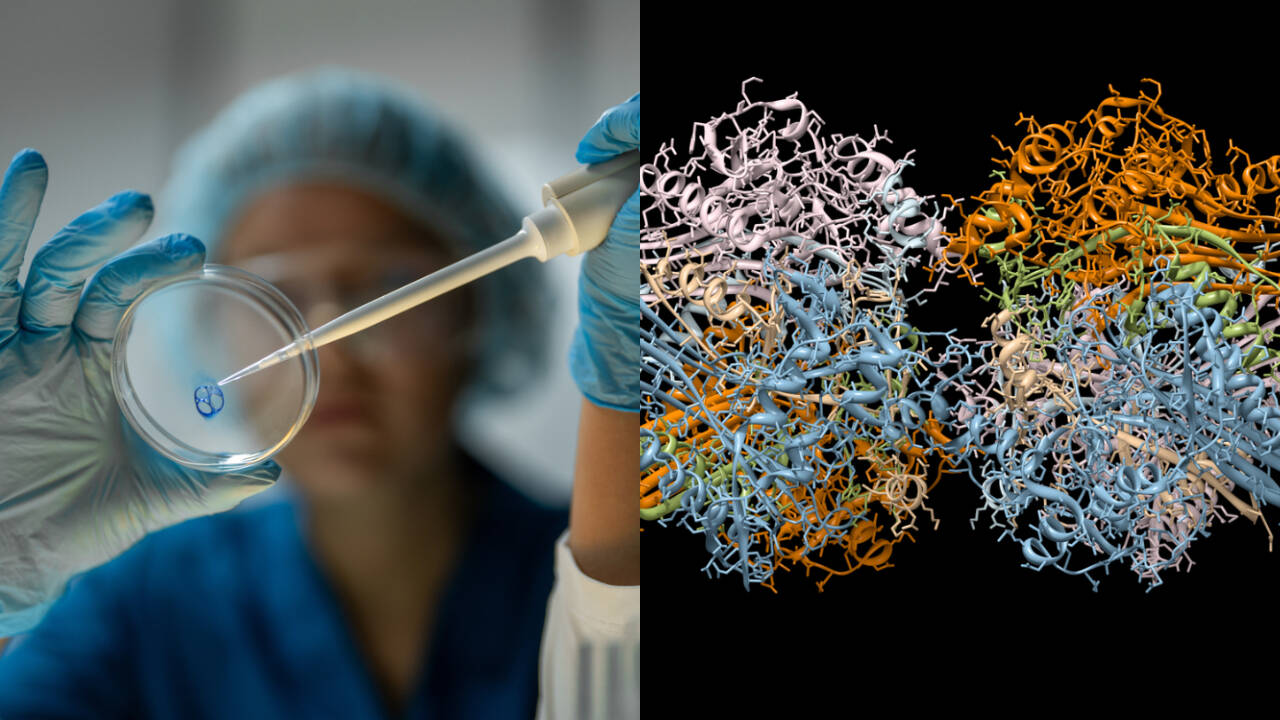
Traditional drug discovery has hit a brick wall. Superbugs are mutating faster than pharmaceutical companies can pump out new molecules, leaving doctors with fewer options every single year. But researchers at the University of Oregon found a radical backdoor out of this crisis. They didn't look forward into computer-generated chemical libraries. They looked backward into deep geological time, pulling blueprints from mammals that lived 160 million years ago.
Published in PLOS Biology, this work shows that proteins from extinct mammalian ancestors can actually outperform modern human equivalents against aggressive, drug-resistant bacteria. It turns out evolution already solved many of the microbial threats we face today. We just forgot to check the ancient archive.
Decoding the Ancient Mammalian Immune System
To understand how this works, you have to look at lactoferrin. This immune protein exists in almost every body fluid outside of blood, including breast milk, tears, saliva, and intestinal mucus. It performs a dual function. First, it binds iron, starving bacteria of a resource they desperately need to replicate. Second, and more importantly for drug design, it contains a built-in antimicrobial peptide segment. This peptide attacks bacterial membranes, tearing holes in cellular walls.
The research team wanted to map how this weapon changed over millions of years. They gathered genetic data from living placental mammals—ranging from humans to cows—and used ancestral sequence reconstruction algorithms. By charting these evolutionary trees backward, they predicted what lactoferrin genes looked like during the age of dinosaurs, synthesized those exact genetic sequences in the laboratory, and generated functional ancient proteins.
When tested against stubborn pathogens like Pseudomonas aeruginosa, Staphylococcus aureus, Escherichia coli, and Streptococcus, the results surprised even the researchers.
The Surprising Power Shift Across Geological Time
Not all ancient proteins proved equally effective. The oldest reconstructed peptides could damage bacterial membranes, but modern superbugs often repaired the damage and survived. Evolution, it turns out, is a process of trial and error.
As the team moved forward chronologically through ancestral branches, the peptides grew progressively sharper and more destructive. By the time they reached relatively recent mammalian ancestors, some reconstructed fragments packed a heavier punch against drug-resistant strains than anything found in modern human bodies.
Nature didn't just stumble on defense mechanisms by accident; it refined them across millions of years of biological warfare against ancient pathogens.
The Single Mutation That Changed Everything
One of the most valuable takeaways from the study isn't just that ancient proteins work, but how they work. Researchers discovered that a single amino-acid mutation could drastically change a peptide's effectiveness.
This detail matters because it completely shifts how we look at protein engineering. Instead of guessing which chemical structures might work against modern resistant strains, scientists can track how molecular changes played out across real biological history. Evolution acts as a vast catalogue of experimental data, showing precisely which genetic swaps succeeded and which failed.
Why Ancient Proteins Aren't Ready for Pharmacies Yet
Let's be realistic. You aren't going to get an ancient mammalian peptide injection at your local clinic next week.
Antimicrobial peptides face a major structural hurdle: stability. Natural peptides break down quickly inside the human body before they can eradicate an infection. They degrade in blood and digestive tracts far too fast to act as standalone, conventional pills.
That means these 160-million-year-old molecules won't replace standard antibiotics directly. Instead, their true value lies in acting as architectural blueprints. By studying how these ancient proteins achieved high potency, scientists can design synthetic molecules that mimic their structural advantages while surviving inside modern human physiology.
This approach also gives researchers a predictive edge against future resistance. If you know how ancient microbes countered these proteins millions of years ago, you can anticipate how today's bacteria will try to dodge upcoming therapeutics.
Stop treating evolution like a finished history textbook. It is a live testing ground, and looking backward might be the only way we win the next phase of the antibiotic crisis.