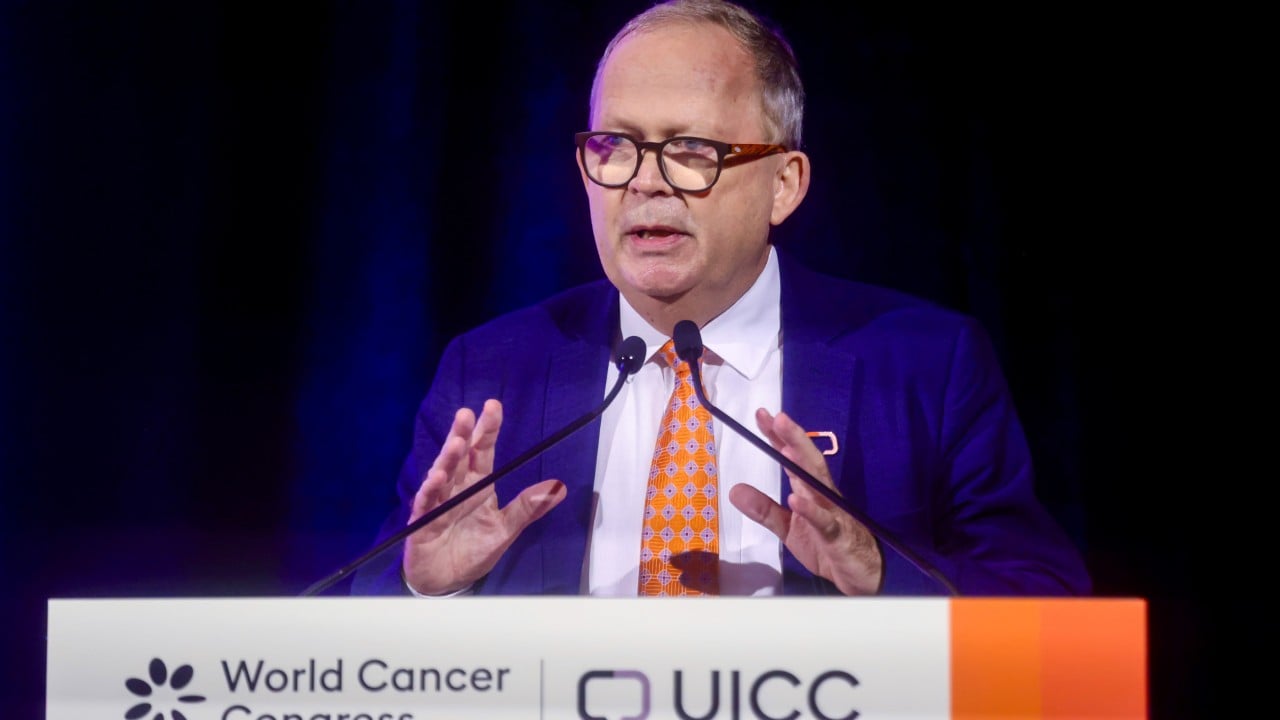
For decades, global medical breakthroughs were expected to emerge exclusively from Boston, London, or Geneva. But international health leaders are suddenly looking toward southern China. When Cary Adams, chief executive of the Union for International Cancer Control, stepped up to discuss global oncology trends, he pointed squarely at Hong Kong. The city isn't just treating patients locally; it is quietly building a reputation as a heavy hitter in cancer research and public health policy.
If you look past the dense skyscrapers and financial headlines, a massive shift is happening in local clinical laboratories and hospitals. Over the past thirty years, Hong Kong has slashed its cancer-related death rates by more than 40 percent. That is not a minor statistical blip. It represents decades of targeted public health interventions, modern clinical trials, and aggressive tobacco control that international bodies now hold up as a gold standard.
What the Global Health Community Is Missing
Most commentators focus purely on drug discovery, missing the bigger picture. Real progress requires an entire ecosystem working in tandem. Hong Kong’s recent hosting of the World Cancer Congress put its medical infrastructure under a microscope. International observers noticed something unexpected: the city combines Western-standard clinical governance with lightning-fast Asian trial recruitment capabilities.
When you test novel therapies for cancers prevalent in Asia—such as nasopharyngeal or liver cancers—speed and patient volume matter. Hong Kong hospitals handle massive patient flows while maintaining meticulous electronic health records. Researchers can track outcomes across millions of residents over decades. That kind of data density attracts multinational pharmaceutical firms and top-tier academic investigators who want reliable, fast trial results.
The Real Driver Behind the Numbers
Data from the city's Health Bureau shows that early screening initiatives and tobacco regulation are doing the heavy lifting. Health minister Lo Chung-mau noted that aggressive smoke-free policies have kept smoking rates among the lowest in the developed world. Cary Adams specifically praised this track record, pointing out that preventing cancer through tobacco control is infinitely more effective than treating advanced tumors later.
At the same time, institutions like Queen Mary Hospital and the Prince of Wales Hospital are pushing boundaries in surgical precision and early blood-based multi-cancer detection tests. While some local practitioners remain cautious about relying solely on liquid biopsies without deeper validation datasets, the momentum is undeniable. Doctors are deploying artificial intelligence in radiology and expanding ambulatory care facilities to catch malignancies before symptoms even manifest.
The Road Ahead for Local Oncology
Challenges still exist. An aging population means absolute case numbers will naturally climb, straining even the most efficient public healthcare networks. Doctors warn that closing the gap on timely diagnoses in primary care clinics remains an ongoing battle.
Yet, the influx of international attention changes the game. Funding follows prestige, and prestige follows tangible results. Hong Kong has proven it can move the needle on mortality rates while pioneering public health rules that other global mega-cities struggle to enforce.
Keep an eye on how local labs integrate multi-cancer early detection tools over the next few years. If they crack the code on reliable, population-wide early screening, the rest of the world won't just be watching—they'll be copying.