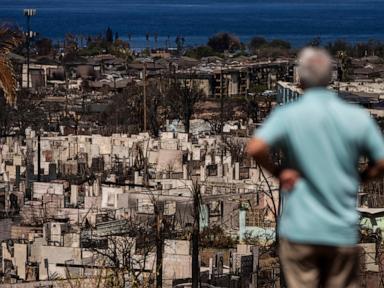
When a modern wildfire tears through a populated community, it doesn't just burn wood, brush, and grass. It vaporizes cars, electronics, building materials, and old paint, creating a toxic chemical soup that settles into the ash and dust long after the flames go out. A landmark study published in the Proceedings of the National Academy of Sciences reveals that residents living near the 2023 Maui wildfires carry elevated concentrations of heavy metals in their bodies, and those toxins are directly linked to reduced breathing capacity.
University of Hawaii researchers tracked data from roughly 1,400 Maui adults six to eighteen months after the tragic August 2023 blazes. What they found shatters the comforting illusion that environmental danger disappears the moment the smoke clears. Antimony levels among participants clocked in nearly forty times higher than standard U.S. biomonitoring data, alongside concerning elevations in arsenic, cadmium, lead, copper, and molybdenum. If you've been wondering about the invisible fallout of climate disasters, this study gives us hard proof that the body keeps the score long after the headlines fade.
Why Urban Wildfire Smoke Is Different
We're used to thinking of wildfires as natural, rural events. But the catastrophic fires in Lahaina and Kula were wildland-urban interface disasters. When modern structures burn, the chemical profile changes drastically.
You're dealing with a complex mixture of synthetic materials, heavy metals from electronics, and legacy contaminants trapped in old soil. The University of Hawaii research team discovered distinct geographic exposure patterns across the island rather than a single uniform cloud.
- Lahaina: Residents showed distinct chemical signatures featuring elevated concentrations of arsenic and cadmium.
- Wailuku and Kahului: Testing revealed the highest median concentrations of copper, iron, and molybdenum, alongside some of the highest rates of abnormal lung function measures.
- Kula and Kihei: These regions exhibited completely different metal profiles, showing that post-disaster contamination landscapes depend heavily on local geology, historic land use, and specific burn debris.
This matters because emergency response planning usually focuses on immediate evacuation and active smoke inhalation. Public health agencies rarely monitor human biomonitoring metrics six months to a year down the line. This study proves we need a complete shift in how we handle post-disaster environmental surveillance.
The Direct Impact on Breathing Capacity
It's one thing to find heavy metals in urine samples; it's another to prove it harms human physiology. The research team ran pulmonary function tests alongside the biological sampling and found clear associations between specific metal mixtures and diminished breathing capacity.
When you inhale fine particulate matter laced with antimony, arsenic, and lead, those particles lodge deep in your respiratory tract. Over months, the body struggles to clear them, triggering chronic inflammation and airway restriction.
People living through these disasters aren't just dealing with situational stress or grief—they're fighting an invisible physical burden. And it's not isolated to Hawaii. As climate change intensifies wildland-urban fires from California to Canada, communities everywhere face the same lingering hazard.
What You Can Do to Protect Yourself
If you live in a wildfire-prone area or find yourself returning to a disaster zone during cleanup, you can't rely on basic assumptions about air quality. Take practical precautions based on what science tells us about lingering toxins:
- Treat ash as toxic waste: Never use leaf blowers, brooms, or dry sweeping on post-wildfire ash. That stirs up heavy metals and micro-particles straight into your breathing zone. Always wet down surfaces first.
- Upgrade your personal protection: Basic dust masks won't stop ultrafine particles or heavy metals. Wear certified N95 or P100 respirators whenever you're handling debris or cleaning up ash around properties.
- Filter your indoor air: Invest in HEPA air purifiers and keep windows closed when outdoor air quality drops or during heavy neighborhood cleanup phases.
- Participate in local health registries: If your community establishes a biomonitoring or long-term health study following a disaster, get involved. Early data collection helps researchers secure funding for long-term medical care and policy changes.
We have to stop treating environmental disasters as isolated events with neat end dates. The ash settles, but the biology remains. Protecting public health means staying vigilant long after the smoke clears.