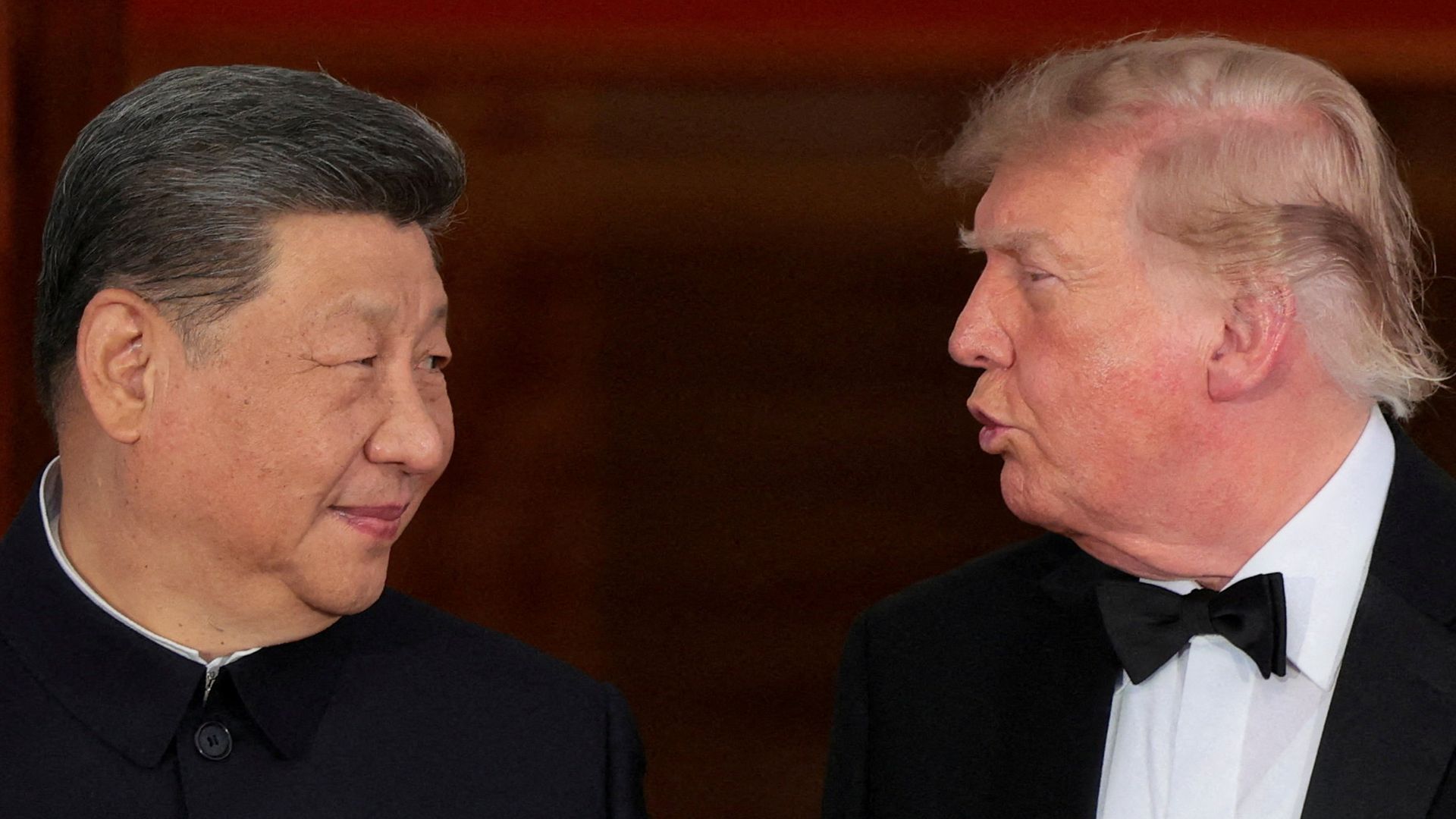
Donald Trump doesn't do traditional diplomacy. When he hosted Chinese leader Xi Jinping at the White House, the conversation veered into territory that left defense analysts scratching their heads. US Ambassador to China David Perdue revealed that Trump casually asked Xi if Beijing wanted to buy American armaments.
Think about that for a second. The leader of the United States—a country locked in a fierce strategic and technological rivalry with Beijing—offered to sell military hardware to the world's primary rising military competitor.
If you're wondering why this happened, you have to look at how Trump views foreign policy. It's a business transaction.
The Real Motive Behind the Pitch
Ambassador Perdue dropped this detail on Fox News while defending the administration's stance on Taiwan. Beijing's leadership frequently bristles at Washington's ongoing military sales to Taipei. When Xi pressed Trump on the issue during their White House meeting, Trump reportedly flipped the script.
Instead of getting bogged down in diplomatic platitudes about sovereignty or regional stability, Trump turned it into a sales pitch. He pointed out that the US sells arms to partners all over the globe, so why not Beijing?
It's classic commercial pragmatism masking complex geopolitical friction. Trump looks at a multi-billion-dollar defense manufacturing base and sees a product that needs moving. But applied to a superpower adversary, it crosses into surreal territory.
What Beijing Actually Said
You can imagine the reaction in Zhongnanhai when the offer landed. China's state media and diplomatic corps have spent decades building an indigenous defense industry specifically designed to counter American military dominance. They aren't looking to stock their aircraft carriers with Lockheed Martin or Raytheon parts.
While details on Xi's exact verbal reply remain sparse, the notion that China would integrate US arms systems into its People's Liberation Army is absurd on its face. Beijing wants technological independence, not foreign dependency.
Yet, the offer highlights a recurring theme in Trump's foreign policy playbook: everything is negotiable, and every geopolitical problem has a commercial angle.
The Taiwan Tension Factor
Let's not lose sight of why the conversation started. Taiwan remains the most dangerous flashpoint between Washington and Beijing. Xi came to the table pushing hard against American arms flows to the self-governing island.
Perdue insisted that Trump remains firm on the "One China" policy while backing the Taiwan Relations Act. But offering weapons to the buyer threatening Taiwan is a dizzying pivot. It trivializes an existential security dilemma into a catalog order.
Critics will call it reckless. Supporters will call it unorthodox negotiating. Either way, it exposes the transactional core of modern American statecraft.
Where This Leaves US-China Relations
We're living through a weird era of great power competition where summit meetings resemble corporate merger talks. Trump is banking on personal rapport and trade leverage to manage tensions with Xi Jinping.
Will this pitch change any military calculations in Beijing? Not a chance. The Chinese military is entirely focused on modernizing its own forces and projecting power across the Indo-Pacific.
If you want to understand where superpower relations are heading, ignore the grand speeches. Look at the balance sheets, the tech export controls, and the raw economic friction driving both nations apart. A casual offer to sell weapons across the Pacific won't bridge that gap, but it certainly makes for an unforgettable headline.