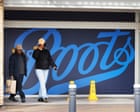
High street institutions rarely stay put. When private equity gets its hands on a heritage brand, you can set your watch for the eventual spin-off, sale, or structural overhaul. Right now, the pharmacy giant Boots is moving toward a $9bn sale to the Canadian branch of the billionaire Weston family. Sycamore Partners, which grabbed the wider Walgreens Boots Alliance network last year, wants to cash out. If the deal crosses the finish line, Canada's billionaire grocery dynasty will stage a major retail comeback on British soil just years after unloading Selfridges for £4bn.
People tracking retail movements want to know why this deal matters. The short answer is scale and stability. Boots operates 1,800 stores across the UK and employs roughly 51,000 people, anchoring town centers from Nottingham to Cornwall. It is not just a chemist selling prescriptions anymore. It is a beauty destination and a primary provider for weight-loss injections. Financial health looks solid too, with recent annual revenues hitting £7.5bn and pre-tax profits jumping 25% to £337m. Private equity firms love cash flow like that, but they also love liquidity. Sycamore tried to offload Boots to Australia's Sigma Healthcare earlier this summer in a $10bn arrangement that fell apart. Now, the Westons are stepping up.
Understanding the Weston Retail Empire
You cannot look at this acquisition without examining who the Weston family actually is. In Canada, they run Loblaws and Shoppers Drug Mart, dominating both grocery and pharmacy sectors. Over in the UK, the separate British branch of the family holds a massive stake in Primark through Associated British Foods. Buying Boots fits their exact operational playbook. They understand high-volume, high-footprint retail environments better than almost anyone else in global commerce.
When the Westons sold Selfridges for £4bn back in 2022, many assumed they were pulling back from flagship British retail entirely. This potential $9bn Boots deal proves the opposite. They are simply trading luxury department stores for mass-market essentials, healthcare, and cosmetics. Pharmacy retail provides a defensive moat against economic downturns. People need prescriptions and basic toiletries regardless of inflation rates or cost-of-living squeezes.
The Private Equity Merry-Go-Round
Boots has experienced a dizzying carousel of ownership over the last two decades. Founded way back in 1849 in Nottingham by John Boot, the company grew from a local herbalist into a national titan. Then came the corporate era. Alliance Unichem merged with it in 2006. Private equity giant KKR bought it in 2007 in a heavily leveraged buyout. Walgreens took a stake in 2012 before completing full ownership by 2014. Sycamore took the parent group private in a $23.7bn transaction last year and immediately carved the empire into five standalone pieces to make selling easier.
Staff and retail analysts often view these private equity shuffles with skepticism. When a massive fund takes over, questions around job security and store footprint immediately follow. Boots employs about 6,000 people at its headquarters in Beeston near Nottingham alone. While the company recently posted strong numbers fueled by beauty products and modern weight-loss treatments, new ownership always brings strategic shifts. Private equity exists to extract value and generate returns for its limited partners, not to preserve high-street heritage for its own sake.
What Happens Next for Shoppers and Staff
If the deal goes through as expected, don't expect dramatic overnight changes on the shop floor. You will still walk into your local branch for prescriptions, toothpaste, and skincare. However, strategic direction at the corporate level will shift toward maximizing supply chain efficiency. The Westons know how to squeeze margins out of vast retail networks. They run massive distribution hubs and inventory systems in North America that could influence how Boots manages its massive UK footprint.
Keep an eye on digital health services and store modernization. Traditional pharmacies face mounting pressure from online competitors and rising operational costs. Whichever family or fund owns Boots has to answer one fundamental question: how do you keep 1,800 physical locations profitable when consumer habits keep shifting online? The Weston family has the retail muscle to answer that, but the execution will define the next chapter of British retail history.