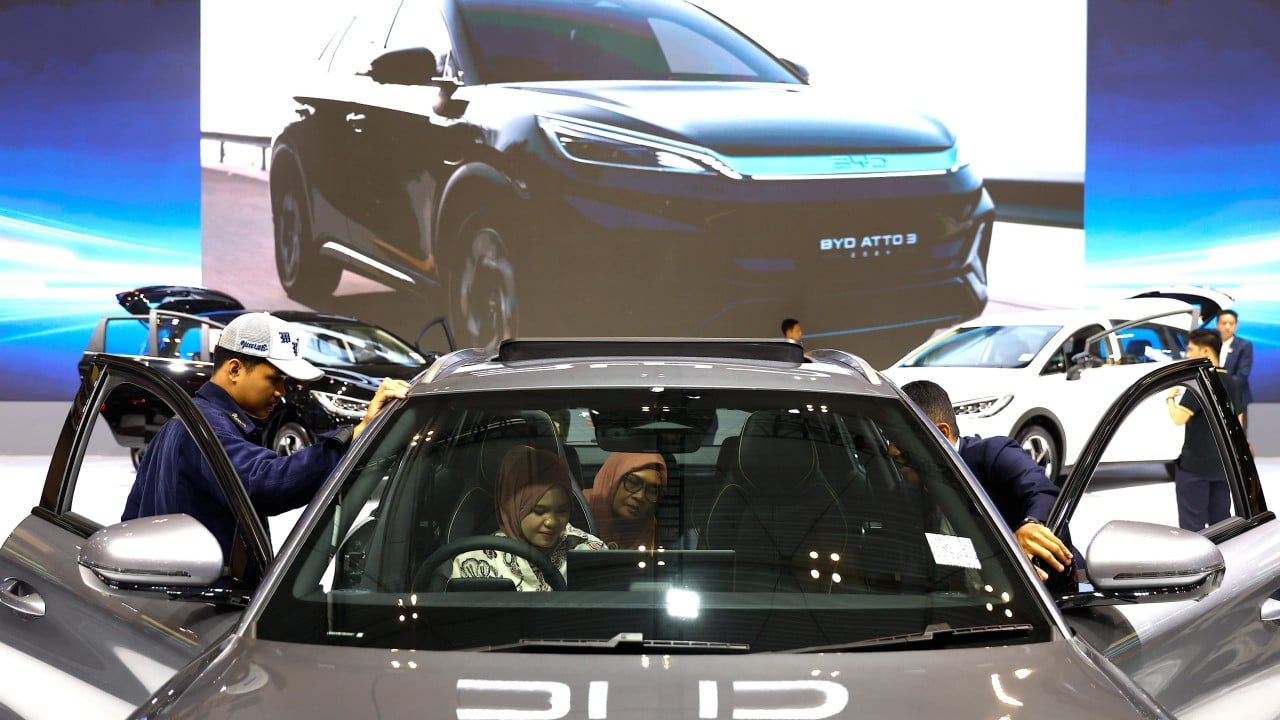
Chinese automakers aren't just dipping their toes into international waters anymore. They're making a massive splash. Industry projections show Chinese car companies are eyeing a staggering 12 million overseas vehicle sales in 2026. Just a few years ago, numbers like that sounded completely absurd. Now, it's the reality of a fiercely executed global expansion strategy.
If you look closely at how the domestic market has slowed down, the overseas push makes total sense. Cutthroat price wars at home have squeezed profit margins until they basically vanished. To survive and thrive, heavyweights like Chery, BYD, and Geely had to look outward. They built a massive machine designed to conquer foreign buyers with tech-heavy vehicles, competitive pricing, and surprisingly quick delivery times.
The Numbers Behind the Global Shift
Let's talk scale. Back in 2022, China exported around 3 million cars. Fast forward to 2025, and total vehicle exports hit 7.09 million units, marking a massive 21.1 percent year-on-year jump. Out of that volume, new energy vehicles—batteries and hybrids combined—accounted for 2.61 million units, or roughly 37 percent of total auto exports.
For 2026, the ambitions are dialed up to eleven. Chery Automobile, long a powerhouse in international markets, is targeting an export volume exceeding 1.5 million vehicles. BYD isn't far behind, setting its sights on 1.3 million overseas sales. Meanwhile, Geely plans to boost its exports by 52 percent to reach 640,000 units.
These aren't just random shipping containers dropped off at foreign ports. Chinese automakers are playing the long game by setting up local manufacturing hubs. Leapmotor, for instance, expects its first overseas plant in Spain to start production in October, aiming for 100,000 to 150,000 international sales. BYD is setting up facilities in Thailand, Brazil, Hungary, and Turkey. They are planting roots where they sell.
Navigating the Tariff Wall
Going global isn't a smooth ride, and ignoring the obstacles is a recipe for disaster. Western and emerging markets aren't just rolling out the red carpet. They are putting up massive trade barriers to protect domestic manufacturing bases.
Take Mexico and Brazil as prime examples. Mexico ramped up its tariff rate on Chinese autos to 50 percent, while Brazil is implementing a 35 percent tariff rate on new energy vehicles. Traditional auto giants in Europe and North America are also sounding the alarm. Ford CEO Jim Farley recently pointed out that Europe is feeling the pressure, urging caution as Chinese brands scale up local assembly operations to bypass direct import penalties.
Building cars inside the target markets is the direct antidote to these tariffs. When you manufacture locally, you dodge import duties and dodge political backlash. It transforms an imported luxury into a locally built utility that creates jobs in the host country.
What This Means for the Rest of the World
If you're buying a car in Southeast Asia, Latin America, or parts of Europe, your options have completely transformed. You aren't just choosing between legacy Japanese, Korean, and American brands anymore. Sleek electric SUVs loaded with smart infotainment systems and affordable price tags are sitting right next to them on the showroom floor.
Traditional automakers missed a beat by assuming software-defined vehicles were years away from mass adoption. Chinese firms moved fast, iterated faster, and capitalized on the transition.
Expect tougher competition, localized price wars in foreign markets, and even more joint ventures as legacy brands try to license Chinese EV platforms rather than build them from scratch. The 12 million target for 2026 isn't just a milestone. It's a loud wake-up call for the entire global automotive industry.