Geopolitics rarely moves in a straight line. Right now, a glaring chasm sits right between Washington and London over what actually happened outside an active military airfield in Gloucestershire.
US Secretary of State Marco Rubio jumped on television to claim that a foreign actor was clearly pulling the strings behind a suspected bomb plot near RAF Fairford. Donald Trump chimed in too, complaining that the British authorities should never have let the suspects walk out on bail.
Meanwhile, back in the UK, counter-terrorism police released those exact same five suspects because initial forensic checks showed no actual explosives inside their white vans. It's a striking contrast. On one side of the Atlantic, officials point to state-sponsored proxies and hostile foreign interference. On the other, investigators sift through an evolving security puzzle while managing strict legal evidentiary rules.
What Sparked the Alarm at RAF Fairford
The whole ordeal kicked off when a local farmer spotted three suspicious white vans crawling toward the perimeter of RAF Fairford. This isn't just any ordinary runway. It's a strategic British airbase heavily utilized by US bombers, making it a high-value symbol and a frequent lightning rod for international tensions.
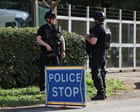
Police swarmed the area, detained five British nationals in their early twenties from London, and deployed bomb disposal robots. Naturally, alarms bells went off everywhere. Iran's Revolutionary Guards had previously labeled the base a legitimate target, creating an instant assumption that Tehran's fingerprints were all over the operation.
Yet, as often happens in modern security investigations, initial panic outpaced hard proof.
Why Washington and London Diverge on Bail and Blame
Rubio's bold assertion that a foreign actor drove the plot rests heavily on the current geopolitical climate, where state-backed sabotage and proxy operations across Europe have surged. Intelligence agencies track these threats daily. When an installation housing strategic assets faces a potential breach, American officials lean toward worst-case assumptions.
British counter-terrorism head Laurence Taylor stressed that investigators are keeping an open mind. They are looking at whether proxies or individuals were knowingly or unknowingly working for a foreign state.
Here is the friction point. In the British legal system, police cannot keep suspects indefinitely without viable material evidence or formal charges. Once the initial examination of those vans failed to yield actual explosive materials, holding the suspects legally untenable under UK statutes forced their release on strict bail conditions.
Trump and Rubio view that decision through a purely strategic lens, arguing that caution should override procedural releases when national security hangs in the balance. London operates under the rigid constraints of criminal procedure, where public pronouncements require court-ready proof rather than circumstantial indicators.
The Real Danger of Proxy Warfare Confusion
We are living through an era where gray-zone warfare makes attribution messy. Hostile states routinely use local, low-level operatives or unwitting dupes to scout locations, test perimeters, or conduct small-scale nuisance attacks. This keeps plausible deniability intact while draining resources from domestic defense forces.
If Iran or another adversary did indeed task these young men with casing RAF Fairford, it fits a broader pattern of recent European incidents. From suspected arson campaigns against sensitive infrastructure to rogue drone flights near diplomatic buildings, foreign actors love operating in the shadows.
Yet rushing to definitive conclusions before forensic teams finish their work creates a dangerous information loop. It weaponizes an ongoing police inquiry for political posturing before the facts are pinned down.
Navigating the Next Phase of the Investigation
The release of those five men on bail doesn't mean the file is closed. Stringent conditions govern their daily movements, and digital forensics take weeks, not hours. Encrypted chats, financial trails, and communication metadata will ultimately dictate whether this was a serious state-directed operation or a botched amateur scouting mission driven by online radicalization.
Keep a close eye on the actual charge sheets rather than press conferences from foreign capitals. True security policy relies on evidence, not immediate outrage.