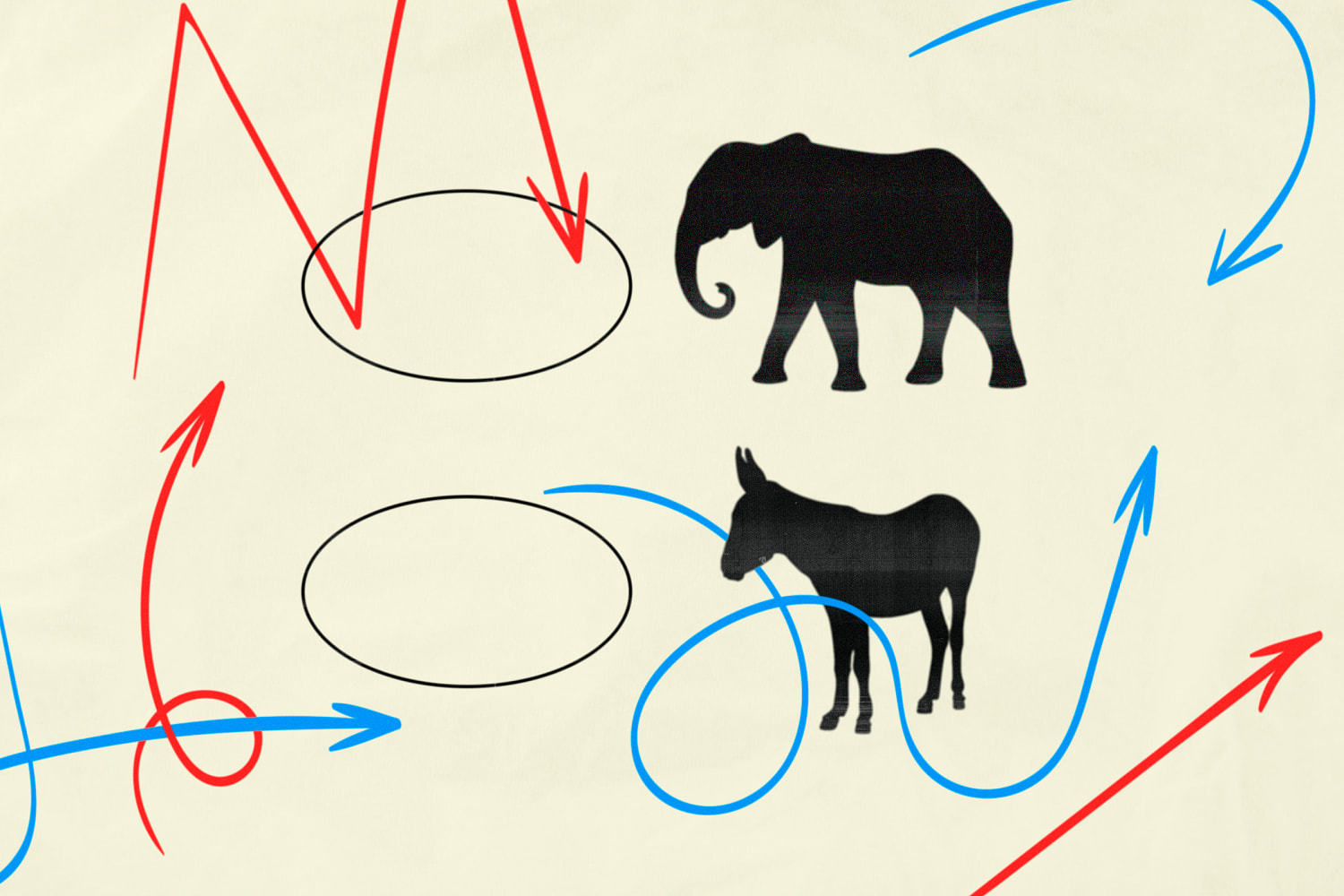
Elections aren't won by party loyalists shouting from the rooftops. They're decided by the exhausted folks sitting at kitchen tables, staring at grocery receipts, wondering why everything costs twice as much as it did four years ago. If you want to understand how voters are weighing their options right now, stop listening to party operatives and look at the real pressure points driving public frustration.
The 2026 midterm cycle isn't shaping up like a standard partisan brawl. Major polling aggregators, including Decision Desk HQ, show that undecided blocks and independent voters hold significant weight as campaigns ramp up. But numbers on a spreadsheet don't capture the sheer fatigue felt across the country. People are tired of being treated like props in a permanent campaign.
The Cost of Living Reality Check
Inflation isn't just a political buzzword. It's a physical weight on households. When people talk about economic policy, they aren't debating abstract theories about tariffs or interest rates. They're trying to figure out how to pay for healthcare and groceries without maxing out another credit card.
Independent research and national surveys consistently show that cost-of-living concerns completely dominate voter priorities. When voters feel squeezed, their loyalty evaporates. Parties that fail to address everyday financial strain directly lose credibility instantly. You can't talk your way out of a high grocery bill with optimistic macroeconomic projections.
The Trust Gap and Candidate Brands
Voters aren't just picking between parties anymore; they're wrestling with massive brand toxicity on both sides. National figures carry heavy baggage that alienates moderates. Many swing voters find themselves caught between competing frustrations. They dislike one party's economic management, but they distrust the alternative's cultural trajectory.
This friction creates a massive pool of movable voters who feel politically homeless. They're looking for competence, local responsiveness, and straight answers. Instead, they get endless polarization designed to generate clicks and donations.
Beyond the Usual Talking Points
While cable news fixates on endless Washington drama, local issues cut through the noise. Issues like regional infrastructure strain, local housing affordability, and emerging economic shifts—such as community pushback against massive data center developments—matter deeply to local communities.
Voters notice when their immediate neighborhoods change faster than their local services can handle. These practical concerns often outweigh grand national narratives when someone finally steps into the voting booth.
What to Watch As Midterms Approach
If you're trying to decode where the political winds are blowing, ignore the daily outrage cycle. Watch how candidates talk about pocketbook issues. Watch whether they acknowledge real household stress instead of glossing over it with talking points.
The voters who haven't made up their minds yet are holding all the cards. They aren't a monolith, and they don't owe allegiance to any political machine. They want proof that someone actually understands their daily grind. Until campaigns figure that out, those undecided numbers will keep telling a story of deep, persistent skepticism.
Check out Wikipedia's 2026 US Elections Overview for aggregate polling data and race trackers.