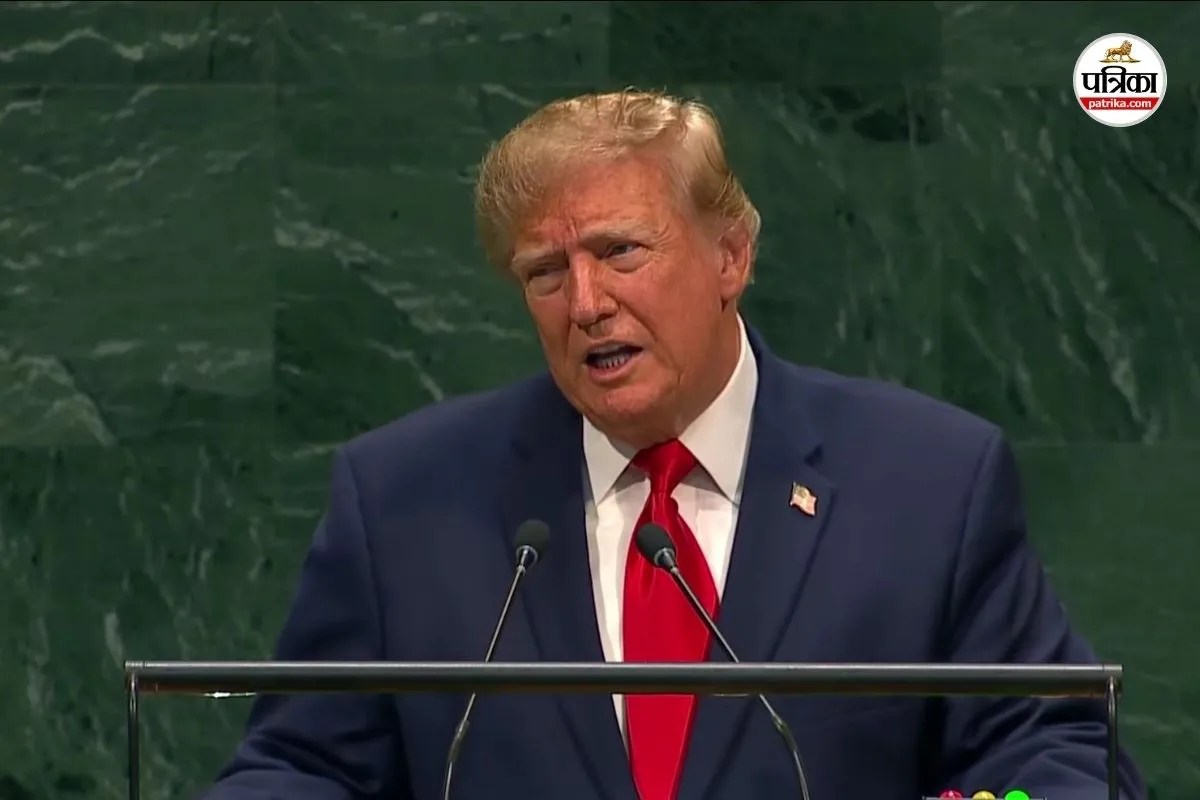
President Donald Trump promised to spend the final sprint of the 2026 midterm elections barnstorming thirty-five of the most competitive battleground districts in the country. He talked a big game about hitting swing seats where every single vote decides the balance of power in Washington. But when you look at his actual calendar for October, something doesn't add up. Instead of heading into razor-thin swing districts, his campaign tour kicks off in deep red strongholds like Alabama, Oklahoma, and Nebraska.
When a politician tells you they're focusing on swing turf and then pivots straight to places they already won by thirty points, you have to ask what's really going on. Meanwhile, you can find other events here: Why Russia's New Strategy Changes Everything For Ukraine Right Now.
The Reality Behind the Safe Red State Rallies
Let's be honest about political scheduling. Time is the one resource a sitting president or party leader cannot buy more of. Every hour spent flying to Durant, Oklahoma, or Mobile, Alabama, is an hour not spent in a competitive congressional district where independent voters might actually be up for grabs.
So why make the trip? Political strategists on both sides of the aisle are watching these stops very closely. To explore the full picture, check out the recent report by Reuters.
The official line from the Republican National Committee is simple math and media market spillover. Events in places like Mobile, Alabama, reach right into the Florida Panhandle and neighboring media markets where high-turnout conservative voters can help lift down-ballot races. It is about energizing a massive regional base.
However, local and national analysts point to a much more defensive reality. Voter enthusiasm in traditional Republican safe havens isn't looking as bulletproof as party leaders want you to believe. When a president has to fly into a deep red state to prop up local gubernatorial or senate candidates, it signals that local dynamics are shaky.
Take Oklahoma, for instance. Republican candidate Mike Mazzei has found himself locked in a surprisingly competitive race against Democratic House Minority Leader Cindy Munson. Down in Alabama, former Democratic Senator Doug Jones is running a fierce campaign for governor against Republican Senator Tommy Tuberville. And in Nebraska, a high-profile senate race featuring Republican Senator Pete Ricketts facing off against Dan Osborn has national Democrats smelling blood in the water.
Damage Control Versus Expansion
Campaigns basically have two modes when the clock winds down: expansion or base mobilization. Expansion means trying to win over undecided voters in purple territory. Base mobilization means panic-checking your own yard to make sure your loyalists don't stay home on election day.
Trump's decision to touch down in Oklahoma, Alabama, and Nebraska tells you which mode his camp is really in.
"He's going to the deepest red portions to make sure that they are still on his side and that they will in fact come out for the election," notes political science expert Rachel Shortle.
If core conservative voters stay home because they're frustrated, distracted, or apathetic, even safe seats start looking vulnerable. Midterm elections are almost entirely about turnout models, not changing minds. When the national political environment shifts against the party in power, complacency becomes a fatal poison.
What This Means for the Midterm Balance of Power
Democrats are fully bullish about their chances of capturing seats in both the House and the Senate this November. They argue that Republicans are being forced to spend precious resources and presidential star power shoring up what should have been safe firewalls.
When you have to defend your own firewall, you aren't scaling the enemy's walls.
At the same time, Republican operatives insist that a fired-up base in red states creates a national momentum wave that ripples outward. They point out that rallies generate massive media coverage, free airtime, and small-dollar donations that fund field operations nationwide.
The truth probably sits right in the middle. Trump's rallies are part ego-driven base adoration and part emergency plumbing work for regional campaigns that are bleeding enthusiasm.
If you're watching the 2026 midterms closely, don't just look at the polls in the marquee swing states. Keep an eye on turnout numbers in places like Grand Island, Nebraska, and Durant, Oklahoma. If the base shows up in crushing numbers, the narrative changes overnight. If turnout drops even a little bit, those safe red state visits will be remembered as the moment the GOP realized it was playing defense everywhere.