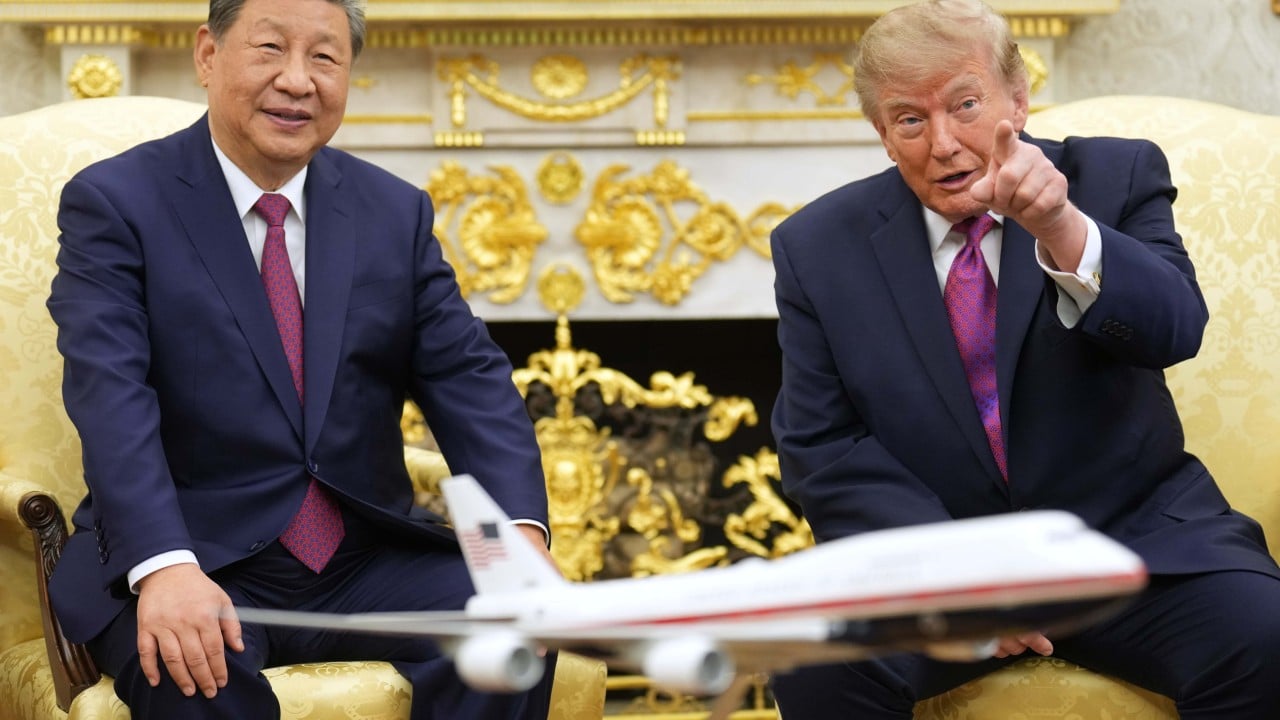
When Donald Trump brushes off high-stakes geopolitical questions with a casual "right now, it's fine," the world usually holds its breath. That exact phrase defined the aftermath of his latest high-profile meeting with Chinese President Xi Jinping. Amid grand state tours, photo ops at the National Archives, and endless handshakes, the status of Taiwan loomed larger than any other unresolved friction point.
Xi wanted an explicit commitment from Washington to oppose Taiwanese independence, aiming to lock the US into a rigid framework. Trump offered a shoulder shrug instead. He treated the most volatile flashpoint in modern geopolitics like a minor scheduling hiccup. But beneath that breezy exterior lies a shifting reality that should worry anyone tracking global stability.
What Actually Happened Behind Closed Doors
Most people assume summits between global superpowers yield massive text treaties or sudden shifts in military policy. Reality is much messier. The recent Washington meeting featured plenty of pageantry and very little structural policy breakthrough. Trade truce extensions and vague nods toward artificial intelligence safety took center stage, while the core issue of Taiwan was pushed into a grey zone.
Beijing has ramped up pressure, calling on the White House to halt billions in approved arms sales. Those shipments remain jammed in administrative limbo, treated by the administration as convenient bargaining chips for broader trade concessions. When pressed on whether the US would pivot away from its long-standing strategic ambiguity, Trump offered zero clarity. He chose to look away rather than pick a fight on camera.
The Cost of Strategic Ambiguity
For decades, the official US stance on Taiwan relied on calculated silence. Washington provided defensive weapons while refusing to explicitly state whether it would intervene militarily in a conflict. That system kept the peace for years.
Trump's casual dismissal throws a wrench into that delicate balance. If an American president treats the defense of a democratic island as an afterthought or a flexible chip in a real estate-style negotiation, deterrence weakens. Beijing notices every hesitation. Lawmakers on Capitol Hill are already sounding alarms, with Senate Democrats demanding the immediate delivery of pending security assistance packages that Congress already signed off on.
Why the Status Quo Won't Hold
You can't coast on "it's fine" forever when dealing with rival militaries operating yards apart in the Taiwan Strait. Xi Jinping views the incorporation of Taiwan as an unyielding historical objective. By treating the issue as a temporary inconvenience, the White House risks inviting miscalculation.
If Beijing interprets Washington's indifference as a green light to tighten the economic and naval noose around Taipei, the crisis will escalate rapidly long before anyone has time to react.
Keep a close eye on the upcoming diplomatic meetings planned for later this year. If the arms sales remain frozen and the rhetoric stays ambiguous, the illusion of safety will shatter faster than you think. Real security doesn't come from a photo-op on the White House lawn. It comes from clear, unwavering red lines that neither side dares to cross.