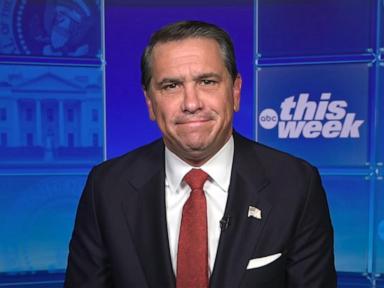
When Attorney General Todd Blanche stepped up to defend the Trump administration's decision to ban specific news outlets from the White House, he leaned on a familiar line. Being inside the executive complex, he argued, is a privilege rather than a constitutional right.
It sounds tidy. It also glosses over decades of federal court precedent.
The administration started barring reporters from CNN, MS Now, and Politico in mid-September, citing what officials branded as inaccurate and one-sided reporting. When pushed on television about concrete examples of errors, Blanche brushed the question aside, arguing instead that the constant negative coverage of the president speaks for itself.
You can't just wave away constitutional boundaries with a clever phrase. Once a presidential administration opens the doors and establishes a formal press-access system, the rules change entirely. Federal judges have repeatedly ruled that officials don't get unbridled discretion to kick out journalists just because they dislike the coverage or the political viewpoint.
What the Courts Actually Say About Press Access
The core tension here sits squarely between executive authority and First Amendment protections.
When U.S. District Judge Timothy Kelly issued a temporary restraining order forcing the administration to restore press credentials for the banned organizations, he didn't buy the government's sweeping national security justifications. He noted that the administration offered very little evidence showing that routine reporting posed a genuine security threat, ruling that the credentials had been stripped without proper due process.
That distinction matters. While nobody has a birthright to a permanent hard pass or a seat in the White House briefing room, the government cannot use credentialing as a weapon to punish critical reporting. When officials start picking and choosing who gets to cover the presidency based on whether a network's tone is flattering, they cross a legal line that courts have spent decades defending.
The Air Force One Battleground
The conflict didn't stop at the gates of the executive mansion. Even after the federal judge ordered credentials restored, CNN journalists found themselves blocked from the press pool traveling aboard Air Force One.
Blanche defended that move too, claiming it's entirely normal for the White House to control who boards the presidential aircraft.
He's partially right on the mechanics. Presidents have always managed the passenger manifest on Air Force One. But the broader context here is anything but routine. Historically, the selection of correspondents traveling in the rotating press pool was managed collaboratively by the White House Correspondents' Association and broadcast networks. Bypassing that system to exclude specific outlets in the middle of an active legal dispute looks less like standard scheduling and more like retaliation.
Why This Fight Is Happening Right Now
Timing tells the real story. This high-stakes clash over media access is playing out with the federal midterms just weeks away, and the administration facing a tough political environment.
Public trust in traditional media outlets sits at historic lows, giving the administration plenty of room to lean into anti-press sentiment with its political base. Labeling critical coverage as a national security risk isn't just a legal argument in a courtroom—it's a calculated messaging strategy.
When top officials claim that one-sided news compromises national security because foreign leaders rely on U.S. media, they are trying to reframe political friction as an existential threat. It's a heavy-handed attempt to justify a system where the government decides what counts as acceptable reporting.
The First Amendment was written precisely because powerful officials get angry when people write negative things about them. As former presidents have pointed out in the past, the temptation to shut out critics is always there. Resisting that temptation is what separates a functioning democracy from a managed information state.
Watch how the federal courts handle the permanent injunction hearings in the coming weeks. That ruling will determine whether the administration's new definition of press privilege holds up against established constitutional law.