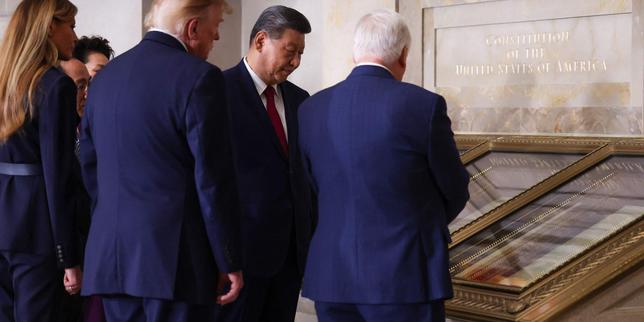
When heads of state fly halfway across the globe for a high-stakes summit, people expect breakthroughs. Instead, the recent Washington visit by Chinese President Xi Jinping turned into a masterclass in pageantry with very little policy to show for it. If you look past the red carpets and the White House banquets, the whole event exposed a glaring gap in how modern presidential administrations handle geopolitical power.
You're looking at a classic case of what critics call "diplotainment." Donald Trump rolled out the ceremonial stops, gave Xi a tour of a newly built South Lawn helipad, and praised granite slabs. But behind closed doors, critical issues like advanced artificial intelligence, trade restrictions, and ongoing security flashpoints were left largely unaddressed. When substance takes a back seat to optics, everyone loses.
The Problem With One-on-One Showmanship
Trump has always favored the personal touch. He wants to cut deals face-to-face, operating like a corporate executive rather than a traditional diplomat. But international relations with a rising superpower don't work like real estate negotiations. When you treat a summit as an exercise in personal charm rather than structured diplomacy, you signal desperation.
Beijing reads those signals instantly. Chinese officials recognized that Washington was eager for a win, so they played hardball. The results of the meeting tell the story clearly. Aside from extending a temporary tariff truce, the summit produced virtually no binding agreements. Artificial intelligence regulation—dubbed "super intelligence" by Trump—was basically brushed aside with an agreement to leave things as they are, despite urgent warnings from tech experts about unmanaged risks.
Why Allies and Leverage Matter More Than Red Carpets
One of the biggest missteps during Xi's visit was the complete sidelining of America's broader alliance network. Washington's true economic and geopolitical strength has never been just one man in the Oval Office; it is the coalition of global partners standing alongside him.
When an administration chooses solo summitry over coalition-building, it weakens its own hand. Former diplomats pointed out that pageantry doesn't secure rare earth minerals or deter aggressive regional ambitions. Pandas and banquets make for great television, but they don't solve supply chain vulnerabilities or manage complex military rivalries.
What Actually Works in Modern Diplomacy
If you want to understand how to handle superpower competition, look at long-term strategy instead of photo ops.
- Build coalitions: Real pressure on Beijing requires a unified front with European and Asian allies.
- Demand verifiable metrics: Don't settle for vague promises or temporary pauses on tariffs without concrete structural reforms.
- Separate style from strategy: Treat state visits as the culmination of hard bureaucratic groundwork, not the starting point.
Stop expecting grand personality matches to fix structural geopolitical clashes. Real diplomatic progress requires discipline, preparation, and a willingness to walk away when the other side offers nothing of substance.
Donald Trump welcomes Xi Jinping to US
This video provides a firsthand look at the high-profile arrival ceremony and red-carpet welcome that defined the optics of the Washington summit.
http://googleusercontent.com/youtube_content/1