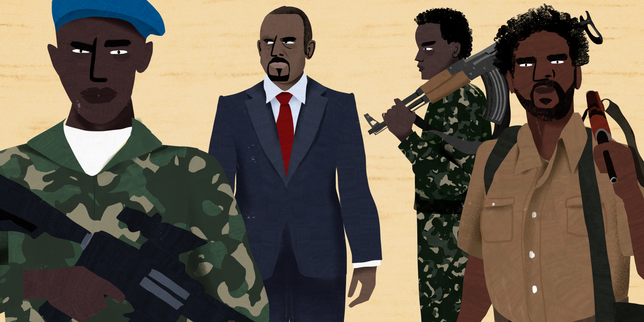
The fragile peace that supposedly ended one of the bloodiest conflicts of the twenty-first century has completely shattered. On September 23, 2026, the silence over northern Ethiopia was violently broken. Tigrayan forces launched a sudden offensive, seizing control of the airports in Mekele, Axoum, and Shire, grounding Ethiopian Airlines flights, and opening fierce new fronts in the Afar and Amhara regions.
If you thought the 2020-2022 civil war was an isolated tragedy, you were wrong. The conflict is back, and the political map has completely inverted.
The Collapse of the Pretoria Agreement
To understand why Ethiopia is plunging back into war, you have to look closely at what went wrong with the November 2022 Pretoria agreement. That deal stopped the fighting, promised disarmament, and restored federal authority. But it left massive loopholes.
The agreement completely sidelined Eritrea and the Amhara militias. It left western Tigray under contentious occupation. It forced an incomplete disarmament process that left bitter resentment on all sides.
By 2024 and 2025, the ruling party of the Tigray region, the Tigray People's Liberation Front (TPLF), split right down the middle. Getachew Reda tried to work within the transitional framework. Hardliners led by Debretsion Gebremichael rejected it entirely, claiming Addis-Abeba was starving the region of aid and breaking its promises. By May 2026, Debretsion had seized back control of regional institutions.
The writing was on the wall. When federal forces took the strategic southern Tigray town of Alamata in late September, the diplomatic charade officially ended.
An Unlikely and Dangerous Alliance
The most shocking development in this renewed conflict isn't the return of fighting—it's who is fighting whom.
On September 20, just days before the offensive, seven distinct armed groups announced the creation of the Alliance of Ethiopian Peoples’ Survival Forces. The coalition appointed Zemene Kassie, leader of the Amhara Fano militia, as its president.
Let that sink in. The TPLF and the Fano militias spent two years slaughtering each other during the previous war. Today, they share a single, negative objective: overthrowing Prime Minister Abiy Ahmed and his Prosperity Party.
There is no unified command structure. There is no joint military headquarters. There is only a mutual enemy.
Experts point out that this strange marriage of convenience could shatter quickly if federal resistance crumbles. Historical ethnic grievances between Tigrayans and Amharas over contested land haven't disappeared. They have simply been shelved for tactical convenience.
Regional Shockwaves and Foreign Powers
Ethiopia doesn't fight in a vacuum. Its stability holds the entire Horn of Africa together. When Addis-Abeba bleeds, the surrounding region catches pneumonia.
Accusations are already flying across borders. The federal government in Addis-Abeba accuses longtime rival Eritrea of funding and coordinating the new insurgent alliance. Asmara denies it, but history suggests otherwise. Isaias Afwerki has spent decades fighting the TPLF and deployed troops against them in 2020.
Meanwhile, external powers are scrambling. The United Arab Emirates has strongly condemned the TPLF offensive and reaffirmed its backing for Prime Minister Abiy Ahmed. Beijing continues to treat Addis-Abeba as its primary sovereign partner in the region, avoiding direct interference in internal ethnic factions.
For neighboring states, the threat is existential:
- Djibouti watches nervously, terrified that disruptions along the main trade corridor to its ports will strangle its economy.
- Somalia worries about separatist precedents.
- The Nile basin countries, particularly Egypt, monitor every shift in power, knowing a fractured Ethiopia alters the geopolitics of the entire river.
What Happens Next
The current escalation is no longer a localized border skirmish. It's a multi-front war that threatens to consume the entire country.
If the TPLF-led coalition successfully links up with Amhara insurgents and cuts vital supply lines like the Semera-Djibouti road, the calculus in Addis-Abeba changes overnight. Prime Minister Abiy Ahmed faces the greatest test of his political life.
Keep your eyes on the logistics routes and regional diplomatic channels over the coming weeks. If Asmara or Khartoum drop their observer status and jump into the fray, we won't be looking at localized civil unrest anymore. We'll be witnessing a regional catastrophe.