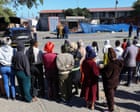
Twenty-seven lives ended in a matter of hours across two separate bloodshed incidents near South Africa's largest urban centers. Seventeen people were gunned down at a tavern in Wedela, south-west of Johannesburg, while another ten people died at a shisanyama barbecue venue in Lwandle near Cape Town. This isn't just another grim statistic in a country long accustomed to high crime rates. It's a flashing neon sign pointing to an escalating crisis of uncontrolled firepower, organized gang warfare, and systemic safety failures that ordinary citizens are forced to navigate every single day.
If you look closely at how these tragedies unfold, you realize standard police responses aren't cutting it. In Wedela, a team of eight suspects armed with AK-47 assault rifles and pistols stormed a bar, indiscriminately firing at patrons inside and outside, robbing cellphones, and torching vehicles before vanishing. In Lwandle, multiple gunmen walked into a packed local entertainment venue at 1:46 in the morning and opened fire, killing five on the spot and five more in hospitals. These aren't random, spur-of-the-moment brawls. They are military-style executions carried out with impunity, leaving communities terrified and wondering who is actually in control.
The Real Cost of Illegal Firearms in South Africa
You can't talk about mass shootings in South Africa without looking straight at the illegal weapon pipeline. Wedela and Lwandle are symptoms of a wider disease where military-grade hardware flows freely into civilian spaces. When attackers show up with AK-47s, local police forces—often outgunned, overstretched, and under-resourced—are left playing catch-up with emergency manhunts after the damage is already done.
Government data shows over 22,700 people were murdered in the 12 months leading up to June. That number is staggering. It represents entire neighborhoods living under a constant cloud of fear. When violence reaches this scale, community gathering spots like local taverns and shisanyamas transform overnight into death traps. People go out to unwind on a Saturday night, and they never come home.
Beyond the Headlines: The Pressure Mounts on Law Enforcement
Public fury is boiling over, and rightfully so. These recent massacres follow hot on the heels of another horrifying attack near Durban that left 11 dead, including a pregnant woman. Add to that the recent discovery of multiple women's bodies near Johannesburg's airport, which sparked nationwide outrage over femicide and gender-based violence, and you see a state apparatus buckling under the pressure.
Citizens are tired of hearing about task teams, specialized detectives, and empty promises of justice. Manhunts rarely bring back the dead or stop the next trigger-happy gang from opening fire. Real change requires dismantling illicit arms trafficking networks, heavily increasing intelligence-led policing in townships, and securing public spaces where families and workers gather.
What Needs to Happen Now
If you live in or follow South Africa, you know the answers won't come easy. But ignoring the structural decay isn't an option anymore. Law enforcement agencies must pivot from reactive investigations to proactive disruption. Intelligence units need to track the flow of assault rifles before they end up in neighborhood bars. Communities, local governance, and national security must work hand in hand to reclaim public spaces from heavily armed syndicates.
The bloodbath in Wedela and Lwandle proves that nobody is safe when illegal weapons flood the streets unchecked. Until leadership addresses the root causes of violent crime with actual strategy instead of rhetoric, the body count will keep climbing, and ordinary South Africans will remain trapped in the crossfire.