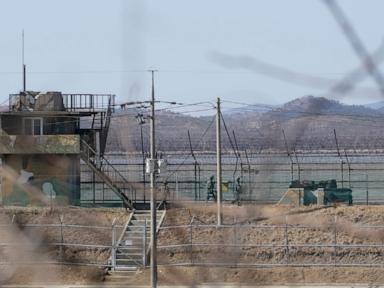
Three South Korean military officers are recovering from severe injuries following consecutive explosions inside the Demilitarized Zone, and Seoul's initial assessments point directly to North Korean landmines. It's a grim reminder that the world's most heavily armed border remains a ticking time bomb.
If you've been following inter-Korean affairs, you know border incidents rarely happen in a vacuum. Let's break down what actually happened during that patrol route operation in the western sector of the DMZ, why military analysts are pointing fingers at Pyongyang's recent fortification push, and what this means for regional security moving forward.
What Happened in the DMZ
The incident unfolded on September 21, 2026, when three South Korean military officers were establishing a patrol route near the Military Demarcation Line. Two consecutive explosions rocked the area, immediately incapacitating the personnel. Two of the officers had to be airlifted from the site by military helicopter, while a third was transported by land before being evacuated for urgent medical care at a hospital near Seoul.
While initial reports from the Ministry of Defense noted that the exact cause wasn't immediately clear, subsequent military evaluations and local media briefings painted a clearer picture. Blast marks, scattered debris, and secondary evidence found at the scene strongly indicated the presence of explosive devices. South Korean officials noted there was no historical record of South Korean or allied forces laying mines in that specific operational sector.
The North Korean Factor
Why would mines suddenly appear where troops routinely operate? The answer lies in Pyongyang's aggressive recent behavior. Over the past several months, North Korea has drastically ramped up frontline fortifications along the 248-kilometer-long and 4-kilometer-wide buffer zone.
We are talking about newly laid landmines, anti-tank barriers, and physical walls designed to seal off the border entirely. This surge in construction has drastically increased the density of unmapped or haphazardly deployed explosives.
Military officials have expressed deep concern over the growing footprint of North Korean soldiers right up against the demarcation line. When an adversary aggressively lays down landmines and anti-tank traps without standard demarcation protocols, accidents—or deliberate provocations—become inevitable.
Echoes of 2015
This isn't the first time hidden explosives have brought the two nations to the brink of a major crisis. Back in August 2015, landmine blasts inside the DMZ severely maimed two South Korean soldiers, touching off a sharp escalation in military readiness and cross-border loudspeaker propaganda wars.
Back then, Seoul held Pyongyang directly accountable for planting landmines inside a southern sector of the DMZ. The current incident carries an eerie resemblance, and South Korean leadership has already signaled that if final investigations confirm North Korean responsibility, they will demand accountability and take corresponding measures.
Understanding the Real Threat Landscape
The DMZ is a legacy of the 1950-1953 Korean War, which technically never ended with a formal peace treaty. Instead, it relies on an uneasy armistice protected by an estimated two million buried mines, miles of barbed-wire fences, heavy artillery, and hundreds of thousands of combat troops.
When you look at this environment, you realize that safety is an illusion. Here is what most observers miss about these border incidents:
- Zero Margin for Error: A routine patrol establishing a path can turn into a battlefield trauma scenario in a fraction of a second.
- Deteriorating Communication: Direct military hotlines between Seoul and Pyongyang have frequently been ignored or severed by the North, leaving zero diplomatic cushion when kinetic incidents occur.
- Escalation Dominance: Neither side wants an all-out war, but neither side can afford to look weak. A single mine can trigger a disproportionate retaliation chain.
What Happens Next
Seoul's Joint Chiefs of Staff are completing their forensic sweep of the blast site. If official findings formally attribute the explosions to North Korean mines, expect a sharp diplomatic backlash, renewed psychological warfare broadcasts across the border, and an even tighter posture from South Korean forces.
Don't expect an immediate military conflict, but do expect the temperature on the peninsula to stay dangerously high. Keep a close eye on official defense ministry briefings out of Seoul rather than speculative social media panic. Real security policy is shaped by the hard data coming out of these investigations, and the border has just become a whole lot more hostile.