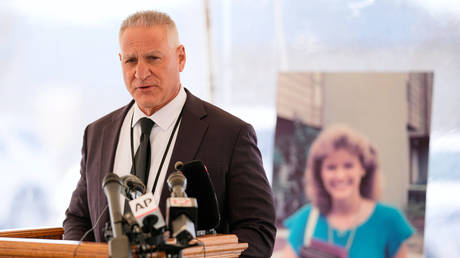
Diplomatic ice doesn't break quietly. When German Foreign Minister Johann Wadephul sat down with his Russian counterpart Sergei Lavrov on the sidelines of the United Nations General Assembly in New York, it marked the first direct ministerial contact between Berlin and Moscow since early 2022.
Four and a half years of total diplomatic silence ended behind closed doors. You might wonder why Berlin blinked first. Moscow certainly didn't waste time pointing it out; Russian Foreign Ministry spokeswoman Maria Zakharova was quick to broadcast that German officials initiated the request.
What Triggered the Sudden Talk
Relations didn't just sour; they froze solid when Russia launched its full-scale invasion of Ukraine. For years, Berlin maintained a strict firewall, refusing high-level bilateral talks while funneling military and financial aid to Kyiv.
So what changed? Honestly, reality caught up.
In early September, German intelligence tied a brazen drone incident at Leipzig Airport directly to Russian sabotage operations. Chancellor Friedrich Merz promised a swift retaliation, which included shutting down the Russian Consulate General and the Russian House in Germany. Moscow immediately retaliated by closing branches of the Goethe-Institut inside Russia.
With hybrid warfare spilling directly onto German soil, ignoring the Kremlin stopped being a viable strategy. Wadephul walked into that New York room to draw a hard line, demanding an immediate halt to escalating hybrid attacks against NATO infrastructure while also pushing for urgent Black Sea grain export agreements to protect food security in the Global South.
Breaking Down the Diplomatic Fallout
You can't restart a relationship that's built on active hostility, and neither side pretended this was a reset. It was a confrontation.
Wadephul made it explicitly clear that isolated diplomatic contact doesn't change Germany's unwavering support for Ukraine. Berlin's calculus is straightforward. If you don't talk to adversaries when sabotage threats mount, you leave yourself entirely blind to their next move.
Moscow used the encounter to air grievances about Western restrictions, but the underlying tension remained thick enough to cut with a knife. Strict conditions surrounded the room itself, with German teams pushing for restricted media access and limits on audio recordings.
The Broader European Reality
Europe's diplomatic architecture is shifting. Maintaining a total freeze on Moscow while infrastructure attacks and airspace violations tick upward leaves European capitals vulnerable.
Berlin's decision to re-engage isn't a sign of softening support for Kyiv. It's a pragmatic acknowledgment that managing an active security crisis requires direct communication channels, even with a belligerent state.
Diplomacy in 2026 isn't about finding common ground. It's about drawing boundaries before small flashpoints turn into open conflict.