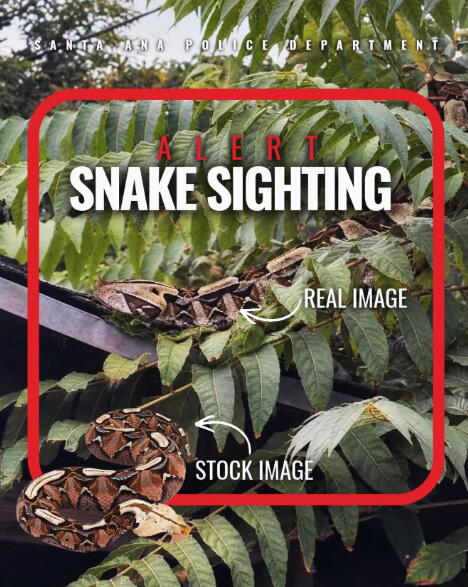
A four-to-five-foot African viper is roaming a Southern California neighborhood, and local authorities are scrambling. Police in Santa Ana issued an urgent public advisory after residents spotted a Gaboon viper near Main Street and Edinger Avenue.
If you think this is just another harmless local wildlife scare, you're missing the bigger picture. Native to the rainforests and savannas of sub-Saharan Africa, the Gaboon viper (Bitis gabonica) is not native to North America. It possesses the longest fangs of any venomous snake—reaching up to two inches—and a massive venom yield capable of rapid tissue destruction. When an exotic apex predator turns up loose in a dense Orange County suburb, it exposes the dark underbelly of the illegal exotic pet trade.
How Did a Gaboon Viper End Up in Southern California?
Let's cut through the noise. Gaboon vipers don't just hitchhike across oceans. They get imported, bought, and smuggled.
Santa Ana police confirmed that no permits for owning a Gaboon viper are on file within city limits. That means whoever had this animal was holding it illegally. When exotic pet owners realize they're harboring prohibited, highly lethal reptiles, panic sets in. Inspections loom. Fines mount. Neighbors start asking questions.
The result? Abandonment. Owners sometimes dump dangerous animals in local parks, bushes, or alleys rather than face legal consequences. Other times, inadequate enclosures allow these master escape artists to slip away during a move or routine cleaning. A Gaboon viper's striking coloration mimics fallen leaves, making it a master of stealth. It can hide in suburban shrubbery for days without anyone noticing a thing.
The Real Danger of a Gaboon Viper Encounter
Most rattlesnakes strike and retreat. The Gaboon viper plays by a different rulebook. It's a sit-and-wait ambush predator with a heavy, thick-bodied build and a notoriously calm disposition—until it strikes with lightning speed.
Its venom contains a potent mix of cytotoxins and hemotoxins. A bite causes agonizing pain, severe swelling, blistering, and rapid tissue necrosis. Because these snakes have massive venom glands, a single bite can inject a lethal dose that attacks the circulatory system.
If someone gets bitten in Santa Ana, standard local hospitals won't have the specific antivenom sitting on a shelf. Gaboon viper bites require specialized polyvalent antivenom typically reserved for major zoological parks or specialized medical centers. Precious minutes would tick away while emergency responders hunt down the correct treatment.
What You Should Do If You Spot It
Police have made instructions crystal clear, but common sense bears repeating.
- Stay back. Keep a distance of at least 20 feet if you spot anything resembling a thick, leaf-patterned snake.
- Do not touch. Never attempt to trap, corner, or kill the animal.
- Call immediately. Report sightings right away to the Santa Ana Police Department at (714) 834-4211, or dial 911 if a bite occurs.
- Secure your animals. Keep dogs, cats, and children indoors until authorities clear the area.
This incident is a wake-up call about the unregulated exotic pet black market thriving in our backyards. Local laws exist for a reason, and ignoring them turns quiet suburban neighborhoods into hunting grounds. Keep your eyes open, stay clear of dense vegetation, and let the professionals handle the cleanup.