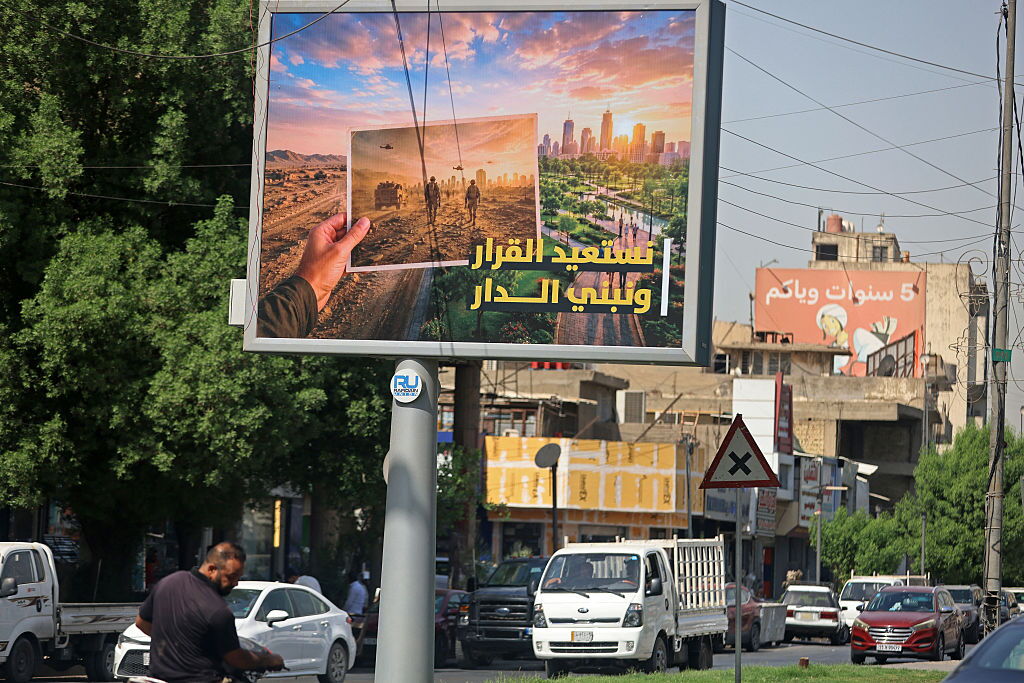
The final American troops are pulling out of Iraq. Think about that for a second. More than two decades after the 2003 invasion that shattered Saddam Hussein's regime and upended the Middle East, the physical footprint of the U.S. military in Iraq is coming to a close.
It's a quiet departure compared to the thunderous arrival twenty-three years ago. There are no massive victory parades or flag-lowering spectacles open to the global press. Just a few hundred remaining personnel packing up their gear, stepping onto transport planes, and leaving behind a country grappling with its own raw realities.
If you look past the official press releases, the timing of this exit is messy. It's happening under the shadow of a broader regional conflict with Iran, leaving Iraqi leaders and vulnerable regional groups to wonder who will pick up the slack.
The Long Arc From 170,000 Troops to Zero
To understand why this exit matters right now, you have to look at the numbers. At the peak of the occupation back in 2007, roughly 170,000 U.S. service members operated across the country. Towns were carved up into concrete blast walls, and entire generations of military families grew up tracking tour lengths like football seasons.
Troops officially left once before, back in December 2011, under the Obama administration. But that vacuum didn't last. The catastrophic territorial rise of ISIS forced Washington right back in by 2014, leading to a second phase focused on air support, intelligence, and advisory roles numbering around 2,500 personnel in recent years.
Now, that chapter is finished too. The anti-ISIS coalition mission has officially concluded.
What Iraq Faces Now That the Americans Are Gone
Iraqi Prime Minister Ali al-Zaidi declared the transition a "day of sovereignty," emphasizing the readiness of local institutions and armed forces. But local realities are complicated.
Baghdad faces intense internal pressure regarding armed factions operating outside state control. While the government pledged to disarm these militias, reality often moves slower than political speeches. Security analysts note that the Kurdish region in northern Iraq is particularly nervous. Having relied heavily on U.S. intelligence, surveillance, and air protection, Kurdish leaders view the sudden absence of these defensive umbrellas with deep anxiety.
Meanwhile, Iran-backed factions are celebrating the withdrawal as a major strategic victory. Removing Saddam Hussein in 2003 inadvertently opened the door for decades of expanding Iranian political and security influence in Baghdad. This exit marks the culmination of that shifting gravitational pull.
The Real Lesson Washington Is Leaving Behind
Superpowers love to believe they can rewrite nations through sheer kinetic force. They think a quick battlefield victory guarantees long-term political control. Iraq was the ultimate laboratory for that theory.
The truth is messier. You can overthrow a dictator in weeks, but you cannot easily control what grows in the political vacuum left behind. Two decades of blood, billions of dollars, and shifting geopolitical strategies have brought everyone right back to a fundamental question: Can Iraq stand entirely on its own feet?
The answer to that question isn't written in Washington. It's being decided right now on the ground in Baghdad and Erbil. Watch how local forces handle border security and internal militias over the coming months. That will tell you everything you need to know about what comes next.