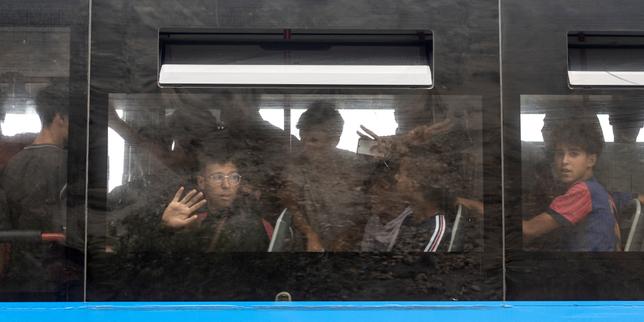
Tiny strips of land on the North African coast don't usually dictate the fate of European governments. Right now, Ceuta is doing exactly that. Two months after tens of thousands of people rushed across the Moroccan border into Spanish territory, the political shockwaves are tearing through Madrid. Prime Minister Pedro Sánchez thought he could weather the storm with diplomatic silence and routine crisis management. He was wrong.
The emergency began when viral social media posts falsely advertised that European borders were wide open for easy asylum. That digital spark triggered a physical stampede. Around 80,000 people crossed into the tiny Spanish enclave in a matter of days. While many returned or were processed quickly, thousands remain stranded, turning local beaches and public squares into makeshift campsites.
For Sánchez, the true danger isn't just logistical. It's the total collapse of a carefully constructed political narrative.
The Collision Between Local Reality and Madrid Politics
If you walk through Ceuta today, you won't find abstract political theories. You'll find shuttered storefronts, exhausted residents, and local municipal services pushed past their absolute breaking point. Juan Jesús Vivas, the conservative mayor-president of Ceuta, didn't mince words when he called the situation a severe social and humanitarian emergency.
When Sánchez visited the enclave, he was met with furious crowds chanting for his resignation. The local anger stems from a simple, brutal truth: Madrid feels miles away, both geographically and emotionally. While government ministers debate resource allocation in air-conditioned parliamentary chambers, residents deal with blocked streets and strained infrastructure.
The crisis also exposed deep fractures within Sánchez's own administration. Defense Minister Margarita Robles publicly stated that intelligence services had given prior warning of the border rush. Meanwhile, Interior Minister Fernando Grande-Marlaska claimed the exact opposite. When top officials openly contradict each other on national television, public trust evaporates overnight.
The Rabat Dilemma and Foreign Policy Fallout
Handling Morocco has always been a delicate tightrope walk for Spanish leaders. You need Rabat cooperation to manage migration flows, but cozying up too closely brings domestic political costs.
A leaked police report added fuel to the fire, detailing what it termed total permissiveness from Moroccan border forces during the initial surge. That document directly contradicted Sánchez's insistence that his government had no proof of official Moroccan complicity. Opposition leaders jumped on the discrepancy, grilling the Prime Minister in parliament with a sharp question: Why are you afraid of Morocco?
Sánchez has tried to pivot by blaming external actors for amplifying online disinformation, even pointing fingers toward foreign interference. But these geopolitical maneuvers fall flat when domestic television screens show thousands of protesters flooding the streets of Seville, Madrid, and Ceuta. The public isn't interested in foreign conspiracy theories. They want to know why a border can be breached so easily and why the central state seems incapable of offering a permanent solution.
What Happens Next for the Socialist Government
The fallout from late July won't fade away quietly. Unaccompanied minors make up a significant portion of the remaining population stuck in the enclave, forcing a bitter nationwide debate over how regional authorities must share the burden of housing them. Conservative-led regions are pushing back against Madrid's mandates, turning migration into a permanent constitutional tug-of-war.
Sánchez has survived plenty of political near-death experiences before. His career is built on defying the odds and outmaneuvering political rivals. Yet this challenge hits differently. It combines an unmanageable humanitarian reality on the ground with a government caught red-handed in institutional confusion.
The Spanish leader is running out of time to convince voters that he has a grip on the nation's borders. If he can't restore order to the southern frontier, the political fallout will define the remainder of his tenure.