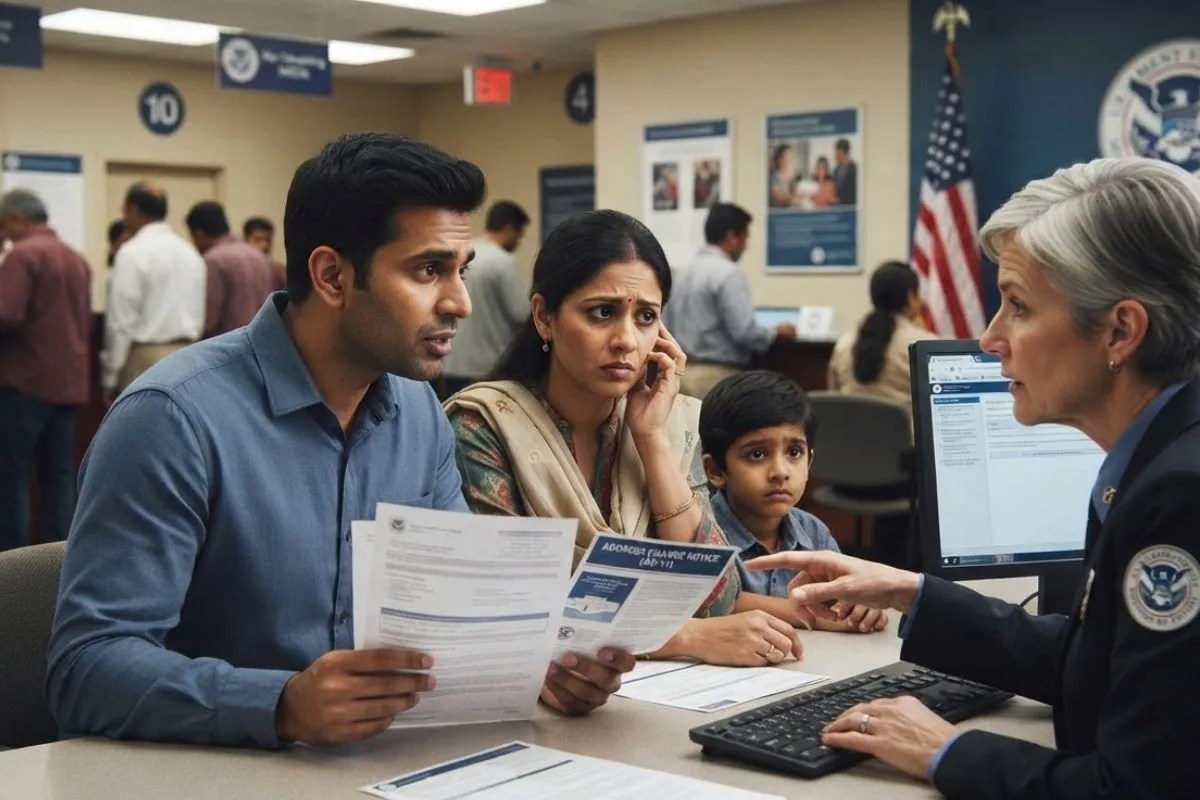
Let's cut right to the chase. If you are an Indian professional eyeing permanent residency in the United States, the math is no longer on your side. In fact, it is mathematically impossible for most applicants to ever see the finish line under the current system.
Recent updates from the U.S. Citizenship and Immigration Services, combined with new administrative compliance shifts under Trump, have brought the migrant bureaucratic nightmare back into sharp focus. But the address-change rule changes are just background noise. The real headline is the staggering backlog that now stretches close to two centuries.
According to data compiled by the George Washington and George W. Bush Institute reports, the employment-based green card backlog has swollen past 1.2 million applicants. For Indian professionals stuck in the EB-2 category, the estimated wait time has scaled up to an absurd 179 years.
The Broken Math of Per-Country Caps
Why is the wait time nearly two centuries? Blame the outdated per-country caps. U.S. immigration law caps employment-based green cards at roughly 140,000 per year. More importantly, no single country can receive more than seven percent of those totals, regardless of population size or demand.
India produces a massive share of the world's top tech talent, engineers, and researchers. When you funnel thousands of highly qualified applicants from a single high-demand nation through a narrow, bottlenecked pipe meant for a global quota, the system chokes.
Look at the breakdown by category:
- EB-2 Category: Around 179 years of waiting for Indian nationals.
- EB-3 Category: Roughly 38 years.
- EB-1 Category: A more manageable 4 to 5 years, though slots are drying up fast.
If you entered the system today, you would pass away long before your permanent residency application ever hit an adjudicator's desk. That is not an exaggeration. That is the statistical reality.
New Compliance Burdens
While the green card queue lingers in deep freeze, immigration enforcement is tightening on day-to-day administrative fronts. USCIS has rolled out strict rules requiring foreign nationals to report any address change within 10 days of moving.
Miss the window, and you risk missing critical notices, facing processing delays, or triggering compliance red flags. The process is handled through online self-service tools, but the margin for error is razor-thin. For temporary visa holders moving frequently for tech projects or corporate relocations, keeping up with these bureaucratic checkpoints adds unnecessary anxiety to an already stressful lifestyle.
Exemptions exist for A and G visa holders, but standard H-1B holders and their dependents must stay hyper-vigilant. Forget to update your address during a cross-country apartment hunt, and your petition could stall indefinitely.
Why Tech Companies and Professionals Are Looking Elsewhere
American corporations rely heavily on international tech talent. Yet, the current setup creates massive retention headaches. When top engineers realize they are chained to an endless temporary visa loop with no pathway to permanent residency, they start looking north to Canada, across to Europe, or back home to booming domestic markets in India.
The U.S. economy loses its competitive edge when brilliant minds spend their prime working years worrying about visa renewals, stampings, and administrative crackdowns instead of innovating.
If you are currently caught in the backlog, hoping for legislative reform or country-cap elimination is basically playing lottery with your career. You need to weigh your options carefully. Build an exit strategy, explore global mobility options offered by multinational employers, or diversify your career portfolio.
The system isn't fixing itself anytime soon. Stop waiting for policy makers to rescue your paperwork, and start planning your next move.