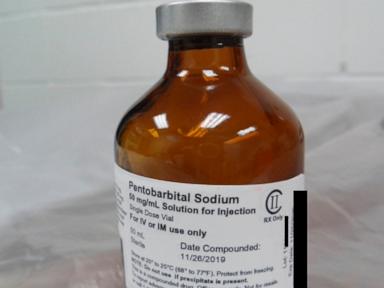
Capital punishment machinery in the United States relies heavily on a veil of administrative secrecy, but every so often, that veil tears completely open. When Tennessee officials attempted to execute Christa Pike using pentobarbital, the procedure dragged on for over an hour behind fluctuating curtains, leaving witnesses listening to heavy breathing and snoring rather than witnessing a quiet death. Pike survived two rounds of lethal chemicals, forcing an emergency hospital transfer and prompting Governor Bill Lee to slam the brakes on all remaining state executions.
This disaster wasn't an isolated anomaly. It marks the second time this year that Tennessee's capital punishment protocol completely broke down. Back in May, executioners spent more than an hour poking and prodding Tony Carruthers, utterly failing to establish a functional intravenous line before the state called off the lethal injection. Years earlier, in 2022, Governor Lee abruptly halted the execution of Oscar Smith at the very last minute after acknowledging the state failed to properly test its lethal injection drugs.
When a state repeatedly botches its own protocols, the conversation inevitably shifts back to the chemical compound at the center of it all. Pentobarbital has a long, troubled history across multiple states, and the recent Tennessee debacle throws its reliability right back into the national spotlight.
The Problem With Pentobarbital
States turned to pentobarbital as traditional execution drugs became nearly impossible to source. Pharmaceutical manufacturers, often based in Europe with strict export controls, refused to let their products be used for capital punishment. Prisons scrambled for alternatives, settling on barbiturates typically used for animal euthanasia or heavily restricted medical sedation.
Pentobarbital is a powerful central nervous system depressant. Administered correctly in high doses, it should rapidly induce unconsciousness, halt breathing, and stop the heart. But execution chambers are not sterile hospital rooms staffed by clinical anesthesiologists. They are run by corrections personnel operating under extreme time constraints, intense legal pressure, and high-stress environments.
When vein access fails, or when chemical compounding goes wrong, the drug's efficacy drops dramatically. In Pike's case, witnesses reported hearing her raise her head, speak to officials about unusual arm sensations, and eventually snore heavily while blinds went up and down. Legal teams quickly flooded federal and state courts with emergency motions, arguing that leaving an inmate conscious and struggling after two rounds of lethal chemicals crossed the strict constitutional line into cruel and unusual punishment.
A Pattern of Operational Failure
Death penalty experts note that surviving the actual administration of lethal injection drugs is extraordinarily rare. While several botched executions in U.S. history stem from execution teams failing to find a viable vein, individuals rarely stay alive after the chemicals enter their bloodstream. The fact that Pike absorbed two separate doses and was later hauled away in an ambulance points directly to systemic incompetence within the Tennessee Department of Correction.
Lawmakers are already demanding structural accountability. Critics point out that internal reviews conducted by the same executive branch overseeing the executions lack genuine independence. Without strict legislative oversight, transparency, and independent third-party audits, the state's capital punishment apparatus remains a liability.
Governor Lee's independent review order is a necessary band-aid, but it doesn't solve the core mechanical rot. When execution protocols fail twice in a single year—once through sheer inability to place an IV line, and once through a chemical failure that left a condemned inmate breathing for over an hour—the entire system loses its legal and moral footing.
The machinery of death in Tennessee is broken, and no amount of procedural tweaking will fix it.