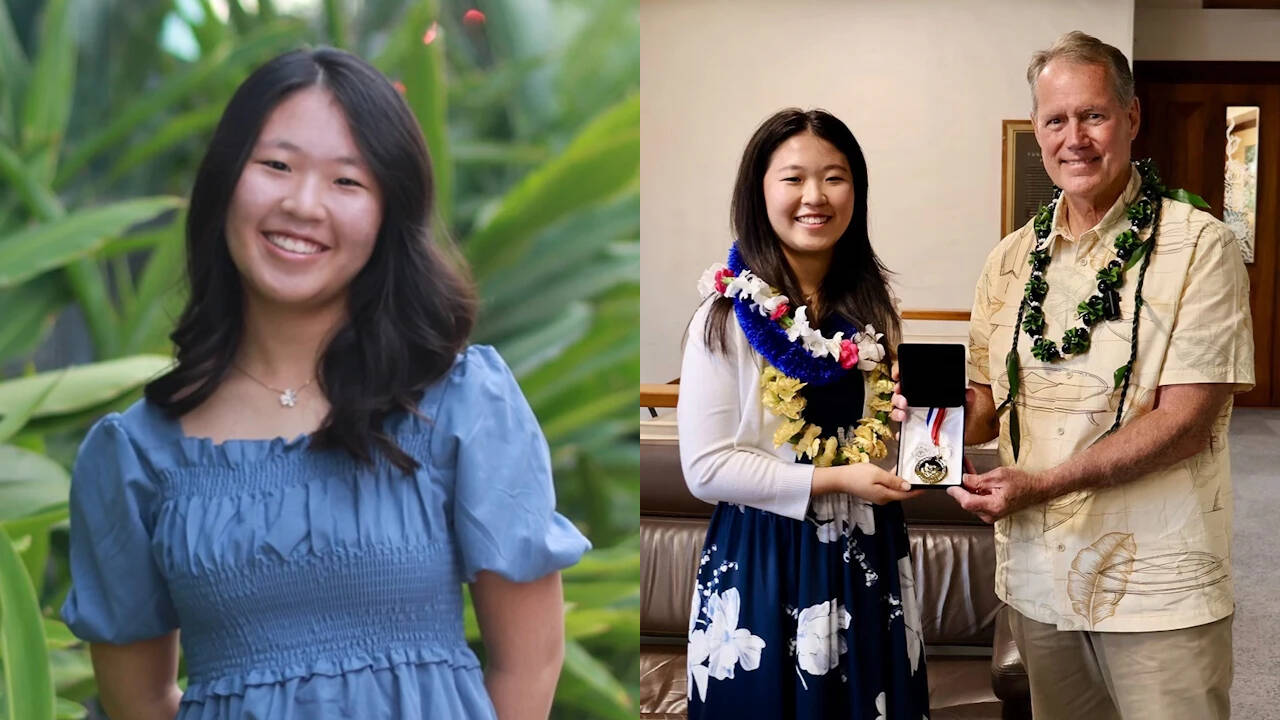
Most high school resumes look identical. They are packed with standard club memberships, inflated club titles, and standardized test scores that blend together into a blur of beige. Then you look at someone like Jessica Lee. At seventeen years old, this Honolulu senior didn't just pad a college application. She logged 420 hours of volunteer service, hit the golf course as part of a three-time state champion varsity squad, and earned the highest youth honor handed down by the United States Congress.
If you think this level of output requires a superhuman schedule or an impossible amount of innate luck, you are missing the point. It actually comes down to relentless focus and finding problems in your own backyard that nobody else is fixing.
Beyond the Standard Extracurricular Checklist
Earning the Congressional Award Gold Medal isn't a walk in the park. It demands a grueling two-year commitment across four distinct categories. You need at least 400 hours of voluntary public service, 200 hours of personal development, 200 hours of physical fitness, and a rigorous multi-day expedition. Most adults wouldn't sign up for that kind of audit on their free time, let alone a teenager juggling advanced coursework.
Lee didn't pick generic volunteer gigs just to check boxes. Her push into public health grew directly out of a personal place. When her grandfather battled lung cancer in Korea, her family struggled to navigate complicated medical jargon and bad information. That frustration stuck with her.
Instead of complaining about the state of healthcare literacy, she did something about it. She volunteered at the St. Francis Healthcare System of Hawaiʻi, spending time face-to-face with elderly patients and watching medical professionals handle real-world challenges. She noticed how language barriers left families completely in the dark during critical treatment decisions.
Turning Personal Frustration Into Practical Action
Observation is cheap, but execution is rare. Lee turned her hospital experiences into the Cancer Health Awareness & Mindfulness Program, known as CHAMP. It is an independent nonprofit designed to lift health literacy in her community.
Through CHAMP, she organizes workshops that break down cancer risks, prevention strategies, and local medical resources. She even teamed up with the University of Hawaiʻi Cancer Center Skin Van for a skin cancer awareness event right at Ala Moana Beach Park. Locally at Punahou School, she helps lead Caring of the Elderly, a program dedicated to supporting kūpuna in Mānoa twice a month.
This is where most high school achievers fall short. They treat community service as a transaction. They log hours for a certificate and walk away. Lee treated her service like a startup, building structures that actually outlive her high school years.
The Discipline of the Fairway
Balancing a nonprofit and hundreds of volunteer hours while maintaining top grades requires an outlet that burns off mental fatigue. For Lee, that outlet is golf.
She picked up a club at age four after her family moved from New York to Hawaiʻi. By high school, she was competing on Punahou's Varsity I girls golf team, which captured three consecutive state championships. She even took second place individually in the state tournament in 2024.
Golf is notoriously unforgiving. One bad swing can ruin an entire round, and you have nobody else to blame. That kind of environment builds a specific type of mental armor. It teaches you how to reset after a failure, stay calm under pressure, and trust the process when things look messy. Those exact lessons translated directly into her advocacy work and her academic life.
Cultural Advocacy and Real-World Navigation
A teenager's world should never be reduced to a single track. Lee's interests stretch far beyond medicine and sports. She has played the violin since the fourth grade, finding rhythm in orchestral arrangements. She also expanded her horizons geographically, taking a trip to Boston to tour college campuses, navigate the subway system for the very first time, and explore historic museums.
Her commitment to her heritage runs just as deep. Starting back in seventh grade, she fought for greater inclusion of Korean language and culture in local curricula. She didn't just whisper about it to her friends. She gathered 300 student signatures on a petition, took her case straight to neighborhood boards, and lobbied the Hawaiʻi Legislature.
When Congressman Ed Case presented her with her Gold Medal and a certificate of recognition, she became only the seventh person from his district to earn the honor over a 25-year span.
What You Can Learn From This Blueprint
You don't need to live in Honolulu or aim for a congressional medal to apply what makes this story work. Most people fail at big goals because they wait for permission, pick boring projects that lack personal meaning, or quit the moment a routine gets difficult.
If you want to build a high-impact life, start by looking at what frustrates you in your local community. Build a small solution, test it, and stick with it long after the initial excitement wears off. Pair that intellectual or civic grind with a physical discipline that tests your nerves. Master the art of recovering from failure.
Stop treating your ambitions like a checklist for other people. Build something that matters to you, put in the quiet hours when nobody is watching, and let the results speak for themselves.