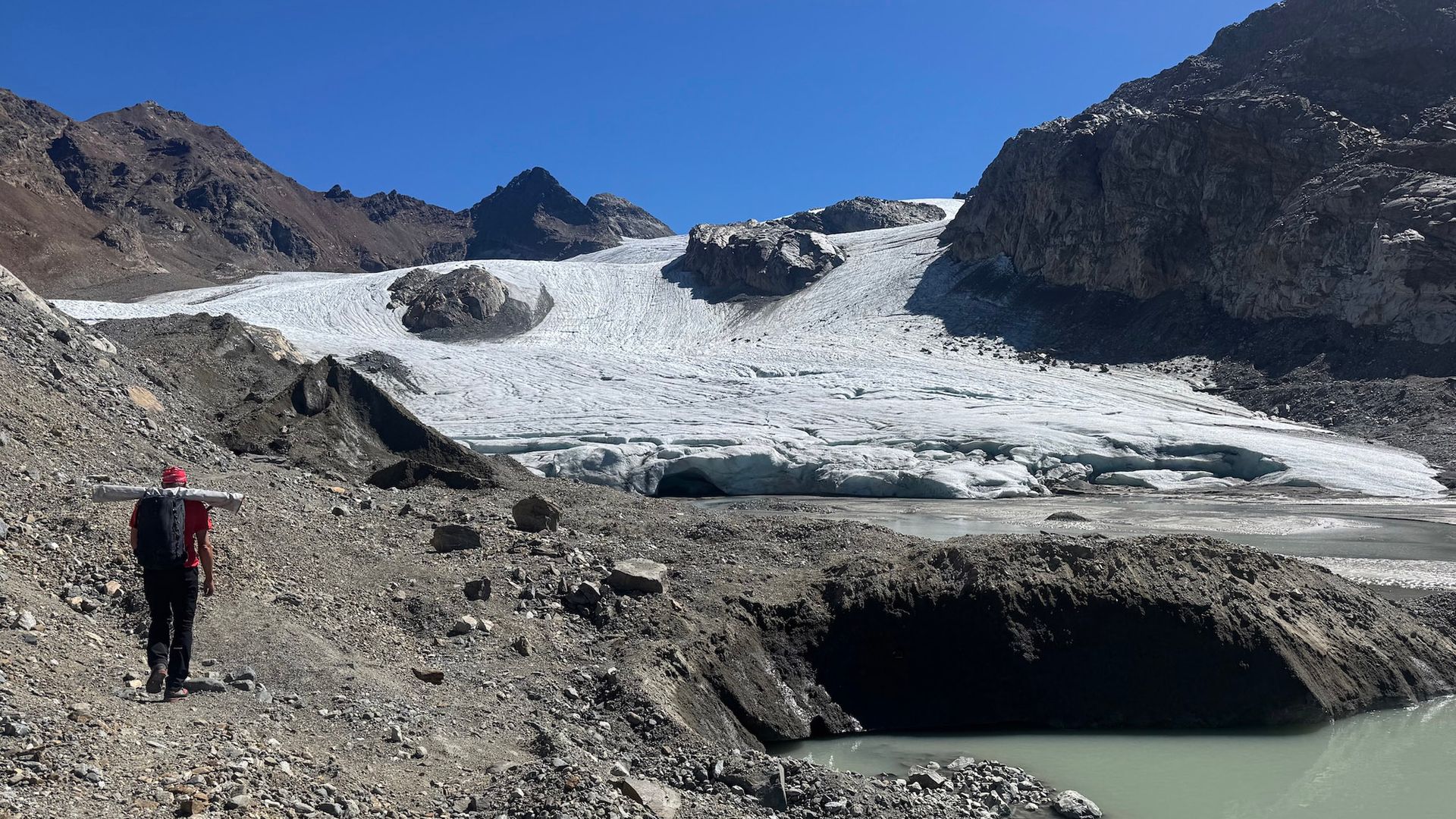
Switzerland's iconic ice bodies are disappearing at a staggering rate. Data from the Swiss glacier monitoring service GLAMOS and the Swiss Academy of Sciences reveals that Swiss glaciers lost roughly 5.5% of their total ice volume this year alone. That makes it the second-largest annual percentage drop ever recorded, right behind the catastrophic melt of 2022.
If you look at the trajectory over the past five years, the numbers become even more alarming. Switzerland has shed nearly a fifth of its total glacier volume in that short span. When you stand near the Great Aletsch Glacier or look at the shrinking Rhone Glacier, the visual reality hits hard. The ice isn't just receding; it's collapsing under the weight of chronic heat and absent winter snow.
The Double Blow of Low Snow and Brutal Heat
Why did this happen so intensely? Two distinct factors drove the crisis. First, winter snowpacks were miserably thin. Winter snow acts as a natural sun shield, reflecting solar radiation and protecting the older, deeper ice underneath. When that protective blanket vanishes early in the season, bare ice takes the full force of summer sun.
Second, record-breaking European heatwaves hammered the region week after week. Matthias Huss, who heads GLAMOS, points out that the warming driving this crisis is entirely driven by human emissions. Without fossil fuels changing the atmosphere, these survival conditions wouldn't exist.
The thickness of individual glaciers shrank by an average of 2.5 to 4 meters, with some glacier tongues dropping by up to 10 meters. That is massive structural loss in a single seasonal cycle.
Why This Matters Beyond the Alps
It's easy to dismiss alpine ice loss as a local problem for skiers and mountaineers, but the consequences stretch far beyond Switzerland's borders.
Switzerland lost roughly 2.2 trillion liters of water from July to September alone. That volume equals four times the annual water consumption of the entire country's population of 9.1 million people. Furthermore, Switzerland serves as the water tower of Europe. Major rivers like the Rhine, Rhone, Danube, and Po rely on seasonal alpine meltwater to maintain their flows during dry months.
Hydroelectric power generation also depends heavily on this water. With more than half of Switzerland's electricity coming from hydropower, shrinking glaciers introduce long-term energy security risks.
Can the Alpine Ice Be Saved?
The short answer is no. Glaciologists are blunt about the fate of the Swiss Alps. It's almost too late to save the glaciers in Switzerland because their current volume is only about a third of what it was 23 years ago. Even if greenhouse gas emissions dropped to zero tomorrow, the baseline temperature increases already locked into the climate system guarantee further losses for these specific formations.
Global efforts must now pivot toward larger polar ice sheets in Greenland and Antarctica. Protecting those regions can still curb catastrophic sea-level rise and defend coastal populations worldwide. Stabilizing the global climate by curbing CO2 emissions remains the only viable path to prevent total environmental disruption. The warning signs from the Alps are clear, and ignoring them is no longer an option.