You think you know where marine life hangs out after dark. You assume the giants of the ocean descend into the murky, silent depths to rest or hunt away from the bustling surface traffic.
You would be wrong. You might also find this related story useful: Why The Renewed War In Yemen And Saudi Arabia Changes Everything Right Now.
A recent study published in the peer-reviewed journal PLOS One flips that assumption on its head. It turns out critically endangered North Atlantic right whales are feeding dangerously close to the ocean's surface at night. That simple behavioral shift puts them right in the path of heavy shipping traffic.
Let's look at why this discovery matters and how it exposes massive blind spots in current conservation efforts. As reported in latest coverage by Wikipedia, the implications are significant.
What the New Data Actually Shows
The numbers are stark. With an estimated population hovering around just 384 individuals left on the planet, every single North Atlantic right whale is precious. When summer hits, a significant portion of this population gathers in the Shediac Valley—an underwater trench in the southern Gulf of St. Lawrence.
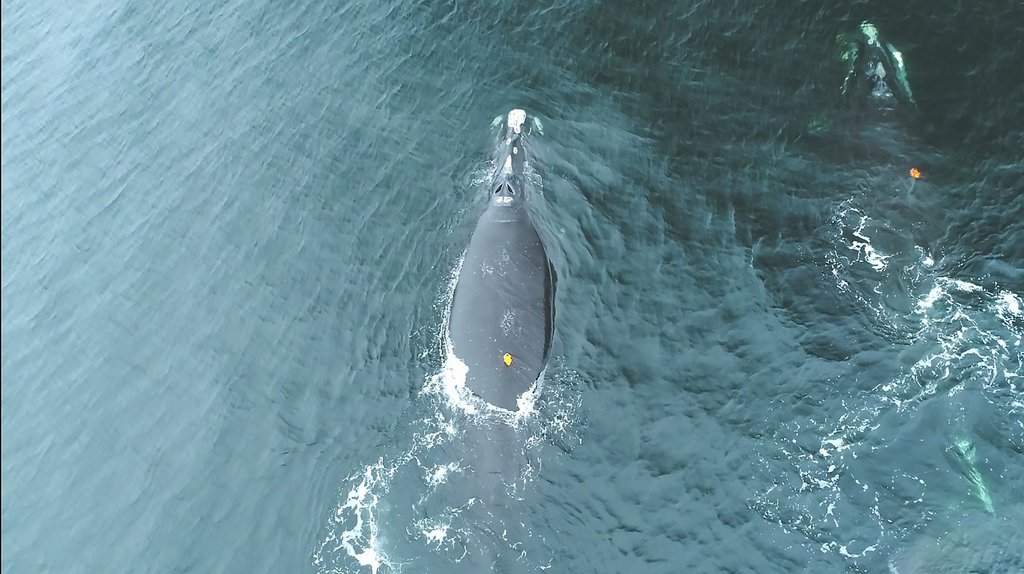
Jay Kirkham, a PhD student at Dalhousie University, teamed up with the U.S.-based non-profit Ocean Alliance to tag 23 of these massive animals in that very valley. The tags recorded high-definition video footage alongside precise movement and directional data.
During the day, right whales typically feed near the seafloor. When they open their massive jaws to scoop up zooplankton, it acts like a parachute, slowing them down and forcing them to kick their tails much harder to maintain momentum. Kirkham used this distinct visual data to train a machine learning algorithm, allowing researchers to track nighttime feeding behavior even when pitch-black conditions made visual identification impossible.
The results? At night, these whales follow their prey right up into the upper water column.
The Deadly Overlap With Cargo Ships
Here is the terrifying reality of the situation. Large commercial vessels passing through the Gulf of St. Lawrence extend anywhere from 10 to 15 meters deep into the water. When right whales rise toward the surface after sunset to chase zooplankton, they occupy the exact same vertical water layer as those massive ship hulls.
It is a vertical collision course.
Vessel strikes and fishing gear entanglements remain the two leading causes of death for North Atlantic right whales. For years, management policies assumed that nighttime might offer a reprieve or that surface risks were primarily a daytime hazard when boats are easy to spot. This new study shatters that assumption.
Why Current Protections Fall Short
Government bodies like Transport Canada and Fisheries and Oceans Canada handle local conservation measures. Transport Canada currently implements seasonal speed restrictions and enforces a strict vessel exclusion zone in the Shediac Valley during the summer months.
On paper, that sounds proactive. In practice, it has blind spots.
Kirkham and his team discovered that the tagged whales spent roughly 25 percent of their feeding time completely outside of that designated vessel exclusion zone. That means a quarter of their risky behavior happens in open waters where ships face fewer restrictions.
While Transport Canada relies on acoustic monitoring systems and surveillance programs to detect whales regardless of daylight, acoustic tools alone can't predict precise depth or prevent a speeding container ship from plowing into a whale that surfaces unexpectedly in the dark.
What Needs to Happen Next
We can't keep relying on static boundaries to protect highly mobile animals whose habits change under the cover of darkness. Conservation strategies need to adapt in real time.
If shipping lanes continue to overlap with active nighttime feeding grounds, regulators must expand seasonal exclusion zones and enforce dynamic speed reductions around the clock rather than just during daylight hours. Fishing and shipping industries need to cooperate with real-time tracking data instead of treating conservation as a daytime checklist item.
The margin for error for North Atlantic right whales is shrinking fast. Ignoring what happens beneath the waves after dark is a luxury we no longer have.