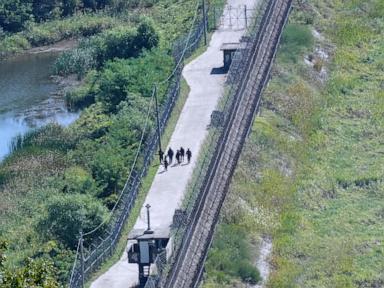
Three South Korean soldiers walked out on a routine patrol near the Military Demarcation Line and stepped into a nightmare. A sudden explosion tore through the area, leaving them severely injured. Seoul's military investigation pointed the finger straight at Pyongyang, claiming North Korean landmines were hidden beneath the dirt.
North Korea didn't just deny the accusation. They called it an elaborate conspiracy. For another perspective, see: this related article.
Kim Yo Jong, the influential sister of North Korean leader Kim Jong Un, stepped forward to reject Seoul's findings completely. She claimed North Korean troops never crossed the border to plant explosives and accused South Korea of fabricating the narrative for political leverage. This clash highlights the fragile reality of the Korean Demilitarized Zone. Trust between the two nations is completely broken.
The Anatomy of a DMZ Border Incident
When explosions happen inside the heavily fortified Demilitarized Zone, the truth is usually the first casualty. Seoul's assessment relied on material evidence from the blast site, identifying characteristics typical of North Korean plastic antipersonnel mines. For the South Korean military, the physical remnants left little room for doubt. Similar insight regarding this has been published by Reuters.
Yet, Pyongyang views every security accusation through a lens of existential paranoia. Under Kim Jong Un, North Korea has steadily abandoned the concept of shared statehood. They've shifted toward a hostile two-state system, treating the South not as estranged brothers, but as a primary adversary and foreign threat. When a landmine injures soldiers, it stops being a mere tactical accident. It transforms instantly into a high-stakes propaganda battleground.
Why the Conspiracy Rhetoric Matters
Accusing Seoul of staging or spinning a conspiracy serves a dual purpose for the regime in Pyongyang. First, it deflects international scrutiny over border militarization. North Korea has spent months reinforcing walls, clearing land, and planting its own defensive barriers along the frontier to lock down its population and prevent defections. Admitting to active mine placement that spills violence across the line contradicts their narrative of restraint.
Second, Kim Yo Jong's sharp rhetoric is designed to preempt any kinetic retaliation from Seoul. By framing the incident as a South Korean fabrication, Pyongyang establishes a psychological baseline. If South Korea fires back or escalates patrols, North Korea can paint itself as the aggrieved victim of an unprovoked escalation.
The Dangerous Reality on the Ground
Blame-shifting aside, three service members are recovering from serious injuries, and the border is more volatile than it has been in years. The Demilitarized Zone is littered with legacy explosives from the Korean War alongside modern additions. Every single meter of that strip is a ticking clock.
Diplomacy remains dead in the water. Calls to revive talks are ignored, and routine patrols carry lethal risks. When leaders swap accusations of conspiracies instead of cooperating on basic border safety, minor accidents turn into major crises overnight. Watch the rhetoric closely because words along this border rarely stay just words for long.