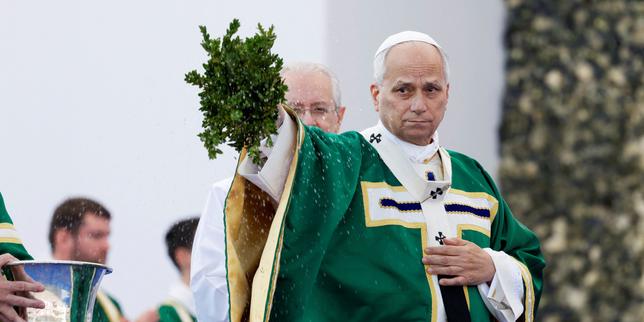
Pope Leo XIV didn't hide from the heaviest burden facing modern Catholicism when he arrived in Lourdes. Stepping into the famous sanctuary on September 27, 2026, the pontiff confronted the painful reality of sexual violence that has shaken the institution to its core. Facing thousands of gathered pilgrims, he didn't mince words about the crisis.
Confronting the Pain at its Source
Lourdes has long been a place of healing and quiet reflection, but this visit carried a much heavier weight. Before thousands of faithful gathered at the sanctuary's prairie, Pope Leo XIV explicitly denounced the "painful scourge" of sexual abuse within Catholic institutions. It's a crisis that has fractured trust between the hierarchy and the faithful, demanding more than just quiet prayers behind closed doors.
In a powerful gesture of transparency, the sanctuary even took the remarkable step of covering the facade mosaics created by Marko Rupnik—the artist and priest accused of sexual abuse—before the papal arrival. It’s a striking physical reminder that the Church cannot simply sweep its darkest chapters under the rug.
Behind Closed Doors With Survivors
Words on a stage are easy; private reckonings are harder. During his time in Lourdes, the pope scheduled a closed-door meeting with seven individuals who survived sexual violence perpetrated within the Church. While some critics argue that private sessions aren't enough to repair structural failures, this direct engagement signals a distinct shift in how the current papacy handles accountability.
You can't rebuild an institution without listening to those it broke. The private exchange forces the highest levels of the Vatican to look individual survivors in the eye, stripping away the bureaucratic abstraction that often protects abusive structures.
What This Means for the Future of French Catholicism
The French Catholic Church has spent years grappling with devastating independent commission reports detailing hundreds of thousands of victims over decades. By explicitly urging the clergy and local bishops to "continue" their path of action and vigilance, Leo XIV is trying to ensure that the momentum of reform doesn't stall out.
Complacency is the true enemy here. If local leaders treat abuse investigations as a one-time PR crisis rather than a permanent operational overhaul, the institution will never regain its moral footing. The pope’s message in Lourdes draws a hard line in the sand: turning back is no longer an option.
The road ahead remains long, steep, and riddled with skepticism. Accountability isn't achieved in a single weekend visit, no matter how symbolic the backdrop. Real change requires relentless institutional transparency, permanent protection mechanisms for the vulnerable, and zero tolerance for concealment.
The spotlight now shifts entirely back to the bishops and local leaders. They have their marching orders from the top, but the real proof will come from the actions they take tomorrow.