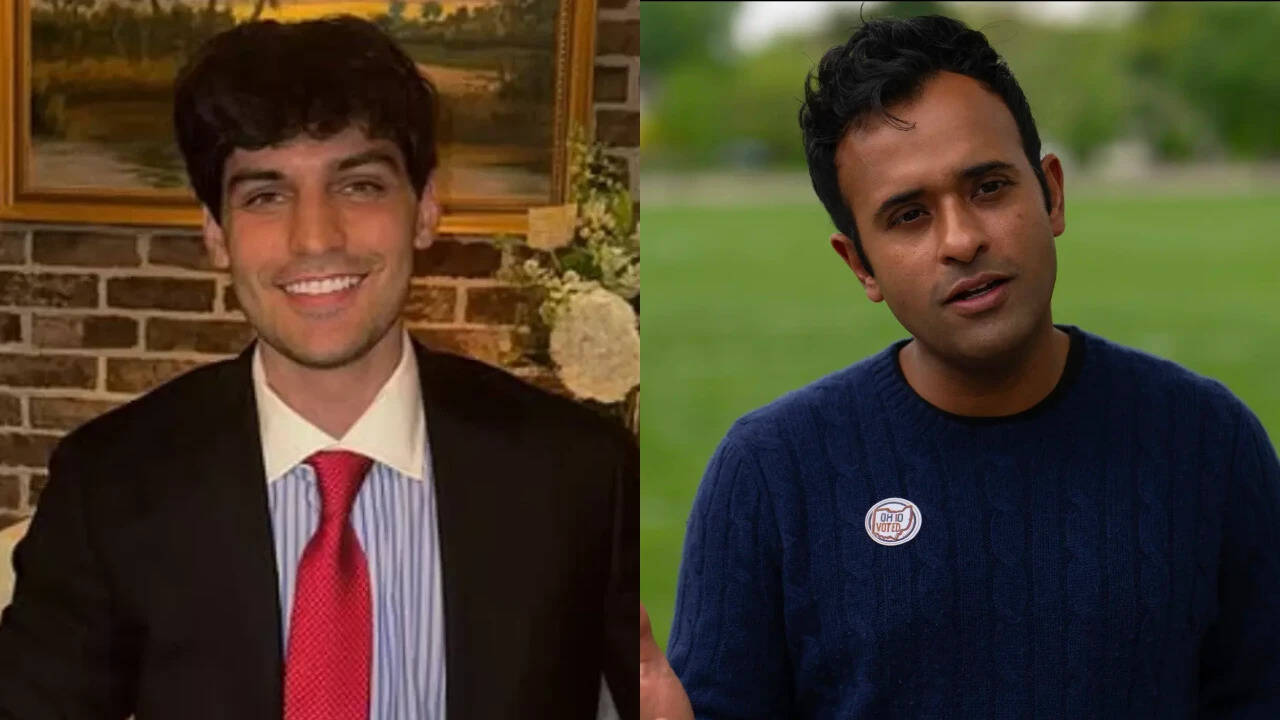
Identity politics in American conservative circles always gets messy when faith enters the chat. You see it every election cycle. Politicians try to smooth over their distinct backgrounds to fit a specific voter demographic, and sometimes, they cross a line that alienates everyone. Nalin Haley just called out Vivek Ramaswamy for doing exactly that, sparking a necessary debate about religious identity, blending, and authenticity.
Let’s look at what actually happened. An old video of Vivek Ramaswamy started making the rounds on social media. In it, he tries to align his Hindu background with Christian values by mentioning that he went to a Catholic school, reads the Bible, and believes the two faiths share a similar spirit. Enter Nalin Haley—son of Nikki Haley—who didn’t mince words. He pointed out a hard truth that many political strategists want to ignore: Hinduism and Christianity are fundamentally different belief systems.
"Believing in all religions is the same as believing in none at all," Haley posted online, cutting straight through the diplomatic fluff.
The Problem With Syncretism in Modern Politics
When public figures try to blend theological differences to score political points, they usually end up disrespecting both traditions. You can't just mash distinct faiths together because it sounds pleasant on a campaign trail. Ramaswamy's attempt to bridge the gap by highlighting his Catholic school education misses the theological mark.
Nalin Haley got it right when he said that Hindus don't want to be Christianized and Christians don't want to be Hinduized. Each faith has distinct doctrines, historical roots, and salvation models. Pretending they are basically the same thing erases what makes each religion unique.
Think about it from a practical standpoint. If you ask a practicing theologian from either faith, they’ll tell you that syncretism waters down their core tenets. Monotheism with a personal savior versus complex Dharmic traditions involving cycles of rebirth and multiple paths to the divine don't occupy the same philosophical universe. Blurring these lines doesn't make someone more relatable; it makes their theological stance look calculated and hollow.
The Hypocrisy of the Backlash
The internet reaction to Haley's comments was predictable. Critics immediately tried to weaponize his own background against him. One social media user lashed out with, "Nothing you say is going to make you white," attempting to reduce a theological disagreement to a cheap racial jab.
Haley shut that down fast. He noted that his stance had nothing to do with race and that he is comfortable with who he is.
This knee-jerk reaction highlights a deeper problem in contemporary political discourse. Whenever someone of minority descent critiques another minority public figure, critics often default to tribalism instead of engaging with the actual argument. Haley wasn't talking about race. He was talking about doctrinal integrity. You don't have to share someone's ethnicity to point out when their theological gymnastics don't make sense.
Why Authenticity Wins Over Pandering
Voters have a finely tuned radar for political posturing. When candidates try too hard to mold themselves into whatever shape the base demands, they lose credibility. Vivek Ramaswamy has built a brand on being blunt, unfiltered, and direct. Yet, when it comes to religion, his attempts to bridge the gap with traditional Christian voters often come across as an evasion of his own heritage.
You can respect someone's right to run for office while still demanding intellectual honesty. If a politician practices Hinduism, they should own it outright without needing to claim it shares a spirit with Christianity just to comfort a specific voting bloc. Real strength comes from standing firmly in your actual beliefs, even if they differ from the dominant culture.
Honesty in faith matters. Voters respect candidates who state their worldview clearly rather than trying to invent a universal theological soup that satisfies no one. Nalin Haley called out a common political sleight of hand, and the ensuing friction proves it's a conversation American politics needs to have more often. Stop pretending every tradition believes the same thing. Clear boundaries build actual mutual respect.