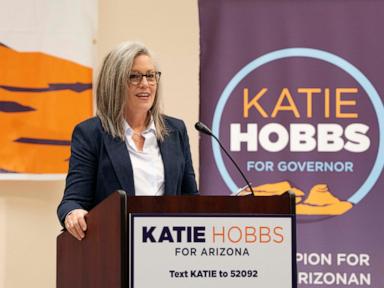
For decades, political analysts treated the Latter-day Saint vote as a reliable baseline for the conservative movement. If you belonged to the faith, checking the box for the Republican candidate felt almost automatic. Shared values, community expectations, and traditional family structures pointed in one clear direction. But that script is tearing apart right in front of us.
In Arizona's high-stakes political environment, that traditional bloc is splintering in unexpected ways. Two members of The Church of Jesus Christ of Latter-day Saints appearing on opposing tickets in a marquee state race have brought this internal reckoning out into the open. Instead of moving as a unified block, women within the faith are reaching sharply different conclusions about what matters most when they step into the voting booth.
The Shift Beyond Party Loyalty
Shared religious affiliation no longer guarantees a predictable outcome at the ballot box. Academic research and ground-level reporting confirm that modern voters weigh a complex mix of community issues, personal morality, and candidate character over simple party labels.
Take Tatiana Pena, a South Phoenix mother and lifelong conservative who approaches her ballot with traditional family protection at the forefront. For voters sharing this perspective, warnings from church teachings about defending the family unit drive every decision. That worldview leads many toward candidates focusing on specific social boundaries, such as restricting access to certain public facilities and opposing gender-transition care for minors.
On the other side of the faith, other members feel entirely alienated by that single-track focus. They look at the broader picture, expressing deep frustration with partisan purity tests and demanding pragmatic leadership that tackles economic pressures and practical governance rather than culture-war flashpoints. They want elected officials who prioritize state infrastructure, fiscal health, and community stability over national talking points.
Why This Split Changes Everything
Arizona routinely serves as a political battleground where razor-thin margins decide major outcomes. When a reliable demographic group breaks into factions, the math for both parties changes overnight.
Campaign strategists can no longer rely on broad appeals to religious identity. Out-of-state operatives visiting the region discover they have to work for every vote, listening closely to local concerns instead of assuming shared cultural values will automatically translate into support.
This fragmentation signals a mature political evolution. Voters are demanding candidates address their specific lived realities. Whether that means focusing on economic relief or doubling down on social protections, the monolithic voting block is gone.
Look closely at how individual voters weigh their options this season. The outcome won't be decided by traditional group loyalties, but by individual choices made at the kitchen table.