Big ambitions carry big price tags. When Wendy Meadley and the organizers behind Expo 2031 locked down a purchase agreement for nearly 57 acres of vacant land in Lakeville, Minnesota, they weren't just planning a garden party. They set their sights on a massive, billion-dollar international horticulture exhibition that aims to draw millions of visitors over six months.
It's a bold gamble. This will be the very first A1 International Horticultural Exhibition hosted in the United States. But grand plans in suburban Twin Cities always face a healthy dose of local skepticism. Let's look past the glossy PR renderings and examine what this massive undertaking actually means for Minnesota, local businesses, and residents living right next to the dirt roads.
The Reality Behind the Billion-Dollar Budget
A billion dollars is a staggering amount of money for a six-month event. When Dakota County first floated the idea of hosting back in 2024, the projected price tag was roughly half that. So where did the extra cash go?
Organizers quickly realized that building temporary exhibits wouldn't cut it. If you look at past World's Fair landmarks like the Eiffel Tower or Seattle's Space Needle, they survived because they became permanent fixtures of the city. Expo 2031 plans to avoid the ghost-town fate that plagues many temporary world fair sites by baking permanence right into the blueprint.
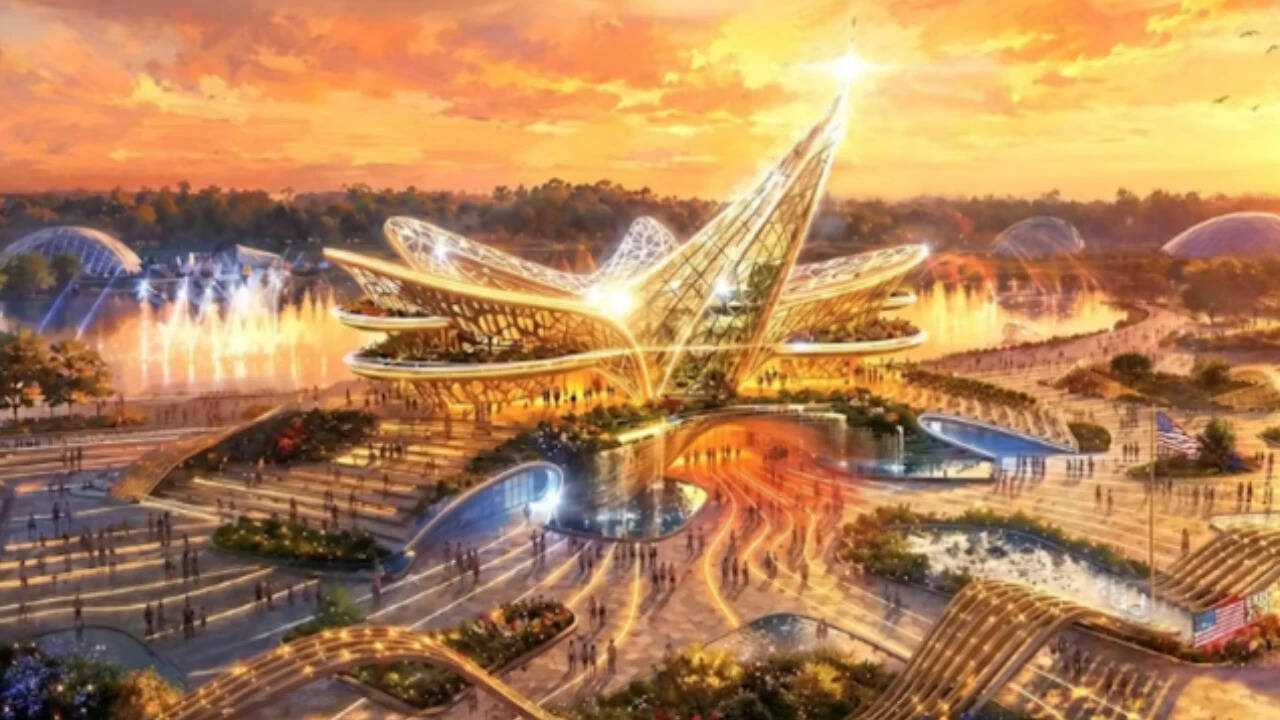
The budget swells because the project centers on a massive USA Pavilion featuring striking water features alongside a 200-room hotel, an expo hall, a media studio, a 1,500-person amphitheatre, and a sprawling 1,300-space parking structure. The 57-acre parcel owned by the United Christian Academy Foundation is just the anchor. Organizers expect the total footprint to expand closer to 180 acres through strategic leases and additional acquisitions.
Turning Fairgrounds Into a Permanent Neighborhood
The smartest part of the Expo 2031 strategy isn't the flowers or the fountains. It's what happens after October 2031 rolls around.
Too many mega-events leave behind rotting infrastructure and empty concrete slabs that local taxpayers spend decades paying off. Lakeville's project takes the opposite route. Once the six-month exhibition wraps up, the entire site is designed to morph into a permanent mixed-use district.
Instead of tearing down multi-million dollar pavilions, the infrastructure stays. Homes, commercial spaces, and community hubs will take root where international gardens once stood. That changes the financial calculus for the local municipality. You aren't just paying for a fleeting six-month party; you're building a brand-new tax base and commercial zone on the southern edge of the Twin Cities.
Local Pushback and the Traffic Nightmare
You can't drop four to six million visitors into a suburban community without breaking a few eggs. Unsurprisingly, local business owners and residents aren't popping champagne quite yet.
Take Dan Mullin, for instance. He runs an auto repair shop sitting right across a gravel road from the designated development site. He's watched years of empty promises come and go. People show up with shovels, scoop dirt for a photo op, and then crickets. He puts the odds of this actually happening at fifty-fifty.
Then there's the traffic. Pumping millions of cars into Lakeville over a six-month window sounds like a commuter's worst nightmare. Organizers claim they will manage the congestion through steady visitor pacing and dedicated shuttle bus networks. But ask any resident living near Interstate 35 and County Road 70 if they trust traffic management plans, and you'll get a very cynical laugh.
Lakeville officials are holding public open houses, like the one scheduled at City Hall, to let residents air their grievances and ask hard questions. That transparency is mandatory. If organizers alienate the local populace before a single brick is laid, the political friction could kill the project faster than any budget shortfall.
What Happens Next
The transition from a visionary pitch to heavy machinery is underway, but the hard work starts now. Organizers have to finalize land acquisition for the remaining acreage, lock down international participants, and prove to skeptical locals that the infrastructure can handle the weight.
If they pull it off, Lakeville transforms into an international destination and a blueprint for how modern expos should be built. If they stumble, it becomes another cautionary tale of grand ambitions clashing with suburban reality. Keep your eyes on the site permits and public meetings over the next year. That's where the real story is written.