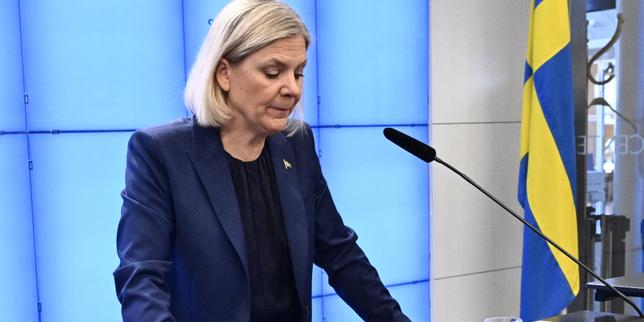
Politics in Stockholm is messy right now. Magdalena Andersson just threw in the towel on forming a government, and honestly, nobody should be surprised.
When you watch Swedish politics from the outside, you might think it is all polite consensus and clean compromises. It isn't. It is brutal, hyper-fractionalized math where a single defection can crash an entire coalition. Andersson tried to thread a needle that was already tied into knots. She gave up because the arithmetic simply refused to work.
The breaking point in Stockholm
Power requires a majority. Andersson didn't have one. The parliamentary puzzle in Sweden has become nearly impossible to solve cleanly. You have the Social Democrats trying to hold together a block of parties that agree on almost nothing except keeping the right out of office. That glue dried up.
If you look closely at the numbers, the structural problem is obvious. Parties drift toward extremes, the center shrinks, and coalition builders are left begging fringe factions for scraps of support. Andersson looked at the demands coming from potential allies and decided the price was too high. You can govern with compromises, but you cannot govern when every single vote threatens to blow up your cabinet before it even takes the oath.
What most people miss about Swedish coalitions
Outsiders often treat Nordic social democracy like a monolith. It is not. The internal friction between green policies, traditional labor demands, and rural economic anxieties is real. Andersson spent years mastering these balancing acts, but the current political climate is too toxic for traditional Swedish pragmatism.
People think leaders quit out of weakness. That is wrong. Walking away is sometimes the only strategic move left when your opponents hand you a poisoned chalice. By stepping back, Andersson forces her rivals to take ownership of an unstable parliament. Let them try fixing a broken machine.
The broader shift in Nordic politics
Sweden is catching up to the rest of Europe. The era of stable, predictable majority rule by a single dominant party is dead. We are living in an age of minority governments, permanent horse-trading, and volatile voter shifts.
Look at how the right-wing bloc has weaponized immigration and law-and-order debates over the past few cycles. It changed the entire vocabulary of the Riksdag. Andersson could not ignore those shifts, but she refused to sell out core party principles to appease a fractured legislative floor.
Keep an eye on what happens next week. The king will step in, consultations will start over, and someone else will inherit a parliament that hates making decisions. Don't expect a quick fix.
Watch the budget votes. That is where coalitions go to die.