When five young British men were arrested outside RAF Fairford on terrorism and explosives charges, it felt like an urgent crisis averted. Then, just a day later, police let them walk out on bail.
That sudden reversal shocked international observers, drew a public critique from U.S. President Donald Trump, and ignited fierce debates over how Western intelligence handles high-stakes security threats. When you have a vital U.S. Air Force facility in England targeted by a suspected bomb plot, releasing the primary suspects raises hard questions about evidence, police thresholds, and foreign state interference.
Inside the RAF Fairford Security Breach
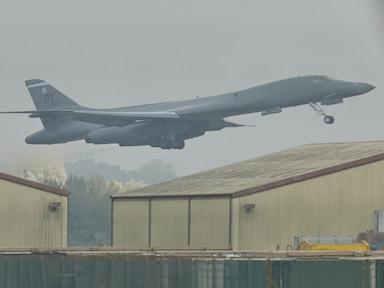
RAF Fairford isn't just another military outpost. Located in Gloucestershire, England, it serves as a critical forward operating location for U.S. Air Force Global Strike Command and houses the headquarters of the 501st Combat Support Wing. It's been a launchpad for American bombers across decades of conflict, including recent military actions involving Iran.
The incident kicked off in the early hours of a Sunday morning. A local farmer spotted three suspicious vans blocking a road near the perimeter and noticed a group of men—some with covered faces—fleeing the scene. She called the police immediately. Army bomb-disposal experts deployed a robot to examine the vehicles, setting off emergency cordons and forcing temporary evacuations for nearby residents.
For a brief window, officials celebrated a swift win. President Trump publicly praised the operation, telling reporters that authorities had watched the suspects for a long time and praising the collaboration between U.S. and British forces.
Then momentum stalled.
Why Bail Frustrated International Leaders
By Monday, UK counterterrorism police announced that all five suspects—all British nationals in their 20s—were released on police bail.
The decision triggered immediate pushback from across the Atlantic. Trump didn't hide his dissatisfaction, noting publicly that he was surprised by the move and stating flatly that he wouldn't have granted bail. U.S. Secretary of State Marco Rubio echoed those concerns in a Fox News interview, acknowledging that many people felt deeply disturbed seeing individuals tied to an active terror probe walk free, even temporarily.
U.K. Counter Terrorism Policing head Laurence Taylor defended the decision, emphasizing that the suspects face stringent conditions and remain firmly under active investigation. Analysts point out that under British law, police bail is often a practical tool used when detectives need time to analyze recovered digital evidence or wait on forensic testing without exceeding strict pre-charge detention limits. The fact that evacuated residents were allowed to return home suggests bomb squads ultimately found no primed explosives inside the vans, shifting the immediate legal battleground.
The Foreign Actor Factor and Iran's Denial
Beyond the local mechanics of the arrests, intelligence officials are looking at a much larger geopolitical chess board.
Investigators are actively probing whether the suspects acted as proxies or unwitting pawns for a foreign state. U.K. Defense Secretary Wes Streeting warned that Britain shouldn't be cowed by saber-rattling, while U.S. officials pointed a finger at foreign involvement. Iranian fingerprints have been heavily suspected by western intelligence given historical flashpoints, though the Iranian embassy has flatly denied any connection to the plot.
Hostile state activity targeting Western military infrastructure is surging. British security agencies reported a 50% spike in national security cases tied to hostile states in late 2025 alone. Whether this specific incident amounts to a state-sponsored proxy operation or an unsophisticated localized threat remains to be seen.
What's clear is that releasing suspects in an active international terrorism investigation leaves a bitter public relations pill to swallow. Trust depends on transparent communication, and when high-level officials openly question local legal tactics, public confidence takes a hit.
Keep a close eye on forensic results from those recovered vans. If formal charges follow, expect the debate over early bail provisions to take center stage in Parliament.