When a fire broke out on Betooni Street in Tallinn on a quiet August night, the physical damage was contained. But the fallout shook European security to its core.
Estonian authorities didn't waste time pointing fingers. They investigated, arrested three Latvian citizens, and formally declared that the mid-August arson at Milrem Robotics—a premier maker of uncrewed ground vehicles supplying Ukraine—was a pre-planned act of sabotage directly commissioned by Russian security services.
If you think this is an isolated incident, you haven't been paying attention to Europe's quiet war.
The Anatomy of the Tallinn Attack
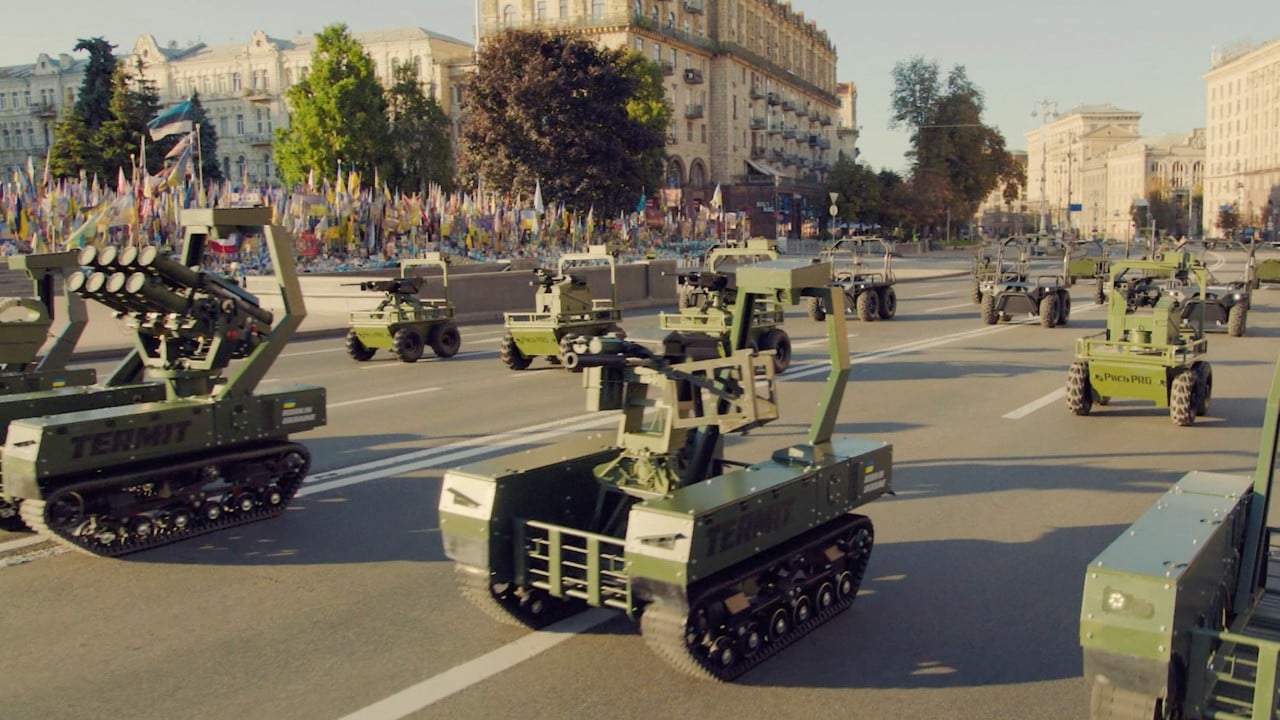
Milrem Robotics isn't just any defense contractor. They build advanced uncrewed military ground vehicles, most notably the THeMIS tracked robots that Ukraine uses extensively on the frontline. Back in 2022, Moscow valued these systems so badly that they put a two-million-ruble bounty on capturing an intact THeMIS robot for research.
When you can't capture a technology on the battlefield, you target its birthplace.
On the night of August 14 to 15, a building belonging to the defense tech firm was set on fire. Quick action by emergency services stopped it from becoming a catastrophe, and no one was hurt. Yet, the investigation by Estonia’s Internal Security Service, KAPO, revealed a chilling reality. The attack wasn't random vandalism. It followed a precise playbook—recruiting regional proxies, executing targeted arson, and trying to cripple Western military supply chains from the inside.
Prime Minister Kristen Michal made Estonia's stance crystal clear. He called out Moscow's tactics and wrote on social media that the country refuses to be intimidated. Foreign Minister Margus Tsahkna went a step further, summoning Russia’s charge d'affaires to the ministry in response.
A Continent Under Siege
Estonia’s revelation isn't happening in a vacuum. It fits into a much larger, darker puzzle of covert operations across Europe.
Since the full-scale invasion of Ukraine in February 2022, monitoring groups and security agencies have tracked roughly 200 incidents of sabotage and malign activity linked to Russia across the continent. We are talking about everything from coordinated warehouse fires and cyberattacks on critical infrastructure to botched assassination plots and explosive-laden drone incidents, like the one Germany foiled at Leipzig/Halle Airport.
Moscow denies everything, naturally. Kremlin spokesman Dmitry Peskov dismissed Estonia's findings as unfounded and detached from reality. But European intelligence agencies aren't buying the denial. The modus operandi matches across borders. Russia is waging a hybrid war, testing NATO's article limits, and trying to bleed Western support for Ukraine dry without triggering a direct conventional war.
Why This Changes Everything for NATO
For years, security analysts worried about tanks rolling across borders. They planned for massive missile barrages and traditional frontlines.
Moscow's current playbook bypasses tanks entirely. It uses low-cost, high-impact hybrid warfare. By hiring local proxies—such as the three Latvian citizens detained in the Milrem case—Russian intelligence agencies create plausible deniability while sowing panic within NATO member states.
It's a strategy designed to make European citizens feel unsafe in their own backyards. If an Estonian defense plant can be targeted, anyone supplying Ukraine feels the heat.
Prime Minister Michal likened Putin's current posture to a "rat in the corner," warning that while a direct conventional attack on Europe remains improbable, these hostile shadow operations are here to stay.
What Europe Must Do Now
You can't defend against a shadow war with old-school diplomacy. Western intelligence agencies need to share threat data faster, tighten facility security around defense tech hubs, and crack down on local criminal networks being flipped by foreign handlers.
If European nations fail to secure their supply chains and punish these hybrid attacks severely, the blueprint will spread. Estonia drew a hard line in the sand. The rest of Europe needs to back them up before the next fire isn't put out so easily.