Politicians love pretending they spend lonely nights hunched over yellow legal pads, crafting every single policy proposal and rhetorical flourish by hand. They want you to picture the midnight oil burning. They want you to believe in the romantic myth of the solitary scribe.
Then reality hits. Discover more on a related subject: this related article.
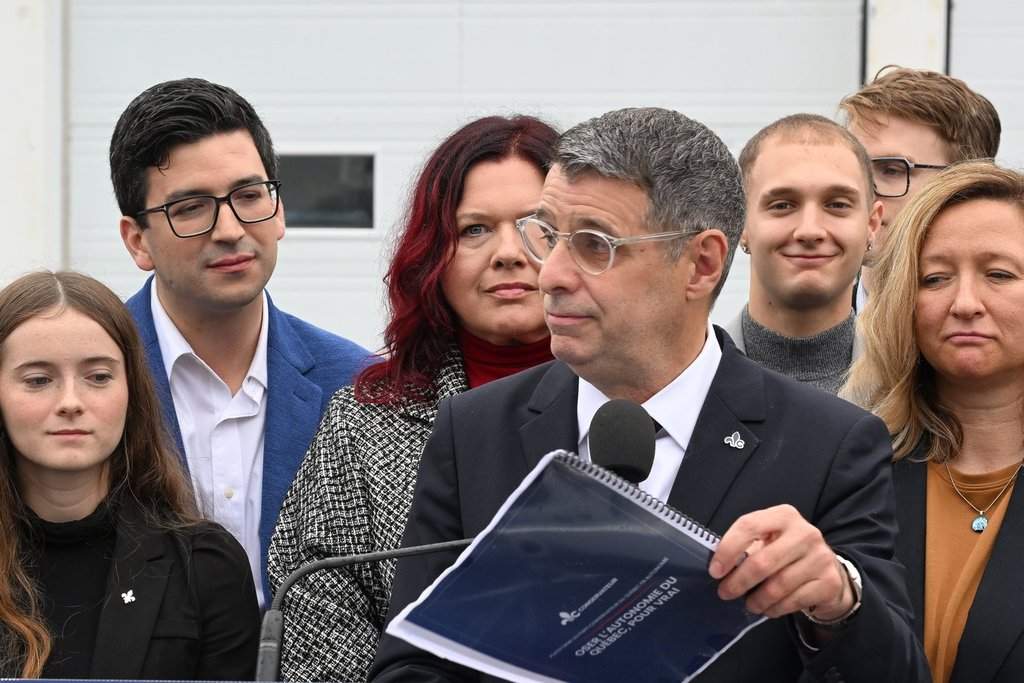
Quebec Conservative Leader Éric Duhaime shattered that political illusion when he admitted to using artificial intelligence to write his latest book, Destination Autonomie. Critics gasped. Opponents cracked jokes on the campaign trail. Media outlets ran software scans claiming a massive chunk of the text was machine-generated.
Everyone is missing the real story here. The shock isn't that a politician used a machine to help write a book. The shock is that anyone expected them to do it the hard way in the first place. Further reporting by The New York Times explores comparable views on the subject.
The Reality Behind the AI Controversy
Let's look at what actually happened. Duhaime didn't just type "write a book about Quebec autonomy" into a chat window and send it off to the printer. He used AI as a structural assistant. He fed it his arguments, his ideas, and his overarching philosophy, letting the software help organize the chaos into readable chapters.
The ideas remain his. The political worldview is his. But the heavy lifting of formatting and sentence arrangement was outsourced to silicon.
According to media reports using detection tools like Pangram, a significant portion of the book showed machine-generated markers. Even an introduction penned by candidate Maïté Blanchette-Vézina faced scrutiny for similar methods. Opponents like Parti Québécois Leader Paul St-Pierre Plamondon and Liberal Leader Charles Milliard had a field day poking fun at whether the party platforms were next.
It makes for great campaign theater. It generates quick soundbites and viral clips. But beneath the political posturing, Duhaime's admission normalizes a workflow that every modern writer, thinker, and communicator is quietly adopting behind closed doors.
Why Politicians Are Terrified of Being Honest About Tech
The backlash stems from an outdated expectation of authenticity. We demand that public figures be pure, traditional, and untouched by modern efficiencies. If a politician uses software to draft a speech or structure a manuscript, voters feel cheated, as if the human element has been stripped away.
That logic falls apart instantly when applied to any other field. We don't demand that architects draft blueprints by hand with ink and parchment just to prove their dedication. We don't ask accountants to avoid spreadsheets because automated math lacks soul.
Duhaime took a calculated risk by admitting it out loud. He defended the move bluntly, stating that social progress relies on technology rather than fighting it. He pointed out that AI served as a tool under strict human supervision.
He's right. The software didn't dream up his political career, his past radio commentary, or his controversial stances on labor unions and government monopolies. It just cleaned up the mess.
The Double Standard of Modern Campaigning
Look at how political campaigns operate today. Parties deploy sophisticated data mining, automated voter contact scripts, algorithmic ad targeting, and machine learning models to predict voter behavior down to the individual street corner. Nobody complains that algorithms picked the target audience for a digital ad.
Yet the moment an algorithm touches prose, people clutch their pearls.
Opponents like Québec solidaire co-spokesperson Ruba Ghazal joked about scanning the book through a telescope to find human writing. Christine Fréchette of the Coalition Avenir Québec quipped that she finally understood how Duhaime found the time to write while running a political party.
Those jabs score cheap political points, but they ignore a basic truth. Politicians are drowning in administrative duties, media appearances, and endless transit across their ridings. Using technology to reclaim time isn't a scandal. It's common sense.
If a tool helps a leader communicate their vision faster and clearer, voters benefit from a sharper, more focused message. The alternative is slower communication and more exhausted leaders relying on overworked staffers who are burning out behind the scenes.
Where This Leaves Political Communications
The taboo around machine assistance in writing is officially cracking. Duhaime won't be the last politician to lean on software to draft a manuscript, a policy brief, or a campaign manifesto. He's just the first one stubborn enough to stop pretending he did it all with a fountain pen.
Transparency matters. If a ghostwriter is standard practice in politics, using a digital assistant shouldn't be treated as a capital offense. The audience cares about the core message, the policy outcomes, and whether the leader can deliver when it counts.
Stop worrying about whether a sentence was shaped by a human wrist or an algorithm. Look at the substance. Look at the intent. That is where the real fight happens.