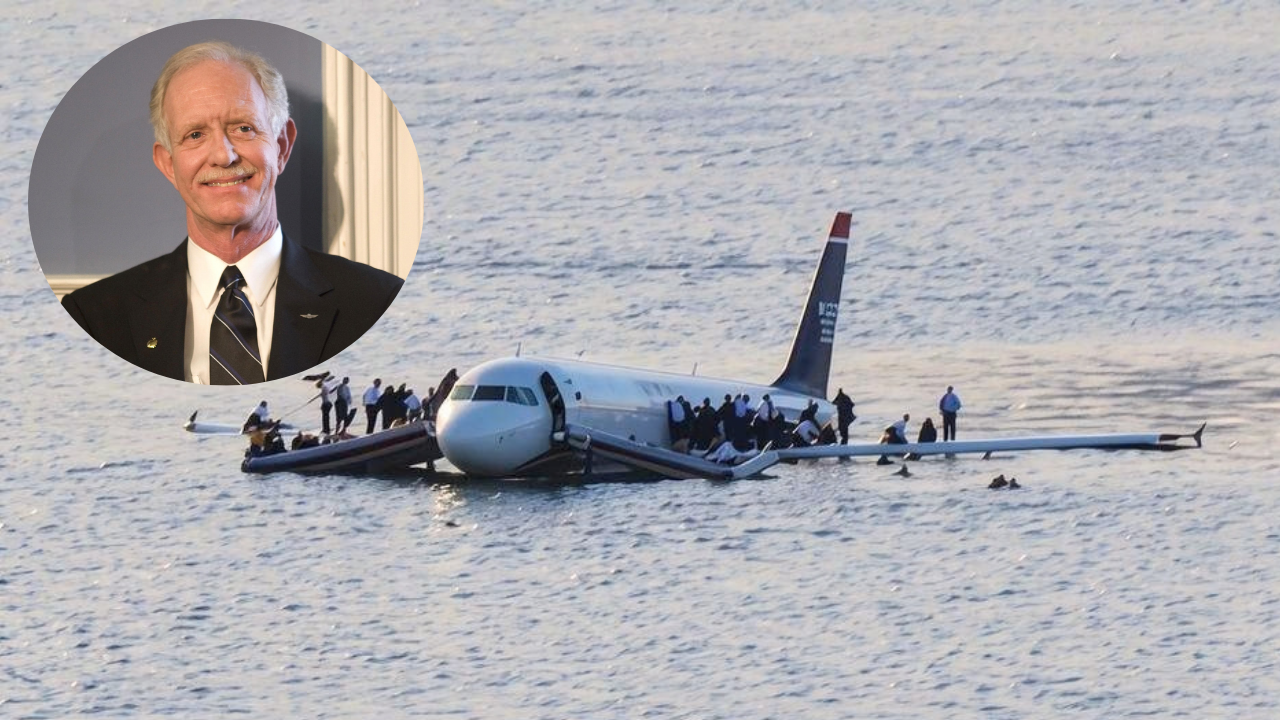
Seventeen years have passed since US Airways Flight 1549 touched down on New York's freezing Hudson River. Everyone remembers the iconic photographs of passengers standing on the wings, waiting for rescue while icy water lapped at the fuselage. That single emergency on January 15, 2009, cemented Captain Chesley "Sully" Sullenberger into global folklore. But reducing a four-decade aviation career to three and a half minutes of sheer survival sells the man entirely short.
Recent milestones prove that his legacy reaches far beyond a single miraculous glide path. Inducted into the National Aviation Hall of Fame, Sullenberger's recognition honors a lifetime spent studying how humans interact with complex machinery under catastrophic pressure. Let's look past the Hollywood movie gloss and examine what actually made his career remarkable, why his recent honors matter, and what we can learn from how he handles life off the flight deck.
The Reality of Three and a Half Minutes
Most people think pilots practice water landings all the time. They don't. Flight simulator training usually focuses on standard engine failures at altitude, where you have precious minutes to configure systems and communicate with dispatch. Flight 1549 offered none of that luxury.
When a flock of Canada geese slammed into the Airbus A320 just moments after takeoff from LaGuardia Airport, both engines ingested the birds and immediately flamed out. The aircraft was barely moving fast enough, sitting at a low altitude over one of the most densely populated urban centers on earth.
Captain Sullenberger and First Officer Jeffrey Skiles faced an impossible math problem. Return to LaGuardia? Too risky, buildings block the glide. Teterboro Airport in New Jersey? Traffic controllers suggested it, but Sullenberger knew instantly they wouldn't clear the terrain.
Instead, he made a split-second pivot that defied standard airline operational playbooks. He chose the Hudson River.
The descent lasted roughly 208 seconds. No alarms stopped ringing. No manual provided step-by-step instructions for ditching a commercial jetliner into an urban river without structural breakup. Sullenberger flew the airplane all the way to impact, flaring the nose at the exact right microsecond to prevent the aircraft from cartwheeling. All 155 people walked away alive.
Beyond the Miracle Label
Sullenberger has always hated the word "miracle." He knows miracles imply luck. What happened on Flight 1549 was not luck; it was the cumulative result of 40 years of deliberate practice, military discipline, and an obsessive fixation on safety protocols.
Before he ever sat in the left seat of a commercial airliner, Sullenberger grew up in Denison, Texas, earned his wings at the US Air Force Academy in 1973, and flew F-4 Phantom II jets as a military flight leader and training officer. Fighter aviation teaches you how to compartmentalize terror. When your jet fails at supersonic speeds, panic kills you instantly. You rely on muscle memory and rigorous procedural training.
When he transitioned to Pacific Southwest Airlines in 1980—later absorbed by US Airways—he brought that military-grade precision into commercial aviation. He didn't just fly planes; he helped redesign accident investigation procedures, served as an Air Line Pilots Association safety chairman, and taught crew resource management long before it became an industry buzzword.
When the National Transportation Safety Board tore apart the wreckage of Flight 1549, they didn't find pilot error. They found masterclass execution.
The Quiet Work After the Cameras Left
Most people would cash in on worldwide fame after surviving a disaster like that. Sullenberger took a different route. He retired from commercial flying in March 2010, but he never really left the cockpit of aviation advocacy.
He spent over a decade testifying before Congress, pushing for stronger pilot training standards, fighting against airline fatigue rules that put exhausted flight crews in charge of hundreds of lives, and lecturing on leadership. Later, he stepped into public diplomacy, serving as the United States ambassador and representative to the International Civil Aviation Organization starting in 2022.
His recent induction into the National Aviation Hall of Fame for the Class of 2026 isn't a lifetime achievement award handed out just for one good day at the office. It recognizes a career that spanned the transition from analog gauges to computerized glass cockpits, paired with an unwavering commitment to keeping passengers safe long after they've unbuckled their seatbelts.
Facing a Different Kind of Horizon
Life doesn't stop throwing curveballs once you achieve legendary status. In July 2026, Sullenberger shared publicly that he had been diagnosed with early-stage Alzheimer's disease after receiving the news in late 2025.
True to form, he didn't hide. Alongside his wife Lorrie, he spoke openly about managing memory difficulties and facing the condition head-on. Just as he once confronted dead engines over Manhattan, he chose transparency over denial, hoping to strip away the stigma that families dealing with neurodegenerative diagnoses often face.
It's a poignant reminder that heroism isn't just about handling a crisis at 3,000 feet. Sometimes, heroism looks like dignity when facing an uncertain future on the ground.
Captain Sully Sullenberger's journey teaches us that competence isn't born in a single dramatic moment. It's built quietly, decision by decision, during decades of unglamorous practice. Whether you're managing a corporate crisis, flying an aircraft, or navigating personal adversity, remember that preparation always beats panic. Pay attention to the details when nobody is watching. Your own emergency might happen someday, and when it does, you'll want your instincts to be as sharp as his were over the Hudson.