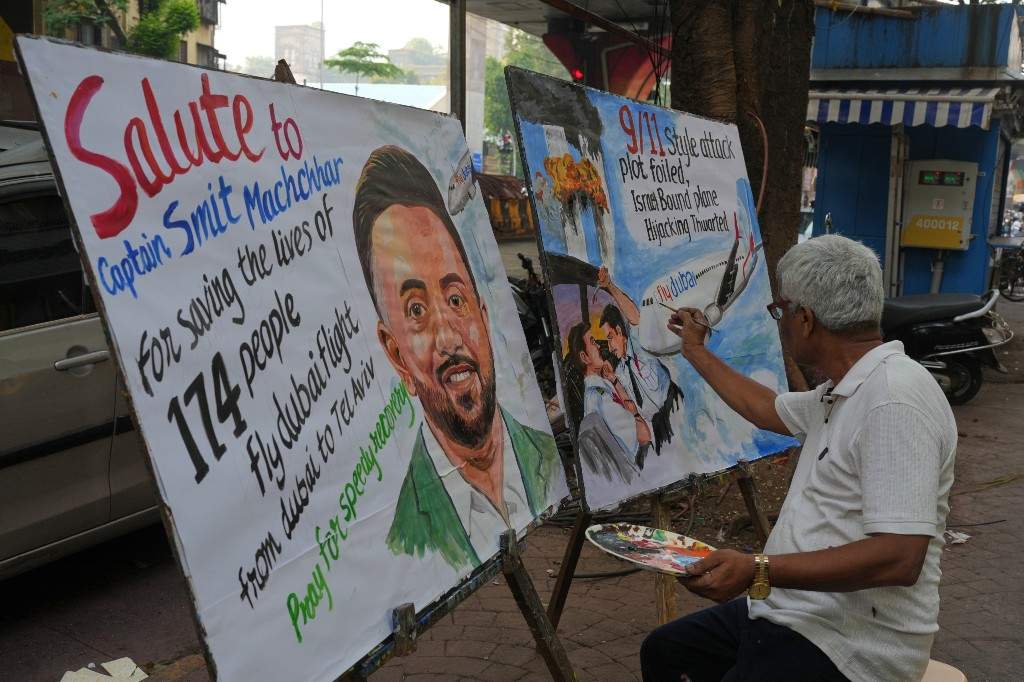
Commercial aviation relies entirely on trust. You strap yourself into a metal tube flying six miles above the earth and assume the two people behind the reinforced door want to land safely just as much as you do. Most days, that trust holds. But on a FlyDubai flight from Dubai to Tel Aviv, that security blanket tore wide open.
A cockpit turned into a crime scene. A co-pilot allegedly lunged at the controls with a knife, trying to force a catastrophic crash. Yet disaster didn't happen. Captain Smit Machchhar stopped it.
Inside the Cockpit Chaos
Flight FZ1073 carried 174 passengers into a nightmare. While airborne, the co-pilot launched a sudden, violent physical assault against Machchhar, inflicting serious stab wounds. The attacker wanted to bring the Boeing 737 down.
Most people would panic. Machchhar didn't. Bleeding and fighting for his life, the veteran Indian captain managed a feat of extreme composure. He unlocked the cockpit door, signaling passengers and crew that something was profoundly wrong.
Passengers rushed forward. They grappled with the assailant while the aircraft underwent a sharp, terrifying descent. The flight ultimately diverted for an emergency landing in Tabuk, Saudi Arabia.
Prime Minister Narendra Modi, Israeli Prime Minister Benjamin Netanyahu, and aviation leaders worldwide didn't hesitate to call Machchhar a hero. Netanyahu noted that his actions averted a midair disaster that could have rivaled historical tragedies. SpiceJet, where Machchhar spent over a decade as a senior commander logging nearly 10,000 hours, poured out public praise for his courage.
Who Is Captain Smit Machchhar?
Heroism rarely comes from nowhere. Machchhar's path to the left seat of a commercial airliner took decades of steady, methodical work. Originally from Mumbai, his journey started long before FlyDubai.
He trained at Mainland Air in Dunedin, New Zealand, spending 18 months mastering the fundamentals of flight. Teachers remembered him as an exceptional student who took his training seriously.
After returning to India, he spent eleven years climbing the ranks at SpiceJet. He transitioned from a nervous first officer making rookie mistakes to a seasoned line training captain. Aviation podcasts where he spoke about handling emergencies—like delivering medical diversions for pregnant passengers—reveal a pilot obsessed with calm procedure over panic.
"Stressing is not going to help," he said in an interview prior to the incident.
He practiced what he preached. When actual life-or-death danger struck thousands of feet over the Middle East, that mental framework kept him alive.
The Security Blind Spot We Ignore
This incident exposes a terrifying vulnerability in modern commercial aviation. Pilots undergo rigorous medical checks, psychological evaluations, and security screenings before every single rostered duty. Background checks are extensive.
Yet cockpit insider threats remain one of the hardest risks to mitigate. When a pilot or co-pilot decides to break protocol from the inside, the physical barriers designed to keep intruders out suddenly trap the victims in.
Airlines have focused heavily on fortifying flight deck doors since 2001. Those doors successfully stopped outside hijackers for decades. But when the threat originates from the pilot seat, that security feature becomes a trap. Machchhar had to actively fight his way through physical trauma to open that door so passengers could intervene.
Aviation regulators are going to face fierce questions about mental health monitoring and co-pilot oversight. Incidents involving pilot-initiated crashes are rare, but each occurrence shakes public confidence to its core.
What Happens Next
Machchhar is recovering in a Saudi hospital in stable condition. His family in Mumbai has received support from diplomatic channels, and his neighbors are recounting his lifelong calm demeanor.
The attacker, identified as an Omani national, remains in custody in Saudi Arabia under interrogation. Motives are still opaque, and international authorities are sorting through jurisdiction and security failures.
When you book your next flight, remember the quiet professionalism of commanders like Smit Machchhar. They don't just fly the plane. Sometimes, they have to fight off the person sitting right beside them just to bring you home.
Check your flight safety briefings. Know your crew. Trust is earned in the air, and Captain Machchhar earned a lifetime of it.