If you stare at parts of the Sacramento-San Joaquin Delta long enough, you realize you're looking at land sitting up to 24 feet below sea level. Centuries of intense agriculture drained the life out of the region's organic peat soils. Once those soils dry out and hit oxygen, they break down, oxidizing into thin air and causing the ground itself to physically sink.
California is done pretending dry-farming can continue forever in a sinking bowl.
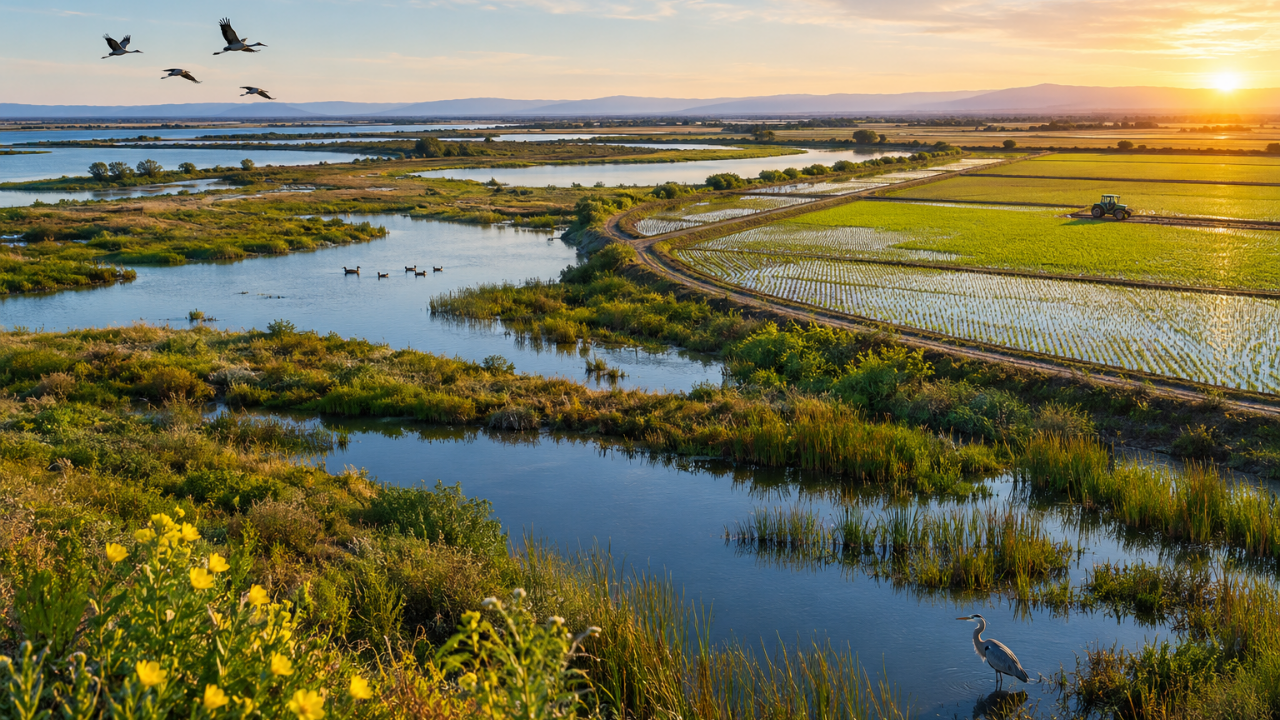
Officials are breaking ground on a massive $28 million overhaul of the Webb Tract, a Metropolitan-owned island in Contra Costa County. Instead of fighting nature with more dikes and pumps, the state is doing something radical: flooding it. The plan converts 2,800 acres of dying agricultural land back into a mixed landscape of wetlands, upland habitat, and productive rice fields.
The Physics of Sinking Peat
Most people don't realize that standard farming in the Delta is a ticking clock for land elevation. When farmers drain peat soils to grow traditional crops, the microbial decomposition of organic matter accelerates rapidly. The ground drops by inches every single year. You get a vicious cycle where islands sink deeper, levees face higher stress, and the entire freshwater supply for millions of Californians hangs by a thread.
The Webb Tract project flips that script. Water is the enemy of soil oxidation. By keeping the peat waterlogged, you starve the microbes of oxygen and slam the brakes on subsidence.
Rice farming plays a quiet, practical hero role in this strategy. Rice requires flooded paddies to thrive. By incorporating rice cultivation alongside restored wetlands, the project keeps the soil wet while letting farmers keep working the land. Metropolitan has already leased thousands of acres on Webb Tract for rice, proving that environmental restoration doesn't have to mean kicking every farmer off the property.
Beyond Sinking Dirt: Carbon and Water Resilience
Stopping the ground from dropping is only half the battle. When dry peat decomposes, it belches massive amounts of greenhouse gases into the atmosphere. Baseline emissions from these drained soils turn out to be much worse than earlier estimates suggested.
By rewetting the Webb Tract, the state traps that organic carbon right where it belongs. This carbon-sequestration benefit is so direct that the project could generate carbon credits. Metropolitan can use those credits to offset its own emissions or sell them back into the market to help pay for long-term site management.
At the same time, native species get a lifeline. Years of heavy development carved up the Delta, leaving migratory birds and local wildlife searching for fragments of natural habitat. The new wetlands bring back crucial ecological zones. The very first planting includes the Bay Miwok evening primrose, tying the physical restoration back to the region's Indigenous communities who guided the project's design.
Cutting Through Red Tape
Big environmental projects usually die in a ten-year cycle of permitting hell. California is trying to bypass that trap here through its Cutting the Green Tape initiative, which streamlines the bureaucratic hurdles for ecological resilience projects. Backed by a $20.9 million grant from the Sacramento-San Joaquin Delta Conservancy and funded partly by the Metropolitan Water District of Southern California, the $28 million effort moves fast because it has to.
You're looking at a complete shift in how California manages its water islands. They aren't just isolated dirt patches meant to feed crops until they turn to dust. They are dynamic sponges that balance agriculture, carbon storage, and flood defense all at once.
If this model works at scale on the Webb Tract, expect to see the rest of the Delta follow suit. We can't pump our way out of a sinking basin, but we can flood our way back to stability.