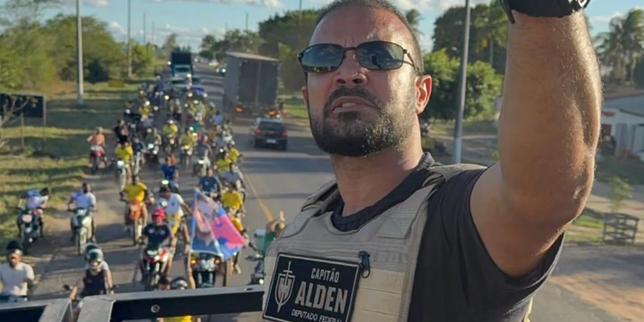
Fear sells. In Brazilian politics right now, it pays out millions in campaign donations and guarantees legislative seats. Over 1,200 active and retired members of law enforcement threw their hats into the ring for the October 4 general elections, aiming directly at seats in Congress. They aren't running despite their badges; they're running because of them.
When you walk down the streets of Rio de Janeiro or São Paulo, public safety isn't an abstract policy debate. It's an everyday anxiety. Cartels, gangs, and heavily armed militias control entire neighborhoods, leaving citizens caught in a permanent crossfire. Law enforcement candidates know this all too well. Instead of offering nuanced social programs or long-term judicial reform, they pitch a simple message: vote for the cop, and stop the crime wave.
The Politics of the Badge
For years, public security has been the ultimate trump card in Brazilian elections. But we're seeing a shift from politicians talking about police work to actual cops wearing uniforms on billboards and social media feeds. They leverage their frontline experience to project authority, discipline, and uncompromising strength.
Voters tired of empty bureaucratic promises lean toward candidates who promise an iron fist. It's an easy psychological trap. If a system feels broken, you don't call a philosopher—you call someone with a gun. Police union networks, social media channels, and conservative political groupings amplify this message daily. They feed public anxiety about crime statistics and urban violence to cement their electoral base.
Why the Safety Pitch Resonates So Deeply
Let's look at why this strategy works so effectively. Brazil deals with staggering levels of violent crime. High-profile police operations—some resulting in massive casualties, like the deadly raids in Rio—dominate the news cycle. Voters feel trapped between brutal criminal syndicates on one side and heavy-handed state responses on the other.
When police officers step into the political arena, they present themselves as the only line of defense against total chaos. They tap into deep-seated frustrations with the judicial system, which many Brazilians view as slow, corrupt, and overly lenient. By framing themselves as protectors of the ordinary citizen, these candidates bypass traditional party politics. They run as anti-establishment figures even when they represent the state's coercive apparatus.
The Cost of Militarizing Legislation
Trading uniforms for legislative office changes how laws are written. When police blocks grow in Congress, public safety discussions narrow down to harsher penalties, extended police immunity, and expanded weapon access. Complex socio-economic drivers of crime—like systemic poverty, failing education systems, and youth unemployment—get pushed to the sidelines.
You end up with a legislative body hyper-focused on retributive justice rather than structural reform. Critics point out that this trend risks blurring the line between democratic representation and institutional self-protection. When law enforcement agents legislate their own operational rules, accountability often takes a hit.
Looking Past the Rhetoric
The October elections proved that security-driven campaigns remain a potent force in Latin America's largest democracy. As long as citizens feel unsafe in their daily lives, candidates with badges will find a ready audience.
If you want to understand where Brazil's political culture is heading, look at the intersection of urban anxiety and police ambition. Solving crime requires addressing its roots, but until voters stop rewarding fear-mongering at the ballot box, the badge will remain the most powerful ticket to political power.