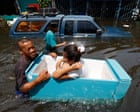
Bangkok has always lived with water. You expect afternoon monsoons to turn avenues into temporary rivers, pushing rats and cockroaches out of sewers and onto high ledges. It's a seasonal rhythm locals know by heart. But when roughly 300 millimeters of rain dropped in barely forty-eight hours last week, the Thai capital didn't just flood. It broke.
Entire neighborhoods transformed into stagnant lakes. Cars vanished beneath brownish water, leaving only roofs peeking above the surface like floating furniture. Forty people lost their lives to drowning or accidental electrocution. Thousands crowded into makeshift shelters across all fifty city districts. When a megacity built on a swamp gets hit with half a year of typical London rainfall in two days, concrete infrastructure meets its brutal match.
The Concrete Trap That Created the Crisis
You can't pave over a floodplain and expect nature to politely step aside. Bangkok rests on the muddy delta of the Chao Phraya River, historically crisscrossed by a dense network of canals known as khlongs. These waterways acted as the city's natural lungs and drainage system. Over decades of rapid urbanization, developers paved over hundreds of those canals to build roads, shopping malls, and high-rise blocks.
The remaining drainage network handles about 60 millimeters of rain per hour. Upgraded zones push that threshold to 80 millimeters. Last week's low-pressure system—stuck stubbornly over the city after blowing in from an unusually warm South China Sea—shattered those limits instantly.
Water had nowhere to go. Pumping stations ran at maximum capacity, yet streets turned into dystopian scenes. Residents improvised, using inflatable paddling pools and even a repurposed kitchen fridge as boats to navigate submerged streets. One man was arrested for riding a jet ski down a major thoroughfare. Behind the absurd imagery lies a grim reality: the urban drainage plan was never designed for multi-day downpours of this scale.
What Authorities Got Wrong
The disaster wasn't just meteorological. It was organizational. Government communication lagged badly behind the rising tide. Residents in older compounds like the 1970s Khlong Chan flats in north-east Bangkok received mobile phone warnings far too late. By the time alerts pinged on phones, ground-floor stairwells were already waist-deep in water.
Urban planning experts point out that authorities consistently underestimate how fast weather patterns are shifting. A system that stalls over a city for days requires early evacuations and coordinated logistics, not reactive emergency scrambling. Suvarnabhumi Airport suffered major disruptions because half of Thai Airways' workforce couldn't reach the tarmac, stranding thousands of luggage items and grounding flights.
When infrastructure fails, the burden falls entirely on ordinary people. Communities formed human chains, sharing food and hoisting belongings to second-story balconies. Yet as the water slowly recedes during brief spells of sunshine, a new hazard sets in. Rotting debris, stagnant sludge, and a sickening chemical smell now coat the streets.
The Bigger Picture Across South-East Asia
This isn't an isolated anomaly. Neighboring Myanmar is wrestling with its own catastrophic flash floods and landslides, where civil war and strict media controls hamper rescue efforts. Scientists studying south-east Asia's climate trends note a clear trajectory. Hotter seas evaporate massive volumes of moisture into the atmosphere, enabling storms to punch harder and linger longer.
Combine this atmospheric loading with an unusually strong El Niño cycle, and you get erratic, violent weather extremes that break historical records. Bangkok's ongoing crisis serves as a stark warning for other low-lying coastal megacities. Pumping stations and dikes buy time, but they cannot outpace rapid climate shifts combined with unchecked urban sprawl.
If you're visiting or living in the region, don't rely solely on municipal alert systems during monsoon peaks. Keep emergency supplies elevated, monitor localized low-pressure systems independently, and recognize that a minor forecast upgrade can escalate into an urban emergency overnight. Bangkok is fighting to stay afloat, but the city's engineering limits have officially been reached.