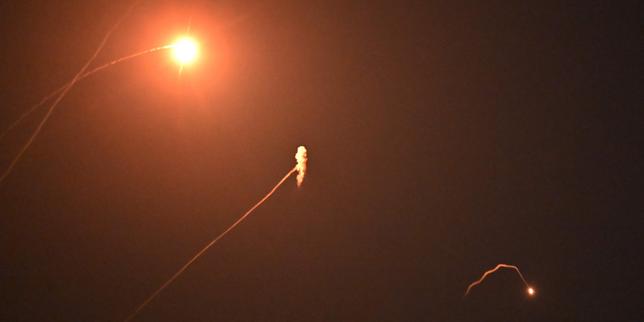
The air over Kyiv didn't just vibrate; it tore open. When a fresh barrage of Russian drone strikes smashed into the Ukrainian capital and its surrounding region, the human cost was immediate and devastating. An adolescent boy of fourteen was among the dead, killed instantly when a projectile obliterated part of a residential building in the Pecherskyi district. This isn't some distant geopolitical abstraction played out on a high-level diplomatic whiteboard. It is the raw, unvarnished reality of a conflict that refuses to slow down, even as world leaders trade rhetorical punches in New York and European capitals.
Let's look at what actually happens on the ground when these night raids morph into daylight assaults. For months, the pattern was predictable. The alarms would wail at midnight, air defenses would rattle windows through the small hours, and by morning, commuters would sweep up glass before heading to work. But the recent escalation in late September shifted that dark baseline. The deployment of jet-powered drones by Russian forces has fundamentally changed the calculus for air defense operators. These newer vectors travel faster, leaving civilians with seconds—not minutes—to dive for cover.
Why Air Defenses Are Struggling With The New Vector
Ask any military analyst in Kyiv right now, and they’ll tell you the same uncomfortably blunt truth. Intercepting slow-moving propeller drones like the classic Shaheds is one thing. Doing it when the technology shifts toward high-speed propulsion is an entirely different engineering nightmare.
The defense systems stretched across the country are operating at maximum capacity, burning through expensive surface-to-air munitions to counter cheap, mass-produced flying weapons. When the sky lights up over central districts, the debris alone becomes lethal shrapnel. Residents in neighborhoods like Darnytskyi and Podil know the sound too well—the angry buzzing of engines followed by a concussive shockwave that shatters apartment blocks.
And the targets are evolving, too. It isn't just military installations or energy grids taking the hits. Recent strikes have pulverized commercial warehouses, postal facilities, and civilian supply hubs near the capital, including infrastructure tied to everyday consumer distribution. Moscou claims these sites house hidden military assets, while Kyiv points to smoking ruins containing nothing more than medical supplies and commercial goods.
The Diplomatic Stall And The Price Paid By Civilians
Meanwhile, the diplomatic front lines are completely frozen. While Sergei Lavrov and other Kremlin officials openly state there is "no pause" coming in the military campaign, Western diplomats are left scrambling to find leverage that simply isn't working. Recent high-level meetings at the United Nations General Assembly yielded plenty of hand-wringing and photo ops, but zero momentum toward a ceasefire. Vladimir Putin’s signals make it abundantly clear: Moscow is betting that Western fatigue will outlast Ukraine's defense budget and industrial capacity.
On the other side, Kyiv's leadership continues to press for stricter sanctions and advanced air shield components, arguing quite rightly that diplomacy without total airspace security is a dead-end street. President Volodymyr Zelenskyy’s administration has consistently maintained that every delayed delivery of missile interceptors translates directly into fresh graves in suburban cemeteries.
You can't negotiate peace while children are dying in high-rise apartments at dawn. Until the technological asymmetry of aerial attacks is solved or a genuine enforcement mechanism for civilian protection is forged, the sirens over Kyiv will keep sounding. The tragedy of a fourteen-year-old boy killed in his own neighborhood is just one data point in a war that demands immediate, radical shifts in how the international community protects urban centers. Stay alert, track the air raid alerts, and don't look away from what is happening right now.