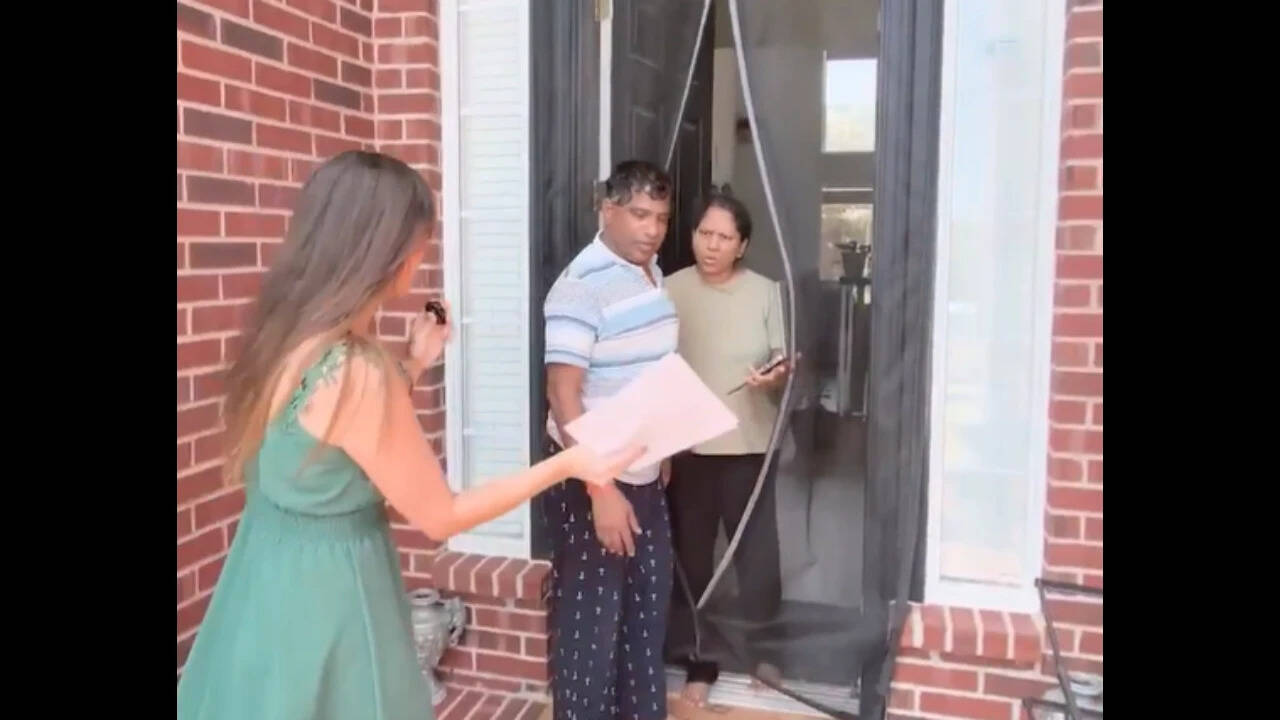
Journalism looks different these days. Sometimes it involves sitting behind a desk filing public records requests. Other times, it means sending a decoy delivery person to a suburban house in Plano, Texas, and shoving a microphone in a bewildered resident's face while rolling cameras.
That is exactly what happened when Texas commentator and media personality Sara Gonzales showed up at the home of Rajender Rao Bairineni, an Indian owner of an IT staffing company called Global Star IT Serve LLC. Bairineni’s family did what most people would do when confronted with an aggressive, camera-wielding stranger at their threshold: they slammed the door shut and called 911.
The ensuing police call and the viral video footage sparked intense debates across social media networks, immigration forums, and legal circles. But beneath the circus-like atmosphere of doorstep confrontations lies a serious, systemic problem that affects thousands of foreign tech workers every single year. Let's look at what actually happened, why the H-1B visa system remains vulnerable to exploitation, and what this bizarre encounter tells us about modern accountability.
The Allegations Behind the Plano Doorstep Ambush
The confrontation didn't happen in a vacuum. Gonzales had been tracking accusations against Bairineni for months following a tip from an anonymous Indian tech worker hired under the H-1B program.
According to the claims documented in the investigative report, the employee alleged severe financial exploitation. The worker stated that Bairineni withheld wages for two full months, illegally shaved deductions from his paycheck, and demanded that he sign fraudulent documents stating he had received full compensation. When the employee refused to play along, things reportedly escalated to verbal abuse at a local restaurant.
To make matters worse, investigators and the reporting revealed that Bairineni's registered corporate office address at 8105 Rasor Boulevard in Plano functioned essentially as a shell or fake location rather than a functioning workspace.
Ghost offices and staffing agency intermediaries have long been the Achilles' heel of the American employment-based visa ecosystem. Small, unscrupulous outsourcing firms sometimes use the H-1B process to bench workers, shave salaries, and exploit the heavy power imbalance inherent in employer-sponsored visas. When your legal right to remain in the country depends entirely on your employer keeping you on the payroll, you lose the ability to easily walk away from abusive work situations.
Why Calling the Police Was the Only Option For the Family
When the doorbell rang and a stranger started interrogating Bairineni about visa fraud right on his porch, his wife opened the door expecting a routine package delivery. Instead, she found herself ambushed by a film crew.
Visibly shaken, she dialed 911. In the audio recording of the emergency call played later in Gonzales's video, the woman sounds genuinely terrified, explaining that an aggressive camera crew had ambushed her home.
When Plano police officers arrived, they assessed the situation carefully. Filming someone from a public sidewalk or knocking on a door isn't technically a criminal offense on its own, provided there's no trespassing or explicit threats of violence. The responding officers informed the family that the act of videotaping outside didn't break local laws, leaving the residents with documentation options rather than an immediate criminal arrest for the reporter.
It’s easy to feel uncomfortable with vigilante-style journalism. Turning up at private residences creates real safety hazards for families, children, and bystanders who have nothing to do with corporate compliance violations. At the same time, when federal regulatory agencies move at a snail's pace—or fail to investigate smaller staffing firms altogether—public pressure and investigative media often step into the vacuum.
The Broader Reality of H-1B Exploitation
We need to talk about why these abuses keep happening. The H-1B visa program was designed to bring specialized global talent to fill critical tech gaps in the American economy. But over decades, it morphed into a cash cow for body shops and low-tier consulting firms that arbitrage foreign labor.
Workers are frequently trapped by three major structural flaws:
- The 60-Day Clock: If an H-1B worker is fired or quits, they have a strict 60-day window to find a new employer, secure a visa transfer, or leave the country. Abusive bosses know this and use the threat of deportation as leverage to force compliance.
- The Dependency Trap: Green card processing timelines for nationals from countries like India can stretch for decades. Workers tied to a specific employer for permanent residency sponsorship are hesitant to rock the boat, even when faced with wage theft or illegal contract demands.
- Paper Companies and Shell Offices: Setting up a small LLC with a virtual office address allows bad actors to sponsor visas without maintaining actual operational infrastructure or steady client projects.
Federal agencies like the Department of Labor and USCIS do crack down on visa fraud when complaints are officially filed, but the investigative backlog is staggering. Thousands of workers suffer in silence because the formal complaint process feels risky, slow, and opaque.
What You Should Do If You Face Visa Exploitation
If you or someone you know is caught in a predatory employment arrangement with an IT staffing agency, waiting around for a viral media crew to rescue you is a terrible strategy. You need concrete, actionable steps to protect your legal status and your financial rights.
First, document everything. Keep copies of every pay stub, bank deposit record, email, text message, and performance review. If your employer cuts your salary, demands kickbacks, or benches you without pay in violation of Department of Labor rules, contemporaneous paper trails are your best defense.
Second, consult an independent immigration attorney who represents employees—not just corporate immigration lawyers whose primary loyalty belongs to the company footing the bill. A worker-side employment attorney can explain your rights regarding portability, wage claims, and whistleblowing protections.
Third, file complaints with the appropriate federal bodies. The Wage and Hour Division of the Department of Labor investigates wage theft and H-1B compliance violations through Form WH-4. Whistleblower protections exist to shield workers from retaliatory firing, though navigating them requires careful legal guidance.
The chaotic doorstep confrontation in Plano will eventually fade from the news cycle. But the structural loopholes that allowed a small-time IT staffing firm to allegedly abuse a tech worker in Texas will remain wide open unless enforcement catches up to the reality on the ground.