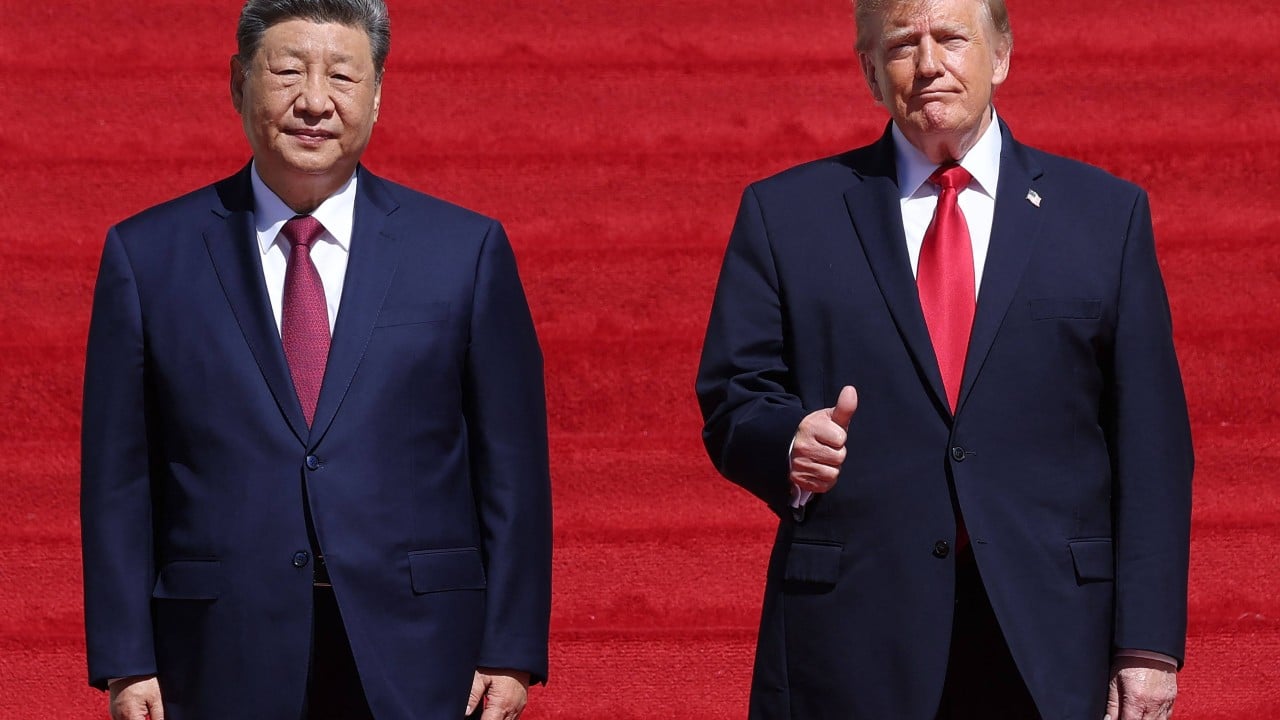
Headlines love a spectacle. When Donald Trump and Xi Jinping meet face-to-face, the world holds its breath, expecting either a miraculous trade breakthrough or a sudden march toward disaster. But reality is rarely that theatrical. Beneath the pomp, the red carpets, and the carefully choreographed handshakes lies a much more complicated diplomatic chess game. Most mainstream coverage treats these summits like reality television episodes, focusing entirely on who blinked first or what gift was exchanged. That misses the forest for the trees.
If you want to understand where global superpowers are heading, you have to look past the superficial spin. Let's look at what actually transpired during Xi Jinping's 43-hour trip to the United States and break down why the real story isn't about immediate policy rewrites. It's about strategic positioning.
The Illusion of Breakthroughs and the Reality of Stalemate
Every single time Washington and Beijing sit down at the negotiating table, commentators rush to predict an era of cooperation or a total economic decoupling. Both extremes are wrong. Diplomacy between the world's two largest economies is an exercise in managed friction.
During the recent high-stakes meetings in Washington, trade, Taiwan, and technological dominance took center stage. Trump rolled out major diplomatic hospitality for Xi's first state visit to the US in over a decade. Yet, welcoming ceremonies don't erase structural disagreements. Tariffs remain high. Supply chains are still scrambling to decouple or de-risk. Semiconductor restrictions are firmly in place.
What changed? Tone. And in high-stakes diplomacy, tone can prevent miscalculation.
When leaders talk directly, the risk of accidental escalation drops. That is the actual success of the summit, not some sweeping treaty that solves every dispute over intellectual property or maritime boundaries. Leaders didn't sign a grand bargain because a grand bargain is impossible right now. Their domestic political realities forbid major concessions. Trump has to project strength to his base, while Xi cannot afford to look weak under intense domestic economic pressures.
Soft Power and the Subtext of Diplomacy
While the presidents hammered out trade and security parameters behind closed doors, separate diplomatic tracks ran in parallel. First ladies Melania Trump and Peng Liyuan toured the Smithsonian’s National Museum of Asian Art, visiting the historic Peacock Room.
Critics dismiss these cultural visits as mere photo-ops. They aren't. In the architecture of international relations, cultural engagements serve as pressure valves. When political talks stall over critical national security issues, cultural diplomacy keeps communication channels open. It signals to domestic and international audiences that despite intense geopolitical rivalry, total hostility isn't the immediate goal.
You have to watch what governments do when the cameras are off. Both sides need each other to keep global inflation manageable and financial markets stable. Complete isolation is economically suicidal for both economies, no matter how loud the nationalist rhetoric gets on social media.
The Tech and Trade Reality Check
Let's talk about the economy. Tech restrictions haven't vanished. The semiconductor blockade is a permanent feature of modern statecraft. Washington views advanced chips as national security assets, not consumer electronics. Beijing views indigenous technological self-reliance as an absolute survival metric.
Neither side is backing down on tech sovereignty. So when people ask whether the summit solved the trade war, the answer is a hard no. What the summit did accomplish was establishing guardrails. It prevented a bad situation from getting worse.
Businesses operating internationally cannot afford to treat geopolitical summits as turning points. If you are building a supply chain or managing cross-border investments, don't bet your capital on a sudden detente. Expect persistent friction. Diversify your operations because export controls and regulatory hurdles are here to stay.
What Comes Next for Global Markets
The aftermath of this summit reveals a predictable pattern. Markets rally on the news of a cordial meeting, then slide back down when reality sets in. The structural rivalry between the United States and China is the defining geopolitical reality of our era. It won't be resolved by a weekend of talks in Washington.
Keep your eyes on practical metrics rather than political rhetoric. Watch shipping volumes, semiconductor licensing approvals, and bilateral communication channels between military commanders. Those indicators tell you the true temperature of the relationship far better than any joint communique.
Stop looking for a Hollywood ending in international relations. There is no final victory or defeat here, just an endless, grinding negotiation between two superpowers trying to share the same planet without breaking it. Prepare your strategy accordingly.