Trials involving police officers accused of violent crimes pull back the curtain on how forensic investigations work from the inside out. When former New South Wales police officer Beau Lamarre-Condon went on trial accused of murdering Jesse Baird and Luke Davies in February 2024, the courtroom wasn't just relying on witness testimonies. Instead, forensic evidence, luminol testing, and recovery operations laid bare a chilling timeline of events.
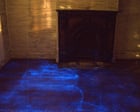
The case centers on an inner Sydney terrace house in Paddington. Prosecutors argue that Lamarre-Condon used his police service weapon to kill the couple inside Baird's home before attempting an extensive cleanup. Forensic experts walked the jury through hundreds of exhibits, including images of rooms treated with luminol—a chemical agent that reacts with iron in hemoglobin to make invisible bloodstains glow bright blue under specialized lighting.
The Forensic Picture Inside the Paddington Home
Photographs presented by crime scene investigator Senior Sergeant Bronwyn Lansley showed bedrooms, hallways, and courtyards glowing under luminol analysis. Investigators even accessed the sub-floor beneath Baird's ground-floor bedroom using a small trapdoor, uncovering a bloodstained tarpaulin tucked away beneath the floorboards.
Other details revealed during the proceedings highlight how meticulous modern forensic work can be, even when an alleged perpetrator attempts to hide the damage. A bullet hole discovered in a bedroom door months after the initial search had been filled with putty and covered with a mounting hook. Laboratory analysis of stippling marks—powder burns left when a firearm is discharged close to a surface—confirmed that the muzzle was unhindered when fired directly toward the barrier. Another recovered bullet was visibly misshapen, having passed through a biological source before penetrating the wooden flooring below.
Disposing of the Evidence
The state's narrative points to a rapid scramble to hide what happened. According to court exhibits, the cleanup extended far beyond the terrace house. More than 100 photographs displayed items recovered from a skip bin at the Cronulla Bowls Club, where personal belongings belonging to Baird and Davies were dumped.
The dumpster contents read like a heartbreaking inventory of everyday life abruptly shattered. Blood-soaked clothing, jewelry, bed sheets, and a wallet containing a Qantas ID card belonged to Davies, a flight attendant. Items tied to Baird's life as an AFL goal umpire and television presenter—including flags, caps, and shorts still sealed in their original plastic packaging—were also recovered from the waste.
Forensic linkage became a crucial pillar for the prosecution. Senior Sergeant Lansley confirmed that a bloodied shoeprint found on the hem of a recovered hoodie matched footwear impressions discovered near a rural monastery in Bungonia, where the victims' bodies were ultimately found.
The Defense Strategy and Next Steps
The defense, led by senior counsel John Stratton, presented a vastly different perspective to the jury. During opening statements, the defense argued that the fatal shootings occurred during physical struggles, framing the actions as self-defense. According to this account, the subsequent cleanup efforts were driven entirely by panic rather than calculated concealment.
High-profile criminal trials involving law enforcement personnel invariably spark intense public scrutiny regarding institutional trust, internal accountability, and evidence preservation standards. As Justice Natalie Adams presides over the proceedings in the Supreme Court of New South Wales, the focus remains firmly on how the jury interprets the physical trail left behind in Paddington, Cronulla, and Bungonia.