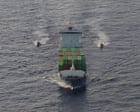
The sea lanes of the Caribbean are turning into a high-stakes checkpoint. When the US Coast Guard boarded a 91-meter cargo ship named Grace on September 5, it wasn't just a routine maritime stop. It was a calculated move within an aggressive oil blockade designed to squeeze Havana until its infrastructure breaks completely.
If you've been watching the news, you know Cuba is suffering through relentless blackouts, hospitals struggling to keep generators running, and deep economic paralysis. But the mechanics behind how the US is enforcing this isolation tell a much darker story about modern maritime policing and the vanishing margins for survival on the island.
The Anatomy of a High Seas Interception
The operation itself reads like a thriller, but the consequences are entirely grim. Coast Guard officials tracking the Grace in the Caribbean Sea between Cuba and Mexico noted that the vessel was utilizing classic "dark fleet" maneuvers. Think turned-off transponders, deceptive navigation routes, and hidden cargo.
When boarding teams finally secured the ship, they didn't find minor infractions. Mexican navy inspection teams later confirmed that the vessel's ballast tanks and multiple secondary containers were packed with illicit fuel meant for Cuban ports.
Adm Kevin Lunday put it bluntly: the high seas aren't a sanctuary for lawlessness. Yet, turning maritime interdiction into a weaponized embargo carries immense human costs that go far beyond political posturing.
Why Traditional Supply Lines Collapsed
Cuba didn't end up in this desperate position overnight. For decades, the country relied heavily on external allies to keep its power grids alive. Venezuela and Mexico served as vital lifelines, sending tankers filled with crude and diesel across the Gulf.
Everything flipped when Washington accelerated its regional pressure campaign. Following the ouster of Venezuelan president Nicolás Maduro in January, those traditional supply pipelines dried up almost instantly. Tanker operators face intense financial sanctions, blocked ports, and direct threats from the US military.
Nobody wants to risk a multi-million-dollar fleet or face federal prosecution. As a result, independent captains turn to shady brokers, unregistered hulls, and dangerous midnight runs just to keep the lights on in Havana.
The Reality on the Ground in Havana
Behind the geopolitical chess moves are ordinary people living in near-total darkness. Nationwide blackouts have stopped hitting the news cycles as breaking events because they've become a daily reality. Families cook on makeshift wood fires. Refrigerators sit empty. Schools and businesses operate on erratic schedules dictated by fuel availability.
The stated goal from Washington is clear: force a regime change by turning up the heat until the system collapses. Critics point out that blockading fuel doesn't hurt government officials the same way it starves hospitals of diesel and leaves children walking home on pitch-black streets.
When the Coast Guard intercepts a ship like the Grace, it makes for a clean headline about stopping illicit trade. In practice, it means another tight squeeze on a population already teetering on the edge of total systemic breakdown.
The blockade is tightening by the week, and with every intercepted vessel, Cuba moves one step closer to an irreversible crisis.