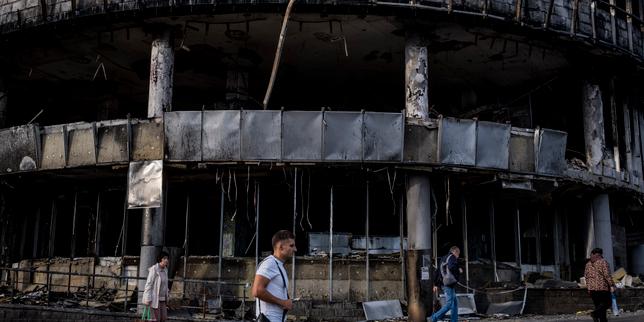
You cannot run a modern industrial state when the power grid flickers out every few hours. While the front lines grab nightly television headlines, a quieter, more devastating war is happening behind them. Russian missile and drone barrages are targeting the structural backbone of Ukrainian commerce. We aren't just talking about broken windows or damaged apartment blocks. We are talking about ports, steel mills, energy grids, and digital networks that keep money moving.
If you want to understand why Kiev's financial survival is hanging by a thread, you have to look past the military maps. The strategy has shifted. Moscow knows it can't easily break the infantry on the ground, so it is going after the economic oxygen instead.
The Destruction of Industrial Lifelines
Ports and steel plants used to be the crown jewels of Ukraine's export-driven GDP. Today, they are primary targets. When a missile hits a major port terminal or reduces a historic steel works to rubble, the ripple effect reaches global markets, but it hits the domestic budget first. Tax revenues evaporate overnight.
Factories can't operate on backup diesel generators forever. The operational costs eat away at profit margins until business owners simply shut the doors. Workers lose their jobs, consumer spending drops, and the state loses the income tax it desperately needs to fund basic public services.
Think about the sheer logistics of it. You rebuild a transformer, and two days later, another wave of drones turns it back into scrap metal. This constant cycle of destruction drains national reserves faster than foreign aid can refill them.
The Hidden Cost of Endless Air Raid Alarms
It's easy to overlook the economic damage caused by productivity loss. Every time air raid sirens wail across major hubs like Kiev, Lviv, or Dnipro, millions of people stop working. Factories halt assembly lines. Office workers head to underground shelters. Retail stores lock their doors.
Studies and local economic assessments indicate that hours spent under alert cost the country tens of millions of dollars every single hour. Multiply that by hundreds of alerts a month, and you get a staggering invisible tax on the entire nation. Businesses cannot forecast next month's output when they can't even guarantee tomorrow's shift.
Energy Infrastructure Under Siege
Energy independence is a luxury Ukraine hasn't had for years, but keeping the lights on for manufacturing was still manageable until recently. Now, persistent targeting of power generation and gas storage facilities has pushed the grid to its absolute limit.
When winter approaches, the pressure multiplies. Power outages disrupt everything from IT outsourcing firms to local bakeries. Without a stable power supply, foreign investors stay away, and domestic capital flees to safer havens abroad.
You're left with a stark reality. The resilience of the Ukrainian people is legendary, but human grit alone cannot power a smelter or keep fiber-optic internet cables live during a blackout. Unless air defense capabilities scale up dramatically to protect vital economic zones, the physical erosion of the country will translate directly into economic collapse.
Keep a close eye on the energy sector numbers over the coming months. That is where this war will actually be decided.