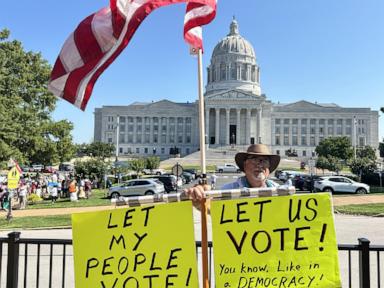
About ten percent of American voters are casting ballots in completely new congressional districts this year, and you can trace that entire disruption back to a single strategic push. Around 440 days after President Donald Trump demanded a rare mid-decade redrawing of political boundaries, nine states finalized new United States House maps just in time for the midterm elections.
If you are wondering why your polling place feels different or why local campaign ads look entirely foreign, redistricting is the culprit. Texas kicked off the chain reaction back in July 2025 when lawmakers moved to shore up Republican advantages. California quickly fired back with its own map adjustments to protect Democratic interests. Before long, federal court rulings and state legislature battles dragged other states into a bitter map-drawing war that reshaped the electoral map before anyone even cast a primary vote.
Which States Actually Changed Their Maps
Not every state that wanted a new map managed to get one through the courts. Legal challenges blocked efforts in several places, but nine states successfully crossed the finish line.
New congressional boundaries are in effect for voters in Alabama, California, Florida, Louisiana, North Carolina, Ohio, Tennessee, Texas, and Utah. Most of these adjustments lean in favor of Republicans, particularly across conservative Southern strongholds where voting rights legal battles opened the door for aggressive map manipulation. California and Utah stand out as the exceptions where new lines could actually give Democrats a lift.
Look closely at the numbers and you realize the sheer scale of this shuffle. More than 6.9 million potential voters in Texas, over 6.3 million in California, and upwards of 4.5 million in Florida woke up to entirely new district lines. In Utah, roughly 69 percent of the population found themselves assigned to a different district number due to state court interventions.
The Partisan Battleground and What It Means for Control
Midterm elections are brutal under normal conditions, but mid-decade redistricting throws conventional political science out the window. Every single one of the 435 seats in the House of Representatives is up for grabs, and a handful of shifted seats can completely alter the balance of power on Capitol Hill.
When Trump urged allies to redraw lines, the calculation was simple math. Republicans hoped to net up to nine additional seats nationwide by packing and cracking opposing voters. Democrats countered aggressively in blue states to neutralize those gains. In places like Tennessee, Republicans heavily targeted the Democratic-held ninth district in Memphis, triggering a domino effect that redrew boundaries for seven of the state's nine total districts.
Yet, map-drawing does not guarantee election night victory. Shifting lines can sometimes backfire if voter demographics shift faster than partisan cartographers expect, or if energized local movements turn safe seats into competitive toss-ups.
Looking Ahead to 2028
The map battles settling this November do not mean the war is over. Lawmakers in places like Mississippi and New York are already laying groundwork for future changes. Upcoming ballot measures in states like Maryland and Missouri could trigger even more cartographic upheaval ahead of the next presidential cycle.
If you want to stay ahead of how these shifts affect your local representation, stop looking at national polling averages and start tracking local candidate filings and state supreme court dockets. The real fight for Congress happens long before election day, and the map you voted on this year might look completely different the next time you head to the polls.