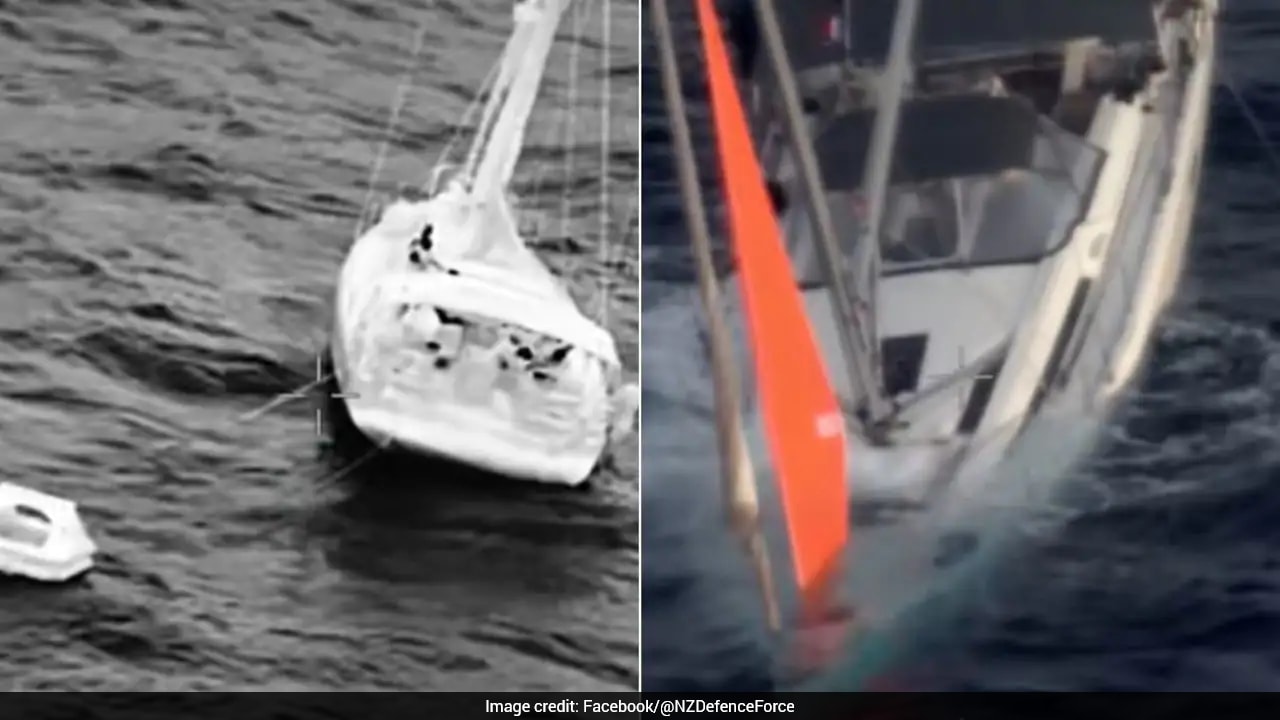
Open water gives zero warnings. One minute you're charting coordinates on a calm afternoon, and the next minute a massive marine mammal totals your hull. That nightmare became reality for four sailors aboard a 52-foot yacht named Tai Tam.
Cruising roughly 250 nautical miles north of Norfolk Island in the South Pacific, the vessel took a catastrophic hit. A pod of six to eight sperm whales surrounded them. One giant of the deep slammed directly into the boat. The impact threw crew members off balance and ruptured the hull. Seawater rushed in faster than any bilge pump could handle.
The Moments After the Strike
Australian sailor Jemma Cooper was steering when the impact hit. Her husband Jeremy Cooper and crewmate Terry Hetherington felt the violent jolt below deck. They didn't have time to panic. They had minutes before the yacht slipped beneath the waves.
The crew did everything right in a worst-case scenario. They didn't waste time trying to save a sinking ship. They grabbed their emergency gear, activated their EPIRB locator beacon, broadcast a Mayday call to rescue coordinators in New Zealand, and scrambled into an inflatable life raft.
Surviving a sinking ship is one challenge. Surviving the open ocean in a tiny raft for seventeen hours is an entirely different test of endurance.
Why Emergency Beacons Save Lives
Most people think drowning is the biggest threat in a maritime disaster. It's not. Exposure, dehydration, and panic get you first.
When you're floating in a tiny orange raft in the middle of the South Pacific, time moves differently. The crew of the Tai Tam stayed calm because they knew rescue coordinators had their exact coordinates via the emergency locator beacon. That piece of equipment changes everything. Without an EPIRB, search planes are looking for a needle in a massive, moving haystack.
Rescue coordinators in New Zealand acted fast. They dispatched a Royal New Zealand Air Force P-8A Poseidon aircraft to track down the floating raft. Aircrews spotted the survivors, keeping tabs on them until a nearby cargo ship, the MV Sofrana Surville, alongside a private sailing vessel, reached the site. All four sailors were hauled aboard safely, escaping without a single injury.
Lessons From the South Pacific Incident
Ocean collisions with marine life are rare, but they happen more often than you think as boat traffic increases. If you're heading offshore, you need to treat safety gear as non-negotiable.
- Never skip servicing your EPIRB or personal locator beacons.
- Keep your ditch bag packed and accessible within arm's reach of the cockpit.
- Practice emergency crew drills before you leave the dock, because panic wastes precious seconds.
Preparation keeps you alive when nature decides to remind you who runs the ocean. Check your safety gear before your next voyage.