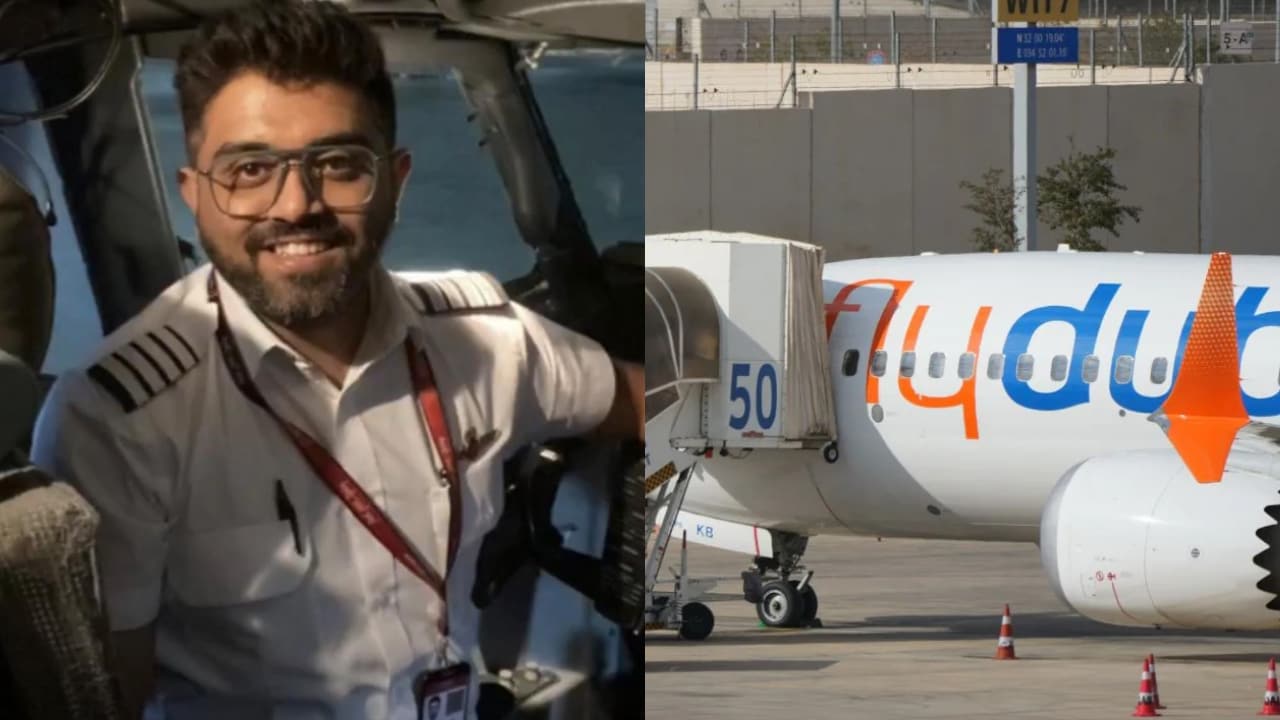
Ten miles above the earth is a terrible place to discover a threat sitting right next to you. On a routine flight from Dubai to Tel Aviv, flydubai Flight FZ 1073 turned into a nightmare when a violent cockpit struggle broke out. The pilot at the controls wasn't just fighting for his own survival. He was fighting to keep 174 passengers from plummeting out of the sky.
That man was Captain Smit Machchhar, an Indian pilot whose composure under pressure prevented a catastrophe. While headlines quickly labeled him a hero, the reality of what happened in that flight deck reveals a terrifying vulnerability in commercial aviation that few travelers ever think about.
Who Is Captain Smit Machchhar
Captain Machchhar isn't a rookie thrust into a movie plot. He is a seasoned aviator with over thirteen years of commercial flying experience, logging more than 9,750 hours primarily on the Boeing 737 fleet. Before joining flydubai as a direct entry captain in 2022, he spent a decade at Indian carrier SpiceJet, where he worked his way up to senior commander and line training captain.
He knew the aircraft inside and out. That muscle memory and deep technical expertise mattered when chaos erupted. When an in-flight altercation escalated into a physical attack and a sudden attempt to compromise the flight systems, Captain Machchhar had mere seconds to react while injured.
The Anatomy of an Airborne Crisis
Flight FZ 1073 was approaching Israeli airspace when the situation inside the cockpit deteriorated rapidly. According to official statements, a co-pilot attempted to sabotage the aircraft systems and crash the plane. During the physical altercation, Captain Machchhar was stabbed, and the aircraft experienced a terrifying plunge, dropping over 17,400 feet in just two minutes.
An airplane at cruising altitude is a pressurized tube moving at hundreds of miles per hour. A sudden loss of control authority combined with a cockpit intrusion creates an almost impossible operational environment. Yet, quick intervention from a crew member and a passenger who broke into the flight deck helped subdue the suspect, allowing Captain Machchhar and the remaining flight crew to stabilize the aircraft.
Instead of completing its journey to Ben Gurion International Airport, the flight was forced to divert and landed safely in Saudi Arabia. All 174 passengers—including families with twenty-seven children—survived.
The Global Aftermath and Security Reality
The incident sent shockwaves through international aviation circles. Passengers on board hailed from Israel, India, the United Arab Emirates, and the United States, turning a regional flight into a multi-national security event. Flydubai immediately suspended its routes to and from Israel pending comprehensive security reviews.
Governments stepped in quickly. Indian Prime Minister Narendra Modi praised Captain Machchhar for his courage, while the Indian Embassy in Saudi Arabia confirmed that the injured captain was in a stable condition after receiving medical treatment. Meanwhile, security agencies across multiple nations began dissecting how such an internal threat bypassed standard pre-flight vetting and cockpit protocols.
Commercial aviation relies heavily on the assumption of trust between flight deck crew members. When that trust shatters at 30,000 feet, standard emergency checklists cannot save you. It takes human grit, split-second tactical decisions, and physical bravery to wrestle control back from the brink. Captain Machchhar provided that grit, ensuring that a routine flight didn't end in tragedy.